Chargers' Tight End Depth Chart Shift Opens Receiving Opportunity for Kolar
By Justin Erickson ·
Charlie Kolar's transition from Ravens backup to potential Chargers starter hinges on offensive system fit, not roster construction.
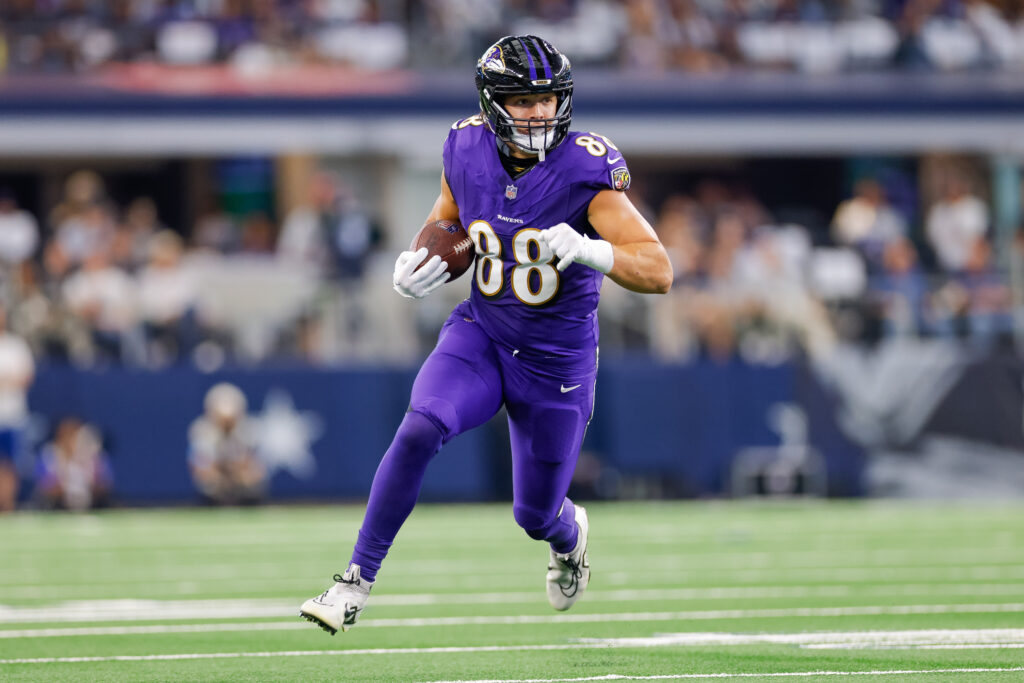
The Chargers added tight end David Njoku in free agency while Oronde Gadsden II finished his rookie year as the primary pass-catcher at the position, yet Daniel Popper's analysis suggests Charlie Kolar—a depth piece in Baltimore last season—could emerge as the team's most productive tight end in 2026. The shift isn't about talent accumulation; it's about scheme.
Kolar spent 2025 as the Ravens' TE3, limited by Baltimore's run-heavy approach and Mark Andrews' entrenched role. Gadsden II showed promise as a receiver last year but remains a developmental blocker. Njoku brings Pro Bowl pedigree but at 28 and coming off a quiet free-agent market, his price tag reflects ceiling questions. Kolar, by contrast, has the athletic profile—4.70 40-time, 25.5 BMI, strong hands—that complements modern NFL route trees. The change in systems matters more than the change in uniforms.
Mike McDaniel's offensive philosophy at Miami relied on tight ends as secondary receivers in space, using them as checkdowns on rhythm throws and slide routes against linebackers. The Chargers have already shown appetite for that scheme with Justin Herbert's checkdown rate hovering above league average. Kolar's 2024 snap count was suppressed by Ravens depth, not inability; he ran 234 routes in limited work and posted a 74.3% catch rate on throws into his area.
For prop purposes, this depth chart uncertainty creates a sizing problem the market has likely underpriced. If Kolar captures the TE1 role (or at minimum, a 50-60% snap share), his receiving yards and target floor immediately expand. Last season he averaged 4.2 targets per 100 routes run—reasonable efficiency for a backup. In a high-volume system with featured looks on third-and-short and red-zone routes, that could translate to 6-7 targets per game in favorable matchups. Gadsden II's early-season receiving yards overs and Njoku's floor props both carry hidden risk if Kolar's role rises faster than pregame projections suggest. The book likely priced 2026 tight end props around last year's snap distributions, not McDaniel's system preferences.
The edge isn't that Kolar becomes a statistical revelation; it's that two months into the season, once snap percentages stabilize, his actual workload will exceed what his projected August receiving-yards lines assumed. Single-game spikes will fade, but the multi-week pattern of him running 25-30 routes and seeing 5+ targets in games where the Chargers chase volume should persist through September and October. Early unders on established passing-game props (Herbert completions, team passing attempts) in games where Kolar's snap share proves elevated carry mild recalibration risk. His personal props—receptions, receiving yards against weaker secondary coverages—present the more durable angle before week 1 numbers solidify.