NBA · transaction
Zach Collins' Extension Signals Chicago's Bet on Health Over Depth
The Bulls lock in their rim-running big on a modest deal, betting his injury history won't repeat.
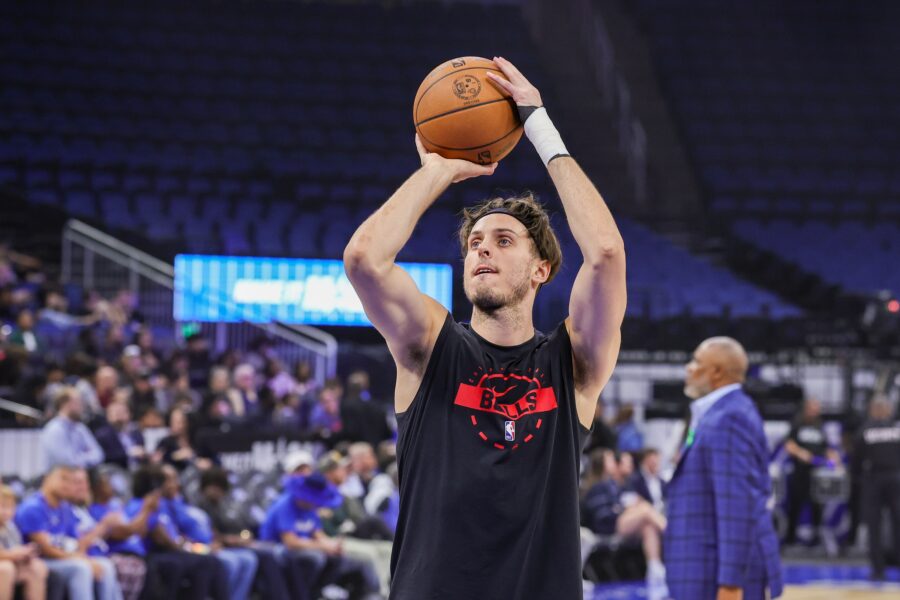
Zach Collins and the Chicago Bulls agreed to a two-year, $17 million extension Tuesday, per ESPN's Shams Charania. The deal came together quickly—Mark Bartelstein of Priority Sports and the Bulls' new front office finalized terms over the span of a few days. It's a straightforward vote of confidence in a player the team views as foundational depth, assuming durability holds.
Context matters here. Collins played in just 10 games last season before a toe injury requiring surgery sidelined him for the remainder of the year. That injury profile—a nagging, recurring issue that eventually forced intervention—raises a genuine medical question: does the Bulls' confidence stem from real prognostic data (imaging, rehab trajectory, specialist sign-off), or are they hoping the surgery resolved the underlying structural problem? The contract size ($8.5M annually) suggests measured optimism, not reckless conviction. They're not paying star money. They're securing a capable backup big who, when available, spaces the floor and runs the rim on pick-and-roll action.
The front-office composition matters too. A newly assembled Chicago regime doesn't typically hand out extensions to injury-prone reserves without internal conviction. If the medical staff cleared Collins for a two-year commitment, that's a signal worth noting—though not one that should override the basic statistical reality: he was healthy for only 10 games. Projection models will naturally discount his per-game efficiency (strong, per the comment reaction) because volume is too thin to trust. One good stretch in a small sample is not a season.
For betting purposes, Collins' availability directly impacts Bulls offensive spacing and pace. When he's on the floor, he functions as a vertical threat in pick-and-roll that stretches defenses and creates driving lanes for guards. The Bulls' backcourt—Coby White, Lonzo Ball, and surrounding perimeter players—benefit from his presence because he occupies rim space rather than camping in it. However, any prop work on Collins himself (points, rebounds, minutes) faces a hard ceiling: until he completes a full, healthy season, any projection built on his per-game efficiency from 10 games carries high variance risk. The market will likely price him conservatively into team totals and pace estimates until he accumulates 40+ games of consecutive health. The extension is a statement of intent from the organization, not a statement of statistical reliability.