Keyonte George Locks In Jazz Future With Flat-Structure Extension
By Ty Whitney ·
A $157.5MM rookie-scale extension keeps George in Utah through 2032, signaling management confidence in a breakout guard entering his prime scoring window.
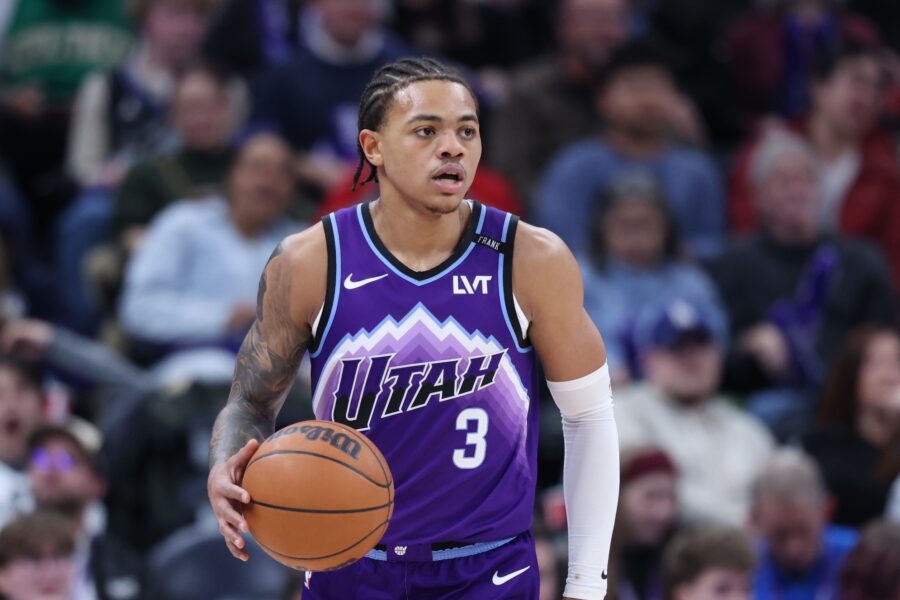
Keyonte George finalized a five-year, $157.5MM extension with the Jazz on Friday, cementing his role as the franchise's centerpiece heading into the 2027–28 season. The deal runs through 2031–32 with a $155MM base and $500K in annual incentives, structured with 4% yearly raises—below the maximum 8%—to accommodate the league's salary-cap trajectory. It includes no player or team option, meaning both sides are committed to the full term.
The Jazz spent months negotiating this deal over the offseason, and George's enthusiasm at Saturday's presser suggested no friction existed. "It was honestly a no-brainer," George told reporters, citing Utah as his "second family." That emotional investment matters. A 22-year-old guard signing long-term without leverage usually signals either desperation by the team or genuine alignment on both sides. The Jazz, clearly, are betting the latter—and their internal valuation of George's trajectory justifies a nine-figure commitment. Last season he averaged 23.6 points on 33.1 minutes per game across 54 appearances, adding 6.1 assists and 1.1 steals. That scoring output, paired with playmaking volume in a young core, convinced Utah he was worth locking in before his true prime hits.
The incentive structure reveals what the Jazz actually believe will happen. George's bonuses include $100K for reaching 65 regular-season games (he played 54 last year—a durability concern the team is addressing via bonus); four separate $100K playoff-series-win bonuses; and a smaller team-defense incentive. None of these are expected to trigger in the near term, per team sources cited by the Tribune. That conservative assumption suggests the Jazz view the incentives as a hedge rather than realistic value—useful framing when assessing whether this contract will feel heavyweight or light in three years.
For betting purposes, George's extension removes downside risk and clarifies his role going forward. He's now Utah's primary scoring engine through 2032, which means consistent high-usage nights and stable minute allocation. If Utah's playoff ambitions materialize—the team eyes its first playoff berth since 2021–22—George will be the beneficiary of increased late-game leverage. His assists line benefits most from playoff runs; his points line benefits most from youth-into-prime trajectory. Expect his scoring volume to climb organically as the Jazz's spacing and roster depth improve. Early-season George points overs hold value if Utah's roster construction speeds his playmaking growth; fading overs on nights Utah trails by 20+ in the fourth quarter (low leverage) remains prudent.
The flat-raise structure is a tell. The Jazz wanted minimal annual escalation because they expect the salary cap to do the heavy lifting for them. That discipline suggests front-office confidence without desperation—a marker that George's on-court trajectory, not media buzz, drove the extension. Lock him in as a 23–26-point-per-night floor over the next two seasons, with upside if the offense runs through him more than it currently does.