NBA
Timberwolves Fix the Edwards Experiment: LaMelo Ball Unlocks Minnesota's Spacing
Chris Finch admitted playing Anthony Edwards at point guard last season hurt the team's playoff chances, but the LaMelo Ball trade is designed to restore Edwards to catch-and-shoot mode where he's most efficient.
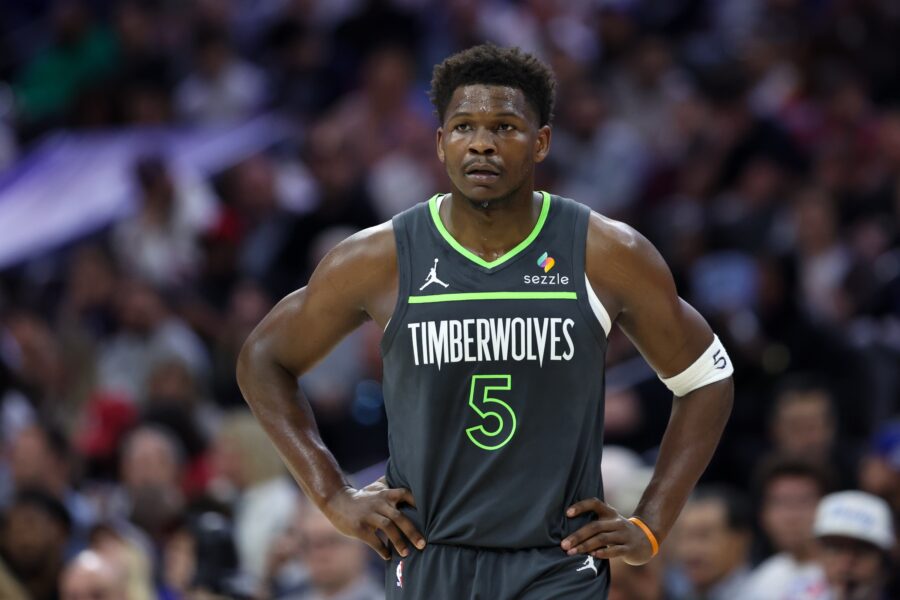
Anthony Edwards finished last season with career highs across the board—28.8 points per game on 48.9% shooting and 39.9% from three. By nearly every offensive metric, 2025-26 was his best year as a pro. Yet the Timberwolves' head coach Chris Finch sees a fundamental problem hiding in those numbers: Edwards was forced to shoulder too much playmaking responsibility, and it became a liability when San Antonio attacked him in the second-round playoff series. In a recent appearance on Road Trippin', Finch was blunt about the cost. "It caught up to us," he said. "Double team after double team." The solution wasn't tweaking usage patterns—it was reshaping the roster entirely by trading for LaMelo Ball.
Finch's diagnosis reveals the real tactical issue at stake. Edwards operates at peak efficiency when he's moving without the ball, spotting up for three-pointers or attacking downhill off simple catch-and-go reads. Forcing him into primary playmaking duty neutralized those strengths and made him predictable in crunch time. The Timberwolves didn't create enough catch-and-shoot opportunities for their most versatile scorer, which is a damning admission from a coaching staff that had a full season to optimize their offense around a 28-point-per-game wing. Ball's addition directly addresses this. Finch specifically cited one stat to validate the move: Kon Knueppel shot 7 percentage points higher from three when Ball was on the court versus off it. For a quality floor-spacing forward, that's a massive gap—evidence that Ball's gravity and passing immediately improve the mathematical efficiency of the Timberwolves' role players. That's not a coincidence; it's a blueprint for how Minnesota intends to deploy Edwards going forward.
The roster moves compound the message. Minnesota traded away Julius Randle and Naz Reid this offseason, hinting they're fully committed to a perimeter-heavy, spacing-first lineup. Trey Lyles—signed to a one-year deal after playing in the EuroLeague—is likely to be their power forward starter, which means conventional post-ups are off the menu. This is a team betting that shooting, cutting, and pick-and-roll generation are the path to a Finals run, not iso-heavy wing play. Ball is the connective tissue that makes that work, and Edwards is the beneficiary of returning to his natural position.
For prop bettors, the Edwards three-point angle is the most durable edge. Over the last season, he shot 39.9% from deep—a career best that was partially suppressed by high-volume creation duties. In a Ball-led offense where Edwards spends more time as a finisher than initiator, expect his effective three-point attempt rate to rise while his volume-from-creation duties falls. The market may price Edwards' three-point makes prop based on last season's 4.2 makes per game, but that figure came in an offense that underutilized him as a catch-and-shoot player. Finch's own words—"we didn't create enough catch-and-shoot threes for him"—tell you the line-item improvement is baked into Minnesota's offseason strategy. His three-point makes should trend upward early in the season, particularly in games where Ball's playmaking is most active (look for elevated numbers against switching defenses, which force Ball to operate in space). This edge is persistent, not a single-game spike; it reflects a 0-82 structural change to how the offense operates.
The secondary angle is Edwards' total points prop in early-season matchups. Catch-and-shoot threes are higher-efficiency shots than creation-weighted possessions, which means the same scoring volume could arrive on materially better efficiency. If Edwards averages a similar 28-30 points per game but gets there on cleaner, assisted looks rather than high-variance iso pulls, his point total becomes a higher-EV play at unders if the market hasn't fully repriced the efficiency lift. However, this edge is less durable than the threes angle—it depends on game flow and whether Ball's pace mirrors his prior usage rates. The three-point makes angle is the core play.