LaMelo to Minnesota Reframes Wolves Ceiling — and Backcourt Redundancy Risk
By Ty Whitney ·
The Timberwolves land a ball-dominant playmaker in LaMelo Ball, but pairing him with Anthony Edwards creates a usage war that could compress both players' individual scoring upside.
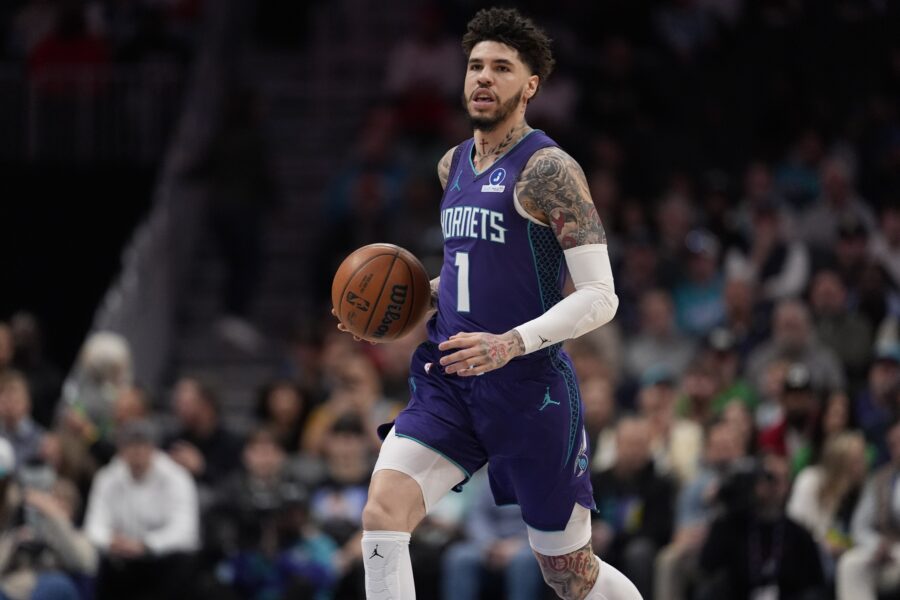
Minnesota officially acquired LaMelo Ball from Charlotte in a four-team trade Friday, adding a 6-foot-7 creator to a roster built around Anthony Edwards. The Timberwolves also received Josh Green and the draft rights to Isaiah Evans (No. 33), while shipping out assets to facilitate Julius Randle's move to Brooklyn and complete a broader reshuffling across the Eastern Conference.
On its surface, Ball's arrival addresses Minnesota's perimeter playmaking gap. He averaged 11.2 assists last season in Charlotte and operates the offense from the wing at an NBA-rare scale for his size. But the structural issue is immediate and unavoidable: Ball and Edwards are both high-volume scorers and primary ball handlers who need spacing and offensive initiation to maximize efficiency. Edwards shot 43% from three last season; Ball hit 35% on similar volume. Both thrive when defenses collapse on their drives. Adding Ball doesn't solve that tension — it amplifies it.
The historical comp is instructive. When Denver paired Jamal Murray and Nikola Jokic, the solution wasn't to run two separate offenses — it was to stagger their minutes and assign clear roles. Minnesota now faces the same calculus, except their frontcourt (Karl-Anthony Towns when healthy) already demands spacing. Ball's assist numbers will likely dip from his Charlotte volume, and Edwards may see fewer direct scoring opportunities in pick-and-roll situations where he previously dominated. The Wolves are betting on depth and chemistry to overcome usage overlap, but that's a middle-outcome scenario, not a ceiling outcome.
For prop purposes, this creates a compression risk on both players' individual scoring lines, at least through the regular season until rotations stabilize. Edwards' season-long points prop will almost certainly move down from his typical 20-22 range; Ball's assist total enters with uncertainty because Minnesota's halfcourt spacing is less forgiving than Charlotte's (where he had more isolation opportunities). The more durable angle is team total overs — the Wolves' offensive talent is legitimate, and the volume of playmaking will likely push pace and spacing in their favor. But single-player prop markets for Edwards and Ball should be treated cautiously until we see live minutes and role clarity in October.