NBA · transaction
Naz Reid Inherits Charlotte's Leadership Vacuum: What a Veteran Bench Contributor Means for Hornets Depth
Reid's eight-year Minnesota apprenticeship—including two Western Conference Finals runs—positions him as an unlikely culture anchor for a Hornets team banking on youth to finally break through.
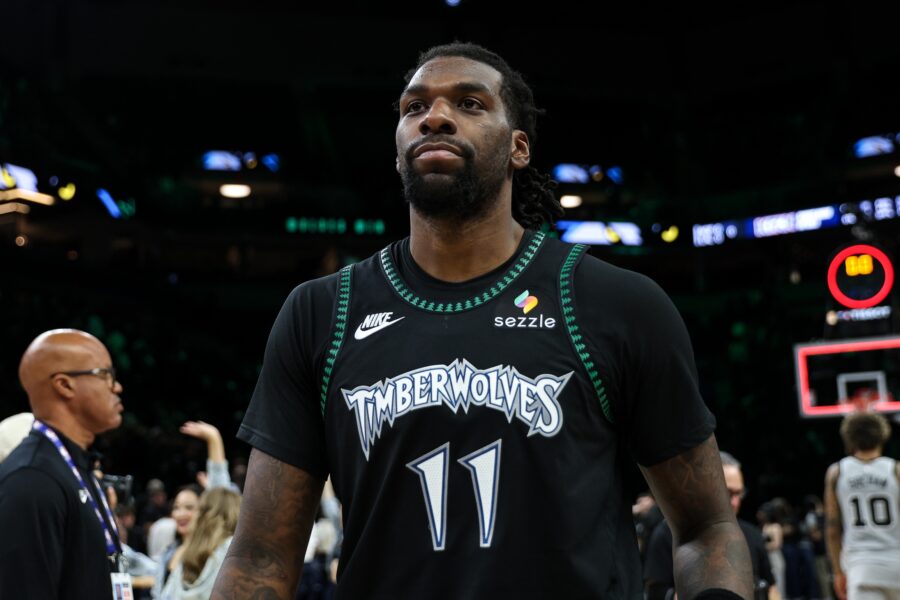
Naz Reid is no longer Minnesota's most beloved reserve. As of this offseason, he's Charlotte's most battle-tested interior anchor, acquired as part of the LaMelo Ball reshuffling that sent Miles Bridges to Phoenix. The shift from Sixth Man of the Year (2024) to starter represents a sharp change in role and visibility, but Reid's framing of the move—voiced in an interview with The Charlotte Observer—reveals something more important than a title upgrade: he's arriving as a institutional memory piece in a rotation stacked with first-time playoff contributors.
For eight seasons, Reid worked his way from an undrafted two-way deal into steady rotation minutes behind All-Star caliber centers. He appeared in 30 games as a rookie in 2019 and methodically carved out a niche as a rim-running, screening, defensively engaged off-bench presence. The Timberwolves made two consecutive Western Conference Finals runs (most recently this year), and Reid was present for both—a relatively rare credential in a league where playoff experience doesn't automatically transfer. When Julius Randle and Rudy Gobert occupied Charlotte's frontcourt uncertainty, Reid slides into the starting lineup as a replacement for Bridges. The mechanical difference is significant: Bridges brought creation and scoring gravity. Reid offers positional steadiness and an external leadership signal.
Charlotte's core—LaMelo Ball, Brandon Miller, Timelapse Cooper—represents the franchise's bet on young talent maturing into playoff contention. Coach Charles Lee (two championship rings) and Reid (two Conference Finals appearances) now anchor the veteran scaffolding. That's a meaningful organizational statement. Reid's explicit role, as stated, is not just production; it's transference. He will model what sustained winning looks like because he's lived it. The Hornets won 47 games last season and made the playoffs for the first time in eight years. They are not yet equipped to go deeper, but structural signals—adding Reid's playoff DNA, retaining Lee's championship pedigree—telegraph that front office confidence in the trajectory.
From a prop perspective, Reid's role elevation matters specifically for total scoring and lineup construction. He averaged 8.2 points per game off the bench in Minnesota over the past two seasons—efficient but low-volume. Starting against typical power forward/center depth pieces, his point production will rise; Charlotte opponents will scheme for him as a starter, not a surprise reserve. Look for Reid to average 10.5–12.5 points per game early in the 2026–27 season as the market prices him as if he'll maintain reserve-level efficiency. The edge is not that he becomes a volume scorer; it's that starting minutes plus opponent allocation creates a baseline floor higher than his Minnesota per-36 suggests. His pick-and-roll gravity with LaMelo in space will generate more easy looks than bench situations afforded. Fade unders on his season PPG early; the line will likely reflect his historical per-game floor, not his elevated minutes or new role context.