Minnesota Mortgaged a Decade for LaMelo Ball—Here's What Changes for the Wolves
By PropBetEdge Editorial Team ·
The Timberwolves surrendered a future's worth of draft capital to pair LaMelo Ball with Anthony Edwards, betting that a true point guard lifts them from perennial second-round exits to title contention.
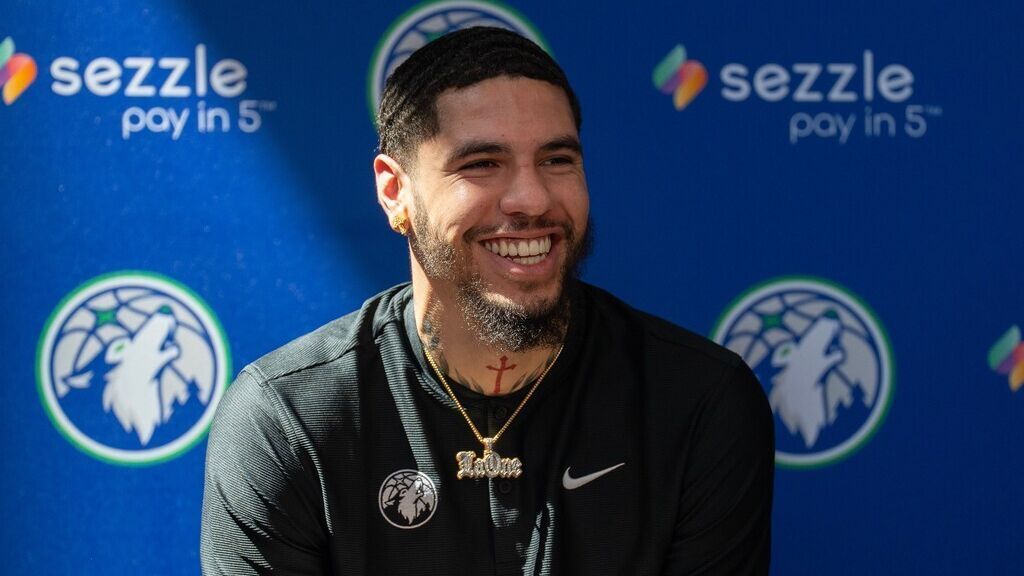
The Timberwolves completed a four-team acquisition of LaMelo Ball on Tuesday, shipping out Naz Reid and a cascade of seven draft picks—including an unprotected 2033 first-rounder and four swaps across 2028–2030—to land the 24-year-old point guard and complementary guard Josh Green. The cost is structural. Minnesota will have no first-rounders for the next decade, betting everything on a window that opens now with Edwards, Ball, and Julius Randle's expiring contract finally creating salary-cap room to retain Ayo Dosunmu.
Timberwolves president Tim Connelly framed the trade as a corrective measure. The Wolves finished second-round exits in 2024 and 2025 despite Edwards' All-NBA trajectory, a pattern that suggested ballhandling and playmaking at the guard position had become the limiting variable. Ball averaged 8.4 assists per 36 minutes over 71 games for Charlotte last season—a meaningful bump from his career 6.8—and he operates with the kind of unpredictability in the pick-and-roll that can destabilize switching defenses. Coach Chris Finch explicitly cited the need for "a big backcourt" as a playoff discovery, pointing to how defensive schemes punish teams that can't weaponize size and ball movement together.
The flip side is fragility. Ball played in only 43% of games from 2022 to 2025, a durability profile that turns a decade-long commitment into a speculative venture. His assist rates improved last season, but against the playoff competition the Wolves faced in their losses, he hasn't proven he can sustain that production in high-leverage minutes. There's also the matter of fit: Edwards and Ball are both scoring-capable wings who can initiate offense, which means their two-man pairing relies on spacing and floor-spacing defense rather than a traditional ball-movement economy. If Ball regresses to his 2023–24 assist average of 6.1 per game, the structural trade ratios flip from aggressive to punitive.
For betting purposes, the Wolves' offensive ceiling tightens into a narrower band. Ball's best-case assists line—8+ per game—depends on high-volume pick-and-roll usage and efficient catch-and-shoot opportunities created by Edwards' gravity. In games where Charlotte forced Ball into iso-heavy offense or faced switching defenses that negated his playmaking, his assist floor dropped to 4–5 per 36. The Wolves will run more structure than the Hornets did, but they've also ceded the defensive versatility that allowed them to switch five out in previous seasons. When Minnesota faces elite closing defenses (Denver, Boston) that can stay large while switching, Ball's assist ceiling shrinks, and team totals should reflect that volatility. Early-season pricing will assume the "elevated" ceiling Connelly promised; the prop edge lives in fading overs on Wolves team points when Ball faces switching-heavy schemes until the market prices in the fit risk.
Connelly's quip that Minnesota now has "none for the next 10 years" was meant as levity, but it's the most honest moment in the press conference. The Wolves are all-in on five-deep rosters built from 2020 draft picks and aging veterans, with no safety valve if injury or chemistry issues derail the window. That's not a bad bet—Edwards alone justifies a contention window—but it's a bet the market hasn't fully priced into Wolves team totals and playoff props yet.