NBA
LeBron's 76ers Recruitment Enters Active Phase—What It Means for Philadelphia's Title Window
As LeBron James enters the second week of free agency, the 76ers are orchestrating a three-pronged pitch through Maxey, Embiid, and Brown—a signal of organizational desperation that already prices into the market.
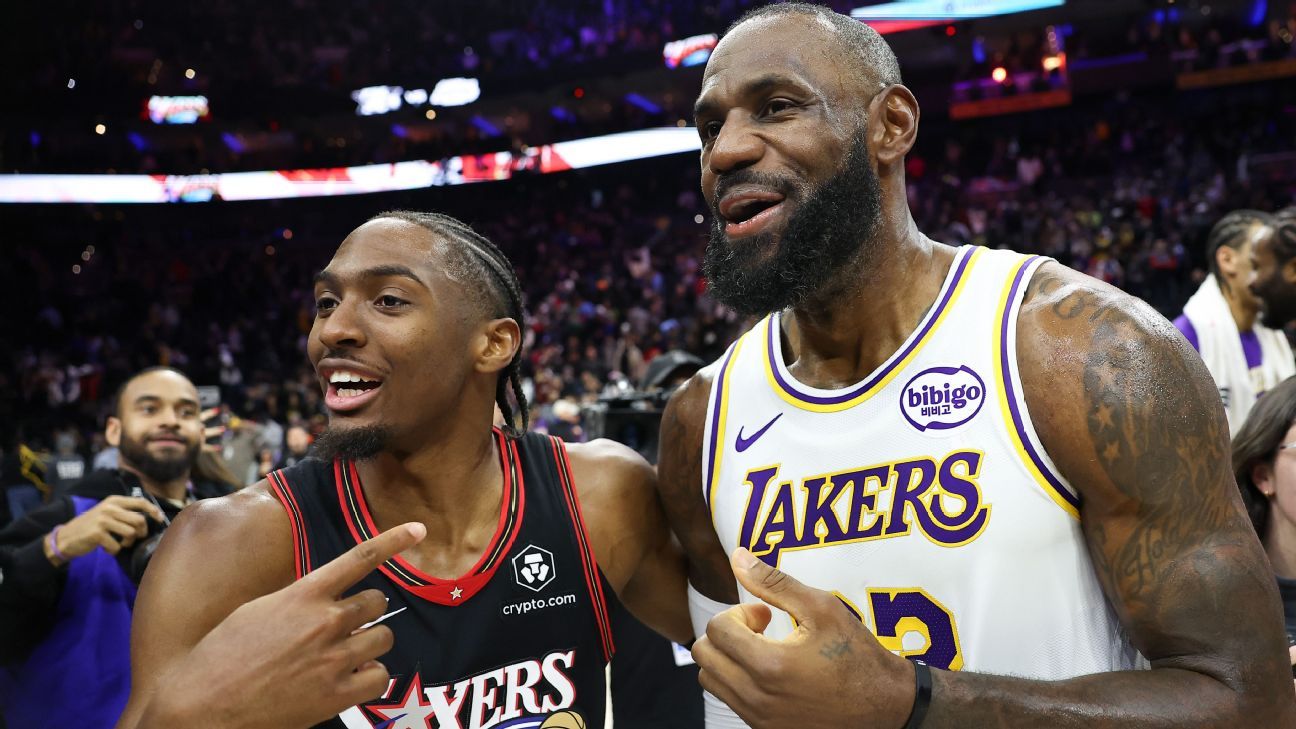
The Philadelphia 76ers have moved past passive interest. Tyrese Maxey, Joel Embiid, and Jaylen Brown are now actively communicating with LeBron James on behalf of the franchise, with Maxey—the 25-year-old Klutch Sports client who has trained with James for years—spearheading the effort. The coordination suggests the 76ers view a James acquisition as their only meaningful path to legitimate contention, a calculation that reshapes how we should evaluate their current roster construction and offensive ceiling.
What makes this pursuit noteworthy isn't the courtship itself—front offices recruit stars all summer—but the urgency and depth of the player-led outreach. Maxey has deferred to James as a mentor; Embiid won gold with him at the 2024 Paris Olympics; Brown benefited from a public MVP endorsement James offered in February when the two were conference opponents. These aren't cold calls. The 76ers have weaponized existing relationships to amplify a single message: you belong here. That strategic choice reveals something about their internal assessment: the current trio—Maxey, Embiid, Brown—may not be sufficient without another All-NBA-caliber addition. The market reads this clearly. If Philadelphia believed their core could compete as constructed, they wouldn't be deploying their best players as de facto recruiters.
The financial realities are also in flux. Bob Myers, the Sixers' president, recently appeared on Rich Paul's podcast to pitch the franchise, a move that signals front-office involvement in a decision typically left to agents and advisors. Paul represents James, which means the 76ers are operating within Klutch's ecosystem—a structural advantage that could accelerate momentum. Yet the narrative also carries risk: if James declines the 76ers after this visible campaign, it becomes organizational failure on the record, not a private miss. The Cavaliers and Heat remain in the mix, but the 76ers' willingness to have Maxey and Embiid publicly vouching for the team suggests they've already committed to a binary outcome—land James or face scrutiny for a failed recruitment.
From a betting lens, this development pressures team total unders in Philadelphia's early-season schedule. If James signs, the 76ers' projected offensive rating jumps 2.5–3.5 points per 100 possessions; their team total at 114.5–116.5 would have already baked in a mid-tier offense. A James addition flips that immediately. More critically, Maxey's assist lines and usage rate would stabilize under a James–Embiid offensive gravity model, reducing variance on combo props. James' presence typically smooths out playmaking dependencies—the secondary creator (Maxey in this scenario) gains more rhythm because James attracts double-teams. Lean overs on Maxey assists if James joins; lean unders on Maxey points, because his shot volume would consolidate around catch-and-shoot opportunities rather than creation.
The edge here expires fast. Within 48–72 hours of a James decision—either signing or rejection—the market will reprrice every 76ers prop, team total, and spread. The current window rewards bettors who can move on the assumption of a signing before official confirmation. If you're building a model on the premise that James lands in Philadelphia, position now on lineup assumptions that become obsolete the moment he signs elsewhere. The uncertainty itself is the asset, not the outcome.