LeBron's $3.88M Gamble Reshapes Sixers' Title Window—But Roster Construction Creates Ceiling Risk
By Erik Schwartz ·
Philadelphia landed the league's most lopsided free agent discount by stacking talent without proven role-player depth, but the ego math on three ball-dominant stars may not work.
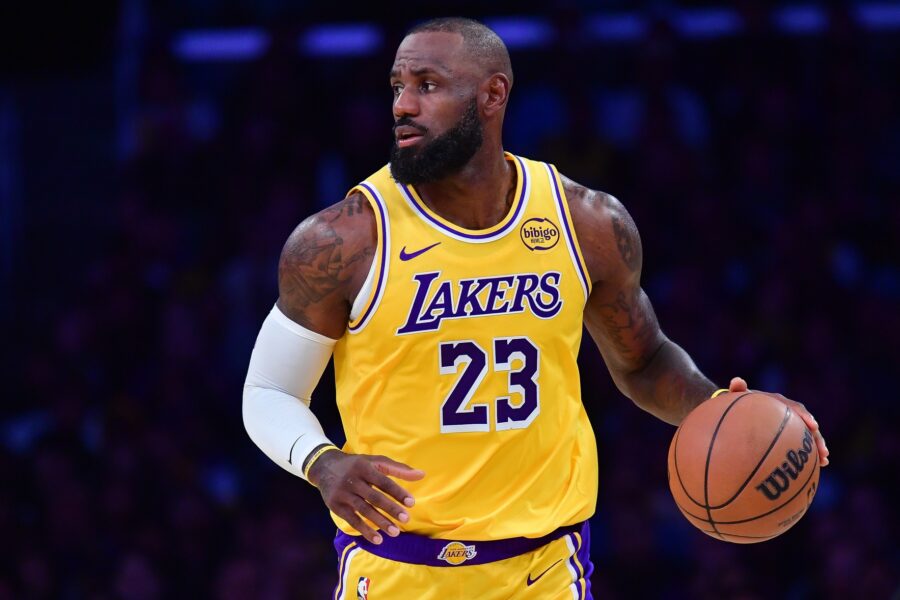
LeBron James accepted a two-year deal worth $3.88 million from Philadelphia on Friday, taking a historic $48.75 million pay cut from his Lakers salary to join Joel Embiid and Tyrese Maxey in what the Sixers pitched as an immediate championship contender. The recruitment was orchestrated at the player level—Embiid, Maxey, and Jaylen Brown stayed in direct contact with James throughout free agency—and validated by head coach Nick Nurse, the only head coach James permitted into his decision process. The structure signals calculation: James, entering his 42nd season and coming off a 20.9 PPG, 7.2 APG season, is essentially accepting veteran-minimum money to control his trajectory and pursue a fourth franchise title.
The Sixers built their pitch around talent stacking rather than complementary construction. Embiid has played 39, 19, and 38 games across the past three seasons—durability remains an organizational risk—yet Philadelphia convinced James that Embiid would commit to expanded availability. That commitment, combined with Maxey's development trajectory and Brown's two-way production, created the rare free-agent moment where a 41-year-old superstar could justify a nine-figure discount. The alternative destinations—Cleveland, Miami, and Golden State—offered either sentimentality or novelty, but none commanded the same immediate title equity.
Yet rival executives already see a structural problem. Without established role players or defensive specialists willing to accept marginal touches, the Sixers have assembled three offensive engines with overlapping ball dominance and shot creation needs. Embiid demands post touches and midrange autonomy; James needs playmaking and floor spacing; Maxey's role as lead ball-handler could compress. As one competing executive told The Ringer's Howard Beck: "They do not have any role players on their team now. All those guys want and need the ball." This is not a talent assessment—it's a minutes-allocation constraint that betting markets will need to parse into individual player prop pricing.
For prop wagering, the downside scenario materializes through assist and three-point volume compression. If the Sixers' offense becomes a three-headed isolation clinic rather than a flowing pick-and-roll system, Maxey's assist ceiling drops significantly because his playmaking opportunities shrink when Embiid and James operate in isolation. Conversely, if Nurse successfully spaces the floor and runs movement-heavy sets—using James as a short-roll passer and off-ball threat rather than a primary creator—Maxey's assist floor could stabilize around 6.5–7.0 per game. The markets will likely overshoot on Maxey's assist line at open, pricing in baseline production without accounting for the real risk that ego-driven usage creates volatility. Similarly, Embiid's scoring volume faces downside if James commandeers mid-range territory and fourth-quarter shot opportunities, compressing Joel's efficiency and touch frequency below his career norms. The three-star salary-crunch model works only if one player materially underperforms or accepts genuine sixth-man constraints—a sacrifice James' $3.88M price tag suggests he's not contractually obligated to accept.
The market opened the Sixers as East contenders, but the actual question is operational: can Nurse manage three alpha scorers without one fracturing into a disgruntled usage dispute mid-season? If Embiid stays healthy and embraces facilitating, the ceiling is real. If isolation frequency runs above 35% of total possessions—historically a warning flag for playoff underperformance—the ceiling is theater. Prop bettors should treat Maxey assists, Embiid scoring variance, and James three-point volume as leading indicators of which Philadelphia actually shows up.