LeBron's $8M Gamble Reshapes 76ers Title Odds—And What It Means for East Scoring Props
By Justin Erickson ·
Philadelphia compressed four All-Stars into one roster overnight; the market repriced the 76ers from +2000 to +950 in 48 hours, but the scoring load redistribution creates inefficiency in individual prop markets still catching up.
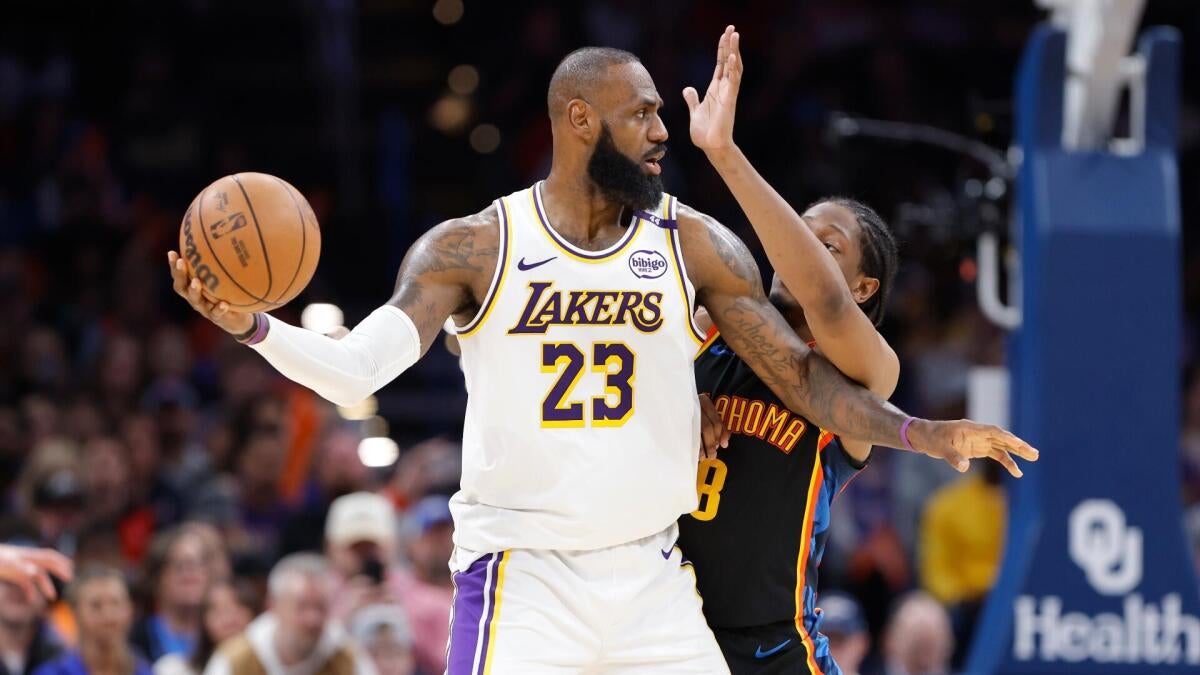
LeBron James signed a two-year, $8 million deal with the Philadelphia 76ers on Friday, turning a late-career redemption arc into a championship-or-bust calculation. The 41-year-old, who spent last season earning $52.6 million with the Lakers, announced the move via social media around the same time ESPN's Shams Charania reported the news. James had genuinely considered retirement after 2025–26 but returned with a singular focus: winning again. The 76ers, already transformed by the Jaylen Brown trade (swapping Paul George and two future firsts), now field a projected starting five of James, Tyrese Maxey, VJ Edgecombe, Brown, and Joel Embiid under Nick Nurse. It's a theoretically elite group on paper—four All-Stars with championship pedigree, a Finals MVP from last season, and a 2023 MVP-caliber center.
Oddsmakers responded with brutal efficiency. The 76ers' title odds tightened from +2000 (post-Brown acquisition) to +1000 immediately after James' commitment, settling at +950 by Tuesday. Their Eastern Conference championship odds sit at +360, just 30 points behind the defending-champion Celtics at +330. The Spurs (+250), Thunder (+260), and Knicks (+900) remain ahead in the overall title market, but the 76ers have compressed into that tier-one conversation in a franchise move that transformed their offseason from aspirational to genuine contention.
The structural problem for the 76ers—and the analytical edge for sharp bettors—is that adding a 41-year-old scoring force to a five-player core doesn't scale linearly. James averaged 16.3 points per game last season on 43% TS with the Lakers, a floor-spacer role that complemented LeBron's primary creation responsibility. But in Philadelphia, he enters a roster where Maxey (19.8 ppg), Brown (23.2 ppg in Boston), and Embiid (33.1 ppg in 2023 before injury absences) all demand offensive gravity. The mathematical reality: someone's scoring load shrinks. Likely candidates are Maxey (who may slide to 16–18 ppg in a four-guard/three-forward net rating) and Edgecombe (floor minutes volatile; role unclear in a crowded perimeter). Embiid's health remains the fulcrum—if he plays 65+ games, the 76ers' title odds are too generous. If he misses 20+ games again, the odds are a steal for someone else.
For individual props, the redistribution creates a vulnerability the market hasn't fully recalibrated. Maxey's points over/under line will likely be posted at 19.5–20.5, anchored on his recent volume; bettors should lean unders in October and early November as the offensive balance stabilizes and James' role becomes clear. Embiid's assists line (likely 3.5–4.0) could overcorrect upward if the market assumes increased playmaking in a four-All-Star offense; instead, expect his APG to dip slightly as James reclaims some creation duty and Nurse's system emphasizes spacing over ball-movement. Brown's production in green remains the wildcard—he's a six-man option who can explode on volume nights, but his ceiling is capped by Embiid's post touches and James' mid-range preferences. Track early-season splits by opponent defensive scheme. Against switching defenses, Maxey's assists should pop (7.5+ per game); fade his points props those same nights.
The James signing is a legitimate title contender bet at the right price. But its edge is structural, not emotional. The 76ers' late-season 76ers props carry real value only if you isolate the causation (Embiid's health, Maxey's role compression, James' limited-volume floor) and bet on regression mechanics, not narrative momentum. Early money will chase Embiid and Brown; the real edge is fading Maxey volume in the first 15 games while the offense stabilizes.