NBA · transaction
Giannis Trade Resolution Looms: How Celtics-Heat Final Act Reshapes Eastern Conference Betting Landscape
The Bucks' two-year standoff with their franchise cornerstone ends Tuesday; the identity shift—whether Celtics acquire a third star or Heat remake their core—resets season-long prop assumptions for three organizations.
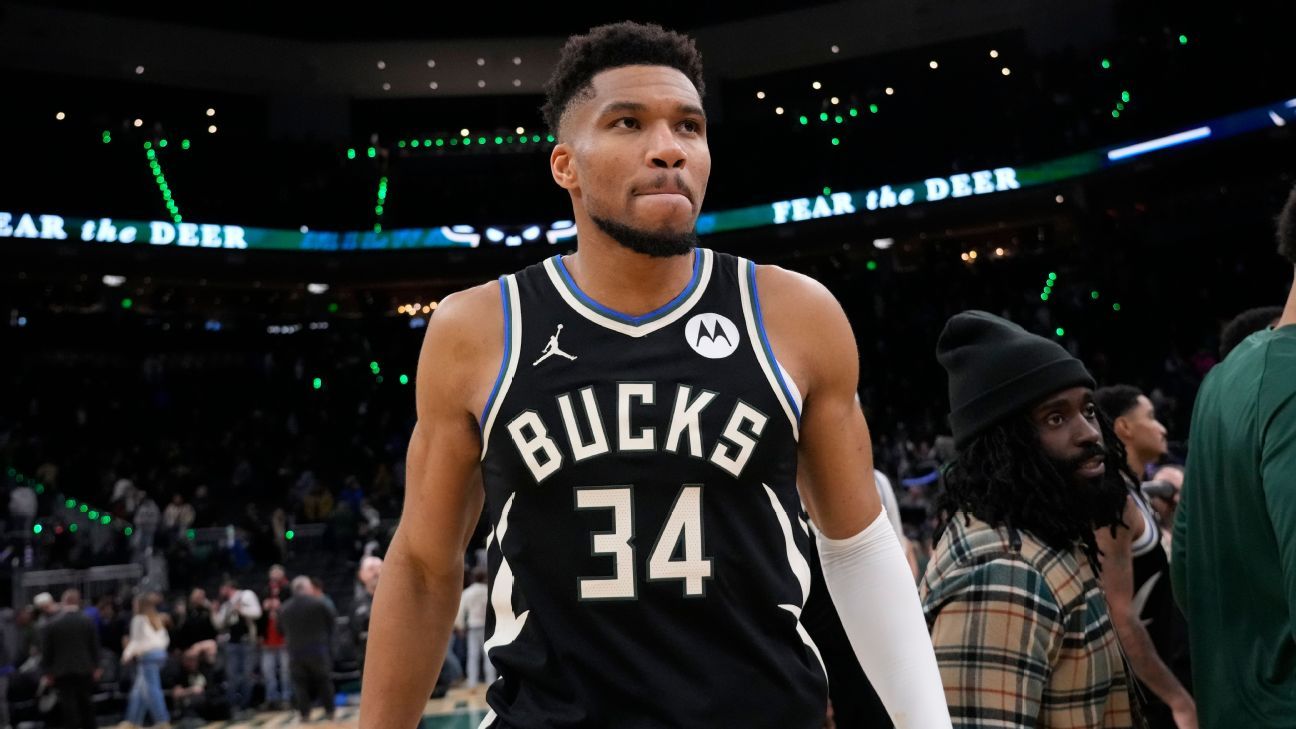
Giannis Antetokounmpo is headed out of Milwaukee before the NBA draft starts tomorrow, with the Celtics and Heat as finalists to acquire him. Per ESPN's Shams Charania, the Bucks have narrowed negotiations to these two teams after over a year of internal conflict: Antetokounmpo first signaled openness to a move in May 2025, then explicitly requested a Knicks trade last summer before the Bucks held firm. That resolve crumbled this season. The franchise limped through a dysfunctional campaign with their two-time MVP openly ready to leave, talks stalled at the trade deadline, and the relationship fractured beyond repair. Now the Bucks face a binary choice: Boston's offer centers on Jaylen Brown—a direct star-for-star swap that would reunite two All-NBA talents in green—while Miami counters with cost-controlled rotation pieces and draft capital anchored by the 13th pick.
Boston's path is the more aggressive restructuring. The Celtics went 56-26 as the East's second seed despite Jayson Tatum playing injured for most of the season; Brown carried the load with a career-high 28.7 PPG. Trading him for Antetokounmpo creates an intriguing question: does a fully healthy Tatum paired with a two-time MVP produce a more sustainable trio than Tatum, Brown, and their current supporting cast? The math favors it, but it hinges on Tatum's health. Miami's pitch is lower-variance but narrower: they're 43-39 mediocrity in search of a lead star. Adding a top-five global talent fixes that ceiling, but the Heat would lose flexibility and punch less hard up front without the complementary pieces Boston or Milwaukee can offer. The Bucks, notably, rejected any three-team involvement—this is bilateral negotiation, not a chaotic marketplace.
For sportsbooks and bettlers, the implications arrive in cascades. A Celtics acquisition revalues Boston's season-win total, championship odds, and every player prop for both Brown (now in Milwaukee, lower-usage environment relative to Boston's pace) and Tatum (offensive load potentially elevated if the Bucks deal clears cap space for secondary playmakers). A Heat acquisition cradles Miami's over-under and playoff probability modeling—going from 43-39 to a Big Three with Antetokounmpo and Adebayo fundamentally shifts their tier. Milwaukee becomes a full teardown with near-zero contention window unless they package Brown and depth into another star acquisition, tanking their win total.
The most immediate betting edge lies in pre-market overreaction to the acquiring team's total and overs. Markets will likely spike the Celtics' win projection by 3–4 games and Miami's by 5–7 games within hours of announcement, driven by the simple fact of star acquisition without accounting for three-year injury risk, integration lag, or roster constraints. Tatum's injury history is documented; the Celtics without him were a 53-win pace last season even with Brown solo-carrying stretches. If he returns fully healthy, a Tatum-Antetokounmpo pairing is a legitimate Finals threat. But books will price that ceiling-case scenario at open, not the median outcome. Conversely, Miami's addition of Antetokounmpo without major salary-cap relief means their bench depth suffers—overs on their totals early in 2026-27 will carry sharp layoff opportunities once they hit small-sample-size variance peaks in October and November.
The Milwaukee side is the most interesting for contrarian prop flow. If the Bucks exit this deal without acquiring a replacement star, their team total for 2026-27 will crater, and unders will be live at any number above 38 wins. That floor assumes they reset with young assets and picks. However, if leaked trade packages suggest Milwaukee flips their return capital into a secondary star—think a third team acquiring picks and using them to swing for a different All-Star—their win total could stabilize around 42–45. Watch the Bucks' opening season total closely; if it lands in the 38–42 range without announced star acquisition, that's a structural value play on the under.