NBA · discipline
Heat's Giannis Gambit Demands Shooting Depth—And They're Chasing It Hard
Miami traded its bench to land Giannis but now faces a narrower path to complementary scoring; their draft and free-agent strategy reveals what they think they need to avoid becoming Milwaukee 2.0.
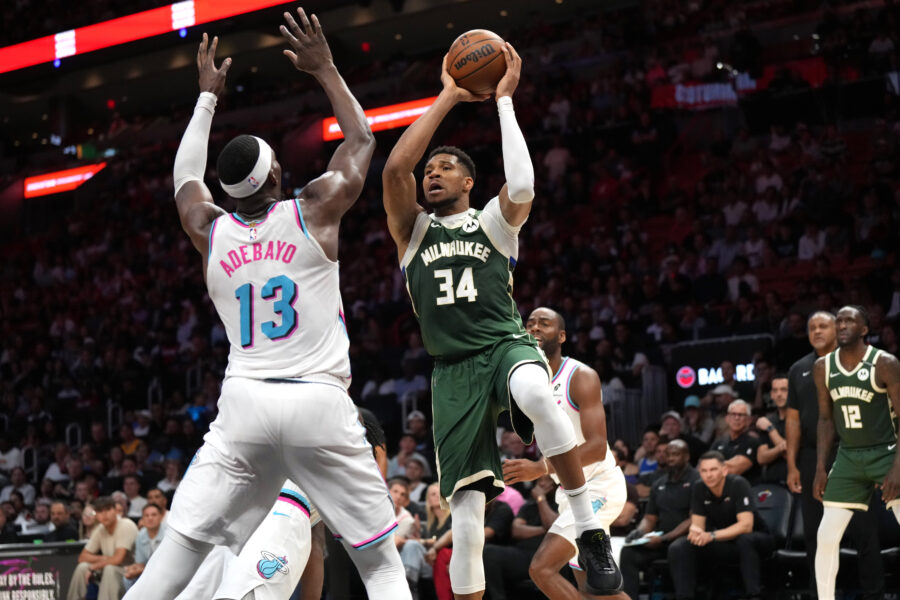
Miami has completed the biggest move of the offseason, acquiring Giannis Antetokounmpo from Milwaukee. The cost was steep—the Heat surrendered most of their young rotation depth—but they've retained two financial tools to rebuild around their new centerpiece: a $14.5 million taxpayer midlevel exception and a $16.8 million trade exception (carried over from last summer's Duncan Robinson sign-and-trade). One of those tools is already earmarked for Bobby Portis, the big man included in the Giannis package. That leaves Miami operating with a narrower margin for error than they had entering free agency.
The Heat's roster construction now hinges on a single insight: spacing. With Giannis's offensive limitations in isolation and limited three-point volume, Miami needs wings and guards who can shoot. The team has already moved—they traded up to grab Ryan Conwell, a Kentucky sharpshooter projected to hit 37% from three (a top-five percentile mark among the 650 players the organization studied). That draft move signals an internal valuation: Miami believes Conwell's floor spacing matters more than the win-now capital they spent to move up for him. Now they're calibrating free-agent targets: Tim Hardaway Jr., Quentin Grimes, Tobias Harris, and Harrison Barnes are all on their shortlist. These are rotation pieces, not stars, but the mechanism is clear—Miami is optimizing for catch-and-shoot gravity rather than secondary creation.
The danger is palpable. Giannis was a 47% three-point shooter last season, his best mark ever, but that came with a carefully constructed Bucks offense that lived on spacing and drive-and-kick execution. Milwaukee had Damian Lillard hitting 38% from three on over 8 attempts per game. Miami has Bam Adebayo, an elite two-way big but a non-threat from distance. If the Heat can't replicate that perimeter spacing—if Conwell is overmatched early and their midlevel exception lands a fringe rotation piece—their offensive ceiling collapses. The math is unforgiving: Giannis's playmaking loses value without shooters to spray the ball to.
For prop bettors, this is a team in structural flux. Giannis's assists total for 2026-27 will hinge entirely on the caliber of shooters surrounding him. If Miami lands a legitimate wing (Harris or Barnes fits that profile), expect his assists to migrate toward his 9.2 assists-per-game range from his Milwaukee years. If they settle for marginal talent, expect a regression toward 7.8-8.2, a mark that reflects increased defensive attention and fewer open reads. The Heat's draft pick and their free-agent tinkering are not noise—they're a real-time gauge of how much spacing Giannis will actually have. Watch for Hardaway or Grimes signings specifically; both would materially improve Giannis's playmaking floor. Conversely, if Miami finishes free agency without a credible third-option shooter (beyond Conwell), Giannis's assist lines will be undervalued early in the season, because the market is pricing in his raw talent, not the roster's ability to convert his looks into baskets.