NBA
Trae Young Declines $49M Option, Testing Market After Injury-Ravaged Season
A player option rejection opens a sideways summer for Washington, but Young's free-agency path hinges entirely on whether NBA teams believe his 2025-26 collapse was injury-driven or a sign of lasting decline.
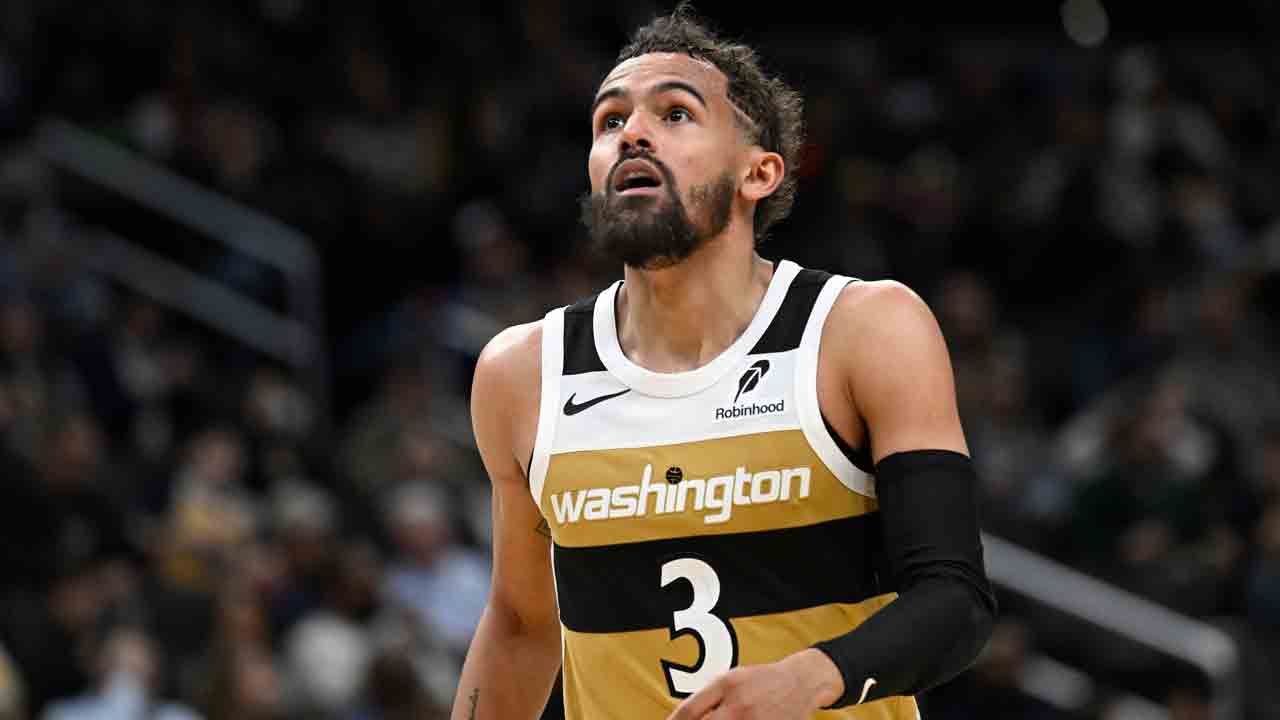
Trae Young is walking away from $48.97 million and hitting free agency this July. The Washington Wizards guard announced his intention to decline his player option for 2026-27, per ESPN, setting up a fascinating test of the market's memory. Young played only five games for the Wizards after arriving in a January trade from Atlanta—limited by knee, thigh, and quad injuries that also restricted him to 10 games with the Hawks before the move. In those 15 combined appearances, he averaged 17.9 points and 8 assists, career lows that look like they were written in pencil.
Context matters here, and it's the only thing keeping Young from becoming a cautionary tale. Before the injury cascade, Young had been a legitimate offensive engine for eight seasons. He averaged 24-plus points from 2019 through 2025, hit 29.6 PPG in 2019-20, made four All-Star teams, and won the 2024-25 assist title at 11.6 dimes per game—a number that reflects the playmaking DNA that made him coveted in the first place. His career splits (43.3/35.2/87.2) and 58% true shooting mark him as genuinely efficient. The question teams will wrestle with is structural: Did the injuries simply derail a full season, or did they expose something about his durability that will persist?
The Wizards have signaled they remain the frontrunner for his services, which is a telling internal valuation call. Washington isn't running from Young; they're positioning themselves as his most patient suitor heading into a negotiation that will be heavily discounted by what happened in 2025-26. The team bet on his talent eight months ago and isn't abandoning that thesis after a half-season footnote. But Young's market leverage just took a hit. He was a 24+ PPG scorer with All-NBA pedigree three months ago. He's now a guard who didn't finish a season and is entering free agency off career-low production. The contract he signs will reflect the 17.9 PPG version far more than the 2024-25 version.
For betting purposes, this creates an immediate prop environment shaped by uncertainty rather than confidence. If Young re-signs with Washington on a shorter deal—the likeliest scenario given the Wizards' frontrunner status—his assist and scoring props in 2026-27 will depend entirely on health and opportunity. The market will price him as a reclamation play for the first two weeks of the season; if he logs 25+ minutes and stays healthy through October, overs on his assist total (likely 7.5-8.5 range) could offer value as his playmaking instincts resurface. Conversely, early unders on his scoring (likely 18-20 PPG range) carry execution risk—he may just not be the same player post-injury. The injury narrative is too recent and too severe for the public to have priced in full degradation yet, but it's fresh enough that any healthy games will trigger public recalibration upward.
Watch the contract structure closely. A one-year deal with Washington signals mutual caution and creates a high-variance season where overconfident overs on his full-season volume props become attractive fades—the Wizards will monitor for durability, not push for heavy minutes. A multi-year deal elsewhere would indicate a team is betting fully on health recovery and willing to pay for upside, which would skew props toward overs as that team seeks to maximize his playmaking. The real edge emerges after free agency closes and health data from July and August training camps filters in. Until then, the angle is triage: identify whether the player getting the extension is a cautious Washington re-sign or an ambitious outside suitor, then size your confidence in his volume props accordingly.