Trae Young Opts Out: Why Washington Remains the Favorite, But the Market Just Opened
By Justin Erickson ·
By declining his $49 million player option, Young signals he's testing free agency—but the numbers still point to a Wizards reunion on a restructured deal.
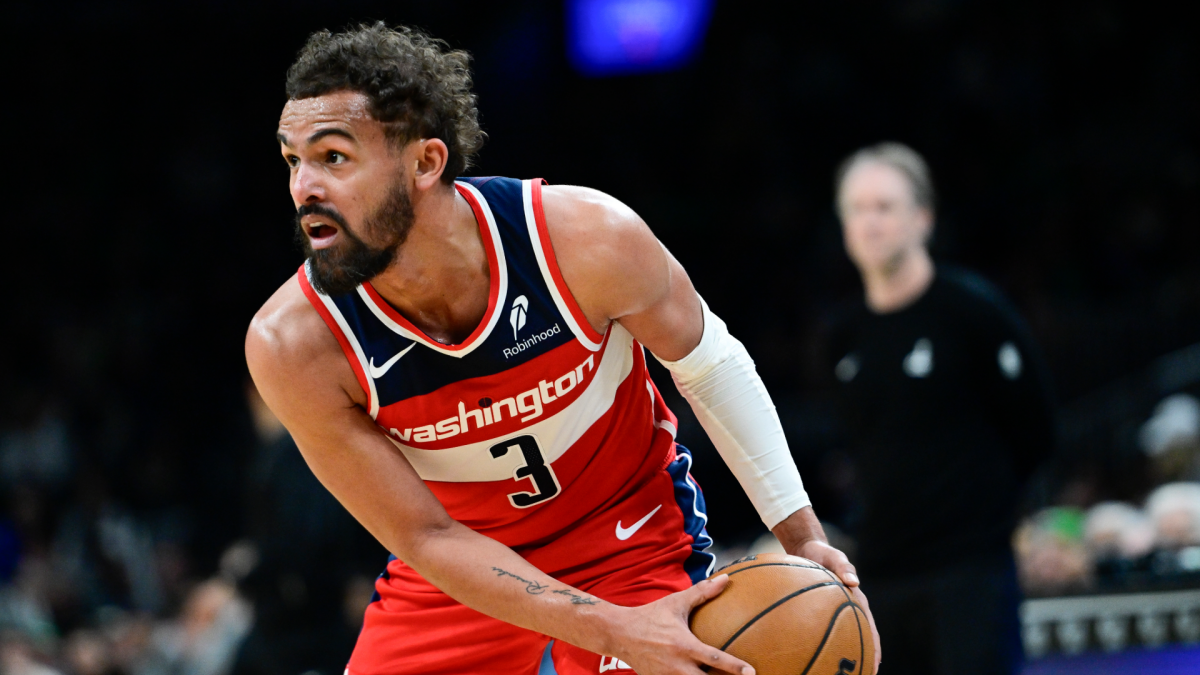
Trae Young has declined his $49 million player option with the Washington Wizards, becoming an unrestricted free agent when the league's offseason officially opens in 11 days. The move is counterintuitive on its surface: Young is turning down guaranteed money in a weak market. The Hawks dumped him at the February deadline for Corey Kispert and an expiring CJ McCollum contract—a cap dump, not a prize acquisition. Yet the timing and mechanism reveal what Young is actually doing: optimizing the structure of a Washington deal while briefly testing whether anyone else will seriously pay.
The Wizards are still the overwhelming frontrunner to retain Young, per reporting from June 8 citing league expectations of a three-year, $120 million extension. That number has remained consistent since the trade deadline. The opt-out actually helps both sides recalibrate. On his $49 million salary for 2026-27, Washington would have had roughly $11 million in cap room below the luxury tax. By opting out, Young creates a negotiating tool: the Wizards can now structure a lower 2026-27 salary—potentially in the $15 million range—that taps into the nontaxpayer mid-level exception while still delivering the full three-year, $120 million total over the deal's life. Washington gets optionality and tax relief. Young gets security and the appearance of market testing without actually leaving.
Other teams are circling, though not with the firepower to displace Washington. Miami mentioned him as a Giannis Antetokounmpo contingency plan. The Nets and Bulls have cap space, but neither is in a position to promise contention in a Young timeline. The Lakers lack the salary cap flexibility and have legitimate concerns about Young's defensive limitations alongside LeBron. Young expects max-level interest, per reporting from June 15, but the infrastructure required to sign-and-trade him adds apron complications and base-year compensation headaches that would've been negotiated before he opted out. The fact that he opted out instead suggests no imminent trade was on the table.
From a betting lens, Young's market situation carries immediate implications for Wizards team composition and offensive rhythm. If he re-signs on a frontloaded, tax-efficient deal—paying him $13-15M in 2026-27 with backloaded years—Washington can deploy the mid-level exception to address backcourt defense and wing depth without punting luxury tax savings. Young's assist rate last season was 8.7 per game, depressed by injuries and role compression in Atlanta; in Washington's less-crowded offensive ecosystem, his 2026-27 assist projection could normalize to 9.0-9.5 per game, especially if the Wizards add a respectable pick-and-roll roll man. That structural certainty—Young staying, money freed up for complementary pieces—makes Wizards team totals and Young's individual assist props more predictable. A deal done before training camp eliminates offseason limbo and contracts-on-the-mind distractions that bleed into early-season inconsistency.
The betting market will reprice Wizards futures and Young's player props downward over the next 10 days as the opt-out narrative settles into a re-signing. Early-market overreactions to free-agency chaos will fade once a deal is announced. The edge is not in chasing a Young departure—the structure of this opt-out was designed to keep him in Washington, not create a real exit. The edge is in fading panic-selling on Wizards season win totals and team-total overs if they spike on uncertainty in the 48 hours before a deal is finalized.