Trae Young's $120M Wizards Extension Points to Win-Now Timeline—and Payroll Crunch
By Erik Schwartz ·
A three-year deal locks Young into Washington's core, but the math on their young roster's upcoming raises reveals the franchise is gambling on immediate contention.
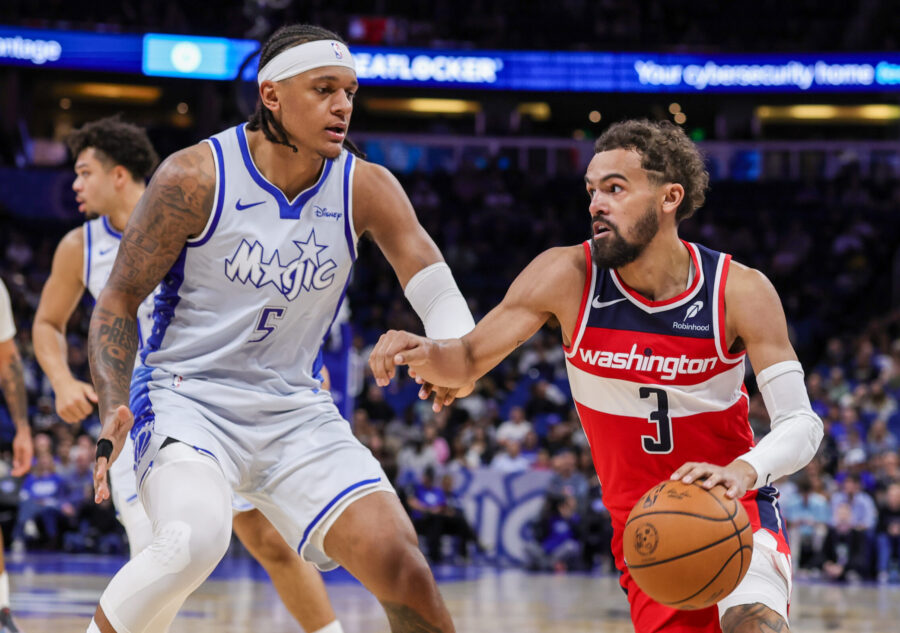
Trae Young is expected to decline his $49 million player option and sign a three-year extension with the Wizards in the $120 million range, per Marc Stein. The move signals Washington's commitment to Young as a franchise centerpiece following his mid-season acquisition, and it also locks in a critical piece of their on-court architecture before the free agent market could reset his value. For a team that traded for the Atlanta Hawks' All-Star point guard mid-season, this represents the clearest statement yet about their competitive timeline: they believe they can contend NOW, not in 18 months.
But the extension carries a harder message underneath. Young's deal at roughly $40 million per year isn't exceptional for a primary playmaker of his caliber—it's market-rate for a star in his prime. What matters more is the sequencing. The Wizards' young rotation players (think their lottery picks and recent acquisitions) will soon graduate from rookie-scale contracts to market-rate salaries. That's the fiscal pressure point. Once those raises hit—typically in years two through four of a drafted player's tenure—the flexibility to add secondary talent disappears rapidly. The Wizards are betting they can contend and win during THIS window, before the compounding salary obligations make mid-level trades and free agent signings impossible.
This creates a binary outcome for Washington: either Young's arrival accelerates the team's competitive arc enough that they're contending for playoff seeding within the next two seasons, or the extension becomes an anchor on a rebuilding exercise they should have started years ago. There's no middle ground where they tread water with $40M/year tied to a high-volume ball-handler. The margin for execution is thin.
For prop bettors, the extension has secondary but measurable value: Young's guaranteed role is now solidified, which means his per-game touch rate and assist opportunities will remain consistent (barring injury). A point guard locked into a $120M deal on a win-now team doesn't get benched or reduced in fourth quarters for cost-containment reasons; he plays clutch situations and season-critical moments. His assist line—likely somewhere in the 8.5-9.5 range depending on opponent pace—becomes a more reliable season-long prop than if he were auditioning for free agency or uncertain of his role. The market will price Young's assists around expectation, but the durability of his role (three years guaranteed, no opt-outs or voidable clauses rumored) reduces variance. In a league where per-game props fluctuate based on rest days and role uncertainty, a locked-in star's touches carry predictive weight.