Trae Young's Free Agency Opens a Market Reset—and a Wizards Roster Risk
By Justin Erickson ·
Young's option decline sends him to open market Monday, but his mid-season MCL injury and late-season scarcity leave his value far below the $229M extension he chased last fall.
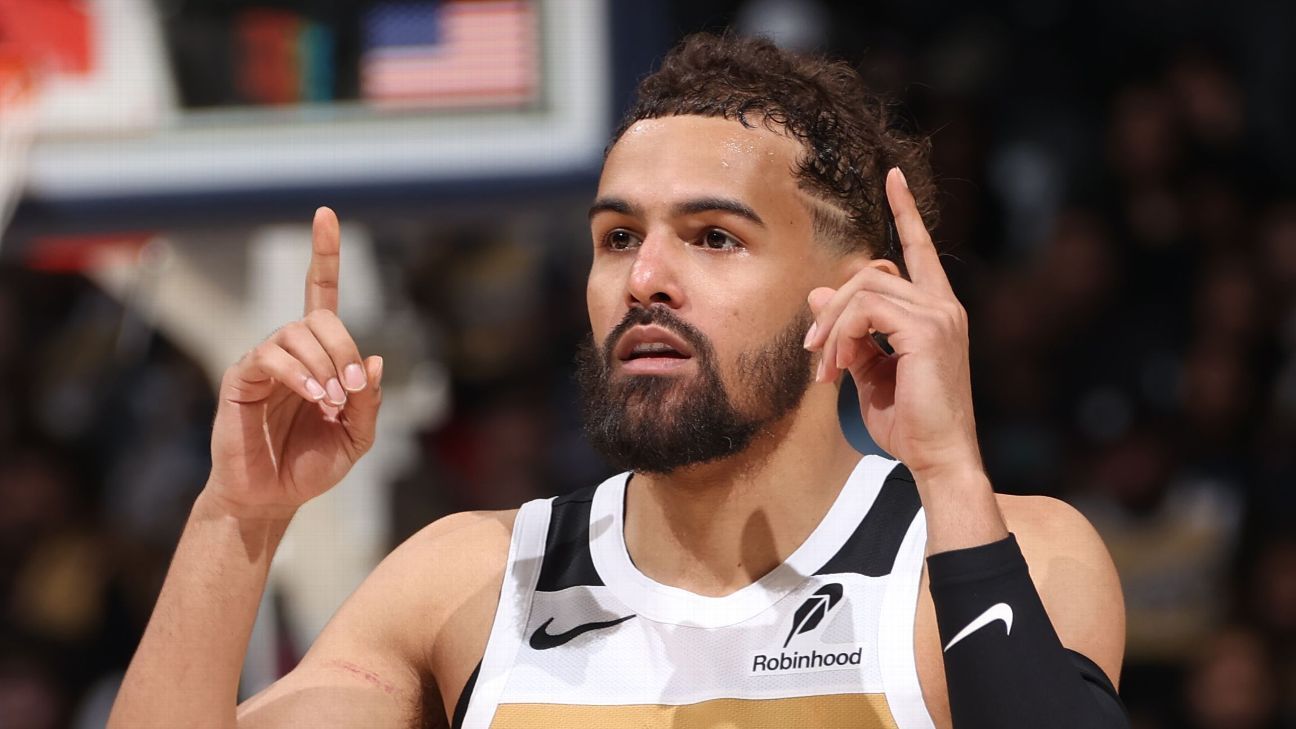
Trae Young will decline his $48.97 million player option for 2026-27 and hit free agency Monday, sources confirmed to Andscape's Marc Spears on Wednesday. Washington remains the frontrunner to retain him, though multiple teams are expected to circle. The move marks a dramatic reversal from Young's preseason posture—he entered 2025-26 intent on proving himself worthy of a four-year, $229 million max extension while leading the Hawks toward Eastern Conference contention. That narrative collapsed in the fifth game, mid-October, when a right MCL sprain sidelined him until mid-December.
The timing and scope of Young's absence fundamentally altered his leverage. He suited up for only five games with Atlanta before the Hawks—convinced they'd glimpsed enough in Jalen Johnson's upside—shipped Young and draft capital to Washington in early January for CJ McCollum and Corey Kispert. Young then played just five games for the Wizards, finishing the season with 17.9 PPG and 8.0 APG across both franchises over 15 total appearances. Compare that to his eight-year career average of 9.8 assists per game: the lost reps, the rust, and the injury recovery created a six-month gap between his last competitive stretch and free agency. The market doesn't reward narrative intent; it prices floor, and Young's floor is now a question mark—not a $48 million asset.
Washington's calculus hinges on whether Young and Anthony Davis, acquired last season, can function as a win-now two-man core alongside a lottery-stocked young wing group (Alex Sarr, Kyshawn George, Tre Johnson, Will Riley, Bub Carrington) and the presumed No. 1 overall pick arriving next week. The Wizards lost 64-plus games in each of the past three seasons and are betting Young's playmaking and penetration unlock the ceiling those prospects haven't reached. But that bet requires Young to recover not just his health but also his shot-creation authority—and both remain untested in a high-volume, late-season setting. The Wizards have depth at ballhandling (Carrington, George), meaning Young's assists line may not inflate to his career average even if he stays healthy.
From a player-prop lens, Young's assists total carries invisible variance baked into the odds. Sportsbooks will likely post his 2026-27 season-long assist average near his career 9.8 mark, anchoring on historical averages while discounting the 2026 injury-and-scarcity discount. If Washington re-signs him at something below $40 million annually—a realistic outcome given his diminished leverage—Young will see moderate early-season usage while Davis commands closer touches, especially in fourth quarters. That usage split depresses assist volume below what his career line suggests, creating an under bias on assists props in October-November if they open at 9.5 or higher. The edge dissolves once the offense stabilizes post-All-Star break, so early-season unders on Young's assist props represent a tactical angle rather than a season-long conviction play.
Young's declining option also signals Wizards management's willingness to let market forces—not their own offer—determine his new deal. That's a cost-control move, not a confidence statement. It means expect a one-year, incentive-laden pact or a two-year setup with an out clause, not the long-term security that projects usage certainty. In a fragmented offense with Davis, Sarr emerging, and a rookie wing lottery pick all contending for touches, Young becomes a complementary play-driver rather than a centerpiece. The analytics-minded should treat his 2026-27 assist line as artificially high until that role crystallizes.