NBA · transaction
Thunder Dismantle Championship Core: Dort to Hawks Signals Oklahoma City's Pivot Away From 2025 Title Team
Lu Dort's departure ends seven years of elite perimeter defense in Oklahoma City and forces a recalibration of Hawks and Mavericks offensive and defensive identities heading into next season.
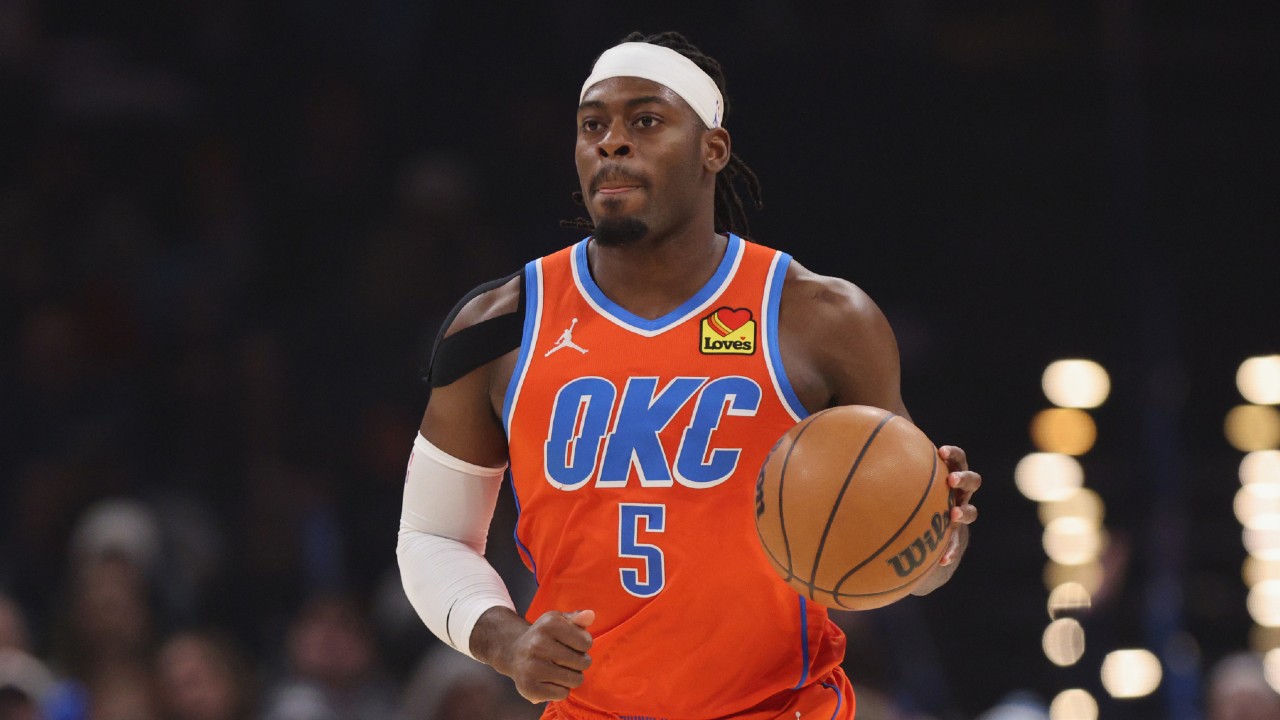
The Oklahoma City Thunder traded guard Lu Dort to the Atlanta Hawks on Sunday as part of a three-team deal that also sent Ryan Nembhard from the Dallas Mavericks to Atlanta, with Dallas acquiring 2024 top-five pick Zaccharie Risacher in return. Oklahoma City received three second-round draft picks as compensation for Dort, marking a watershed moment: the franchise is actively dismantling the roster that won the 2025 NBA championship less than five months ago.
Dort, 27, spent seven seasons with the Thunder after entering the league as an undrafted free agent in 2019. He evolved into one of the league's most reliable perimeter defenders, earning All-Defensive First Team honors and averaging 11.6 points, 3.8 rebounds, and 1.6 assists per game. His offensive role was narrowly defined—catch-and-shoot wing who rarely initiates—but his two-way value in playoff basketball made him a cornerstone of Oklahoma City's title run. The Thunder's decision to move him for draft capital rather than a star-level return suggests either financial constraint or a deliberate reset. Either way, the championship window is closing faster than expected.
Atlanta's acquisition adds defensive versatility to a roster built around Jalen Johnson's scoring and shot creation. Dort can defend positions 2 through 4 at a switchable level, which matters when the Hawks face spacing-heavy offenses. However, Dort is not a ball-creator; his assist rate (1.6/game in 2025-26) ranks in the bottom quartile of wing players. This means Atlanta's offensive load on Johnson intensifies. The Hawks also added Aaron Wiggins and now own three Canadian national team members (Dort, Nembhard, and Nickeil Alexander-Walker) plus president Onsi Saleh from Edmonton, but roster chemistry and shooting gravity are separate concerns. Nembhard (5.3 assists per game on 6.6 PPG last season) gives Atlanta a reserve ball-handler, but his creation metrics don't suggest he's a threat to eat into starter usage.
For prop betting, the Dort trade reshapes Hawks wing-scoring distribution. Johnson's usage rate and scoring volume should rise; Dort's addition signals defensive investment, not offensive depth. When Atlanta plays teams that switch and force perimeter creation, Johnson touches will climb and his point total should trend higher. Expect Johnson's PPG props to price slightly lower than his season rate (he averaged 21.8 PPG in 2025-26) because the market assumes Dort's arrival spreads the offensive workload. In fact, the opposite occurs: Dort's role is to defend and spot-shoot, freeing Johnson to attack downhill more often. Back Johnson point totals when the Hawks face switch-heavy opponents early next season, before the market recognizes that Dort doesn't dilute Johnson's scoring opportunity—he enables it.
Oklahoma City's three second-round picks represent a bet on depth and development. The Thunder are no longer title contenders in 2026-27; they're in reset mode. Dallas betting on Risacher's upside is speculative—the Mavericks hope a change of scenery catalyzes his development, but his per-game averages (5.2 PPG, 3.1 RPG in 2025-26) offer no evidence of imminent impact. Fade Risacher scoring props for at least the next 10 games while Dallas integrates him; his minutes will climb before his ceiling reveals itself.