NBA · transaction
Kawhi to Toronto Finally Official: How the Raptors' New Superstar Resets Their Title Window
After 11 weeks in limbo, the Raptors-Clippers trade cleared league approval on Monday, injecting a championship-caliber perimeter scorer into Toronto's rotation before training camp opens in fewer than six days.
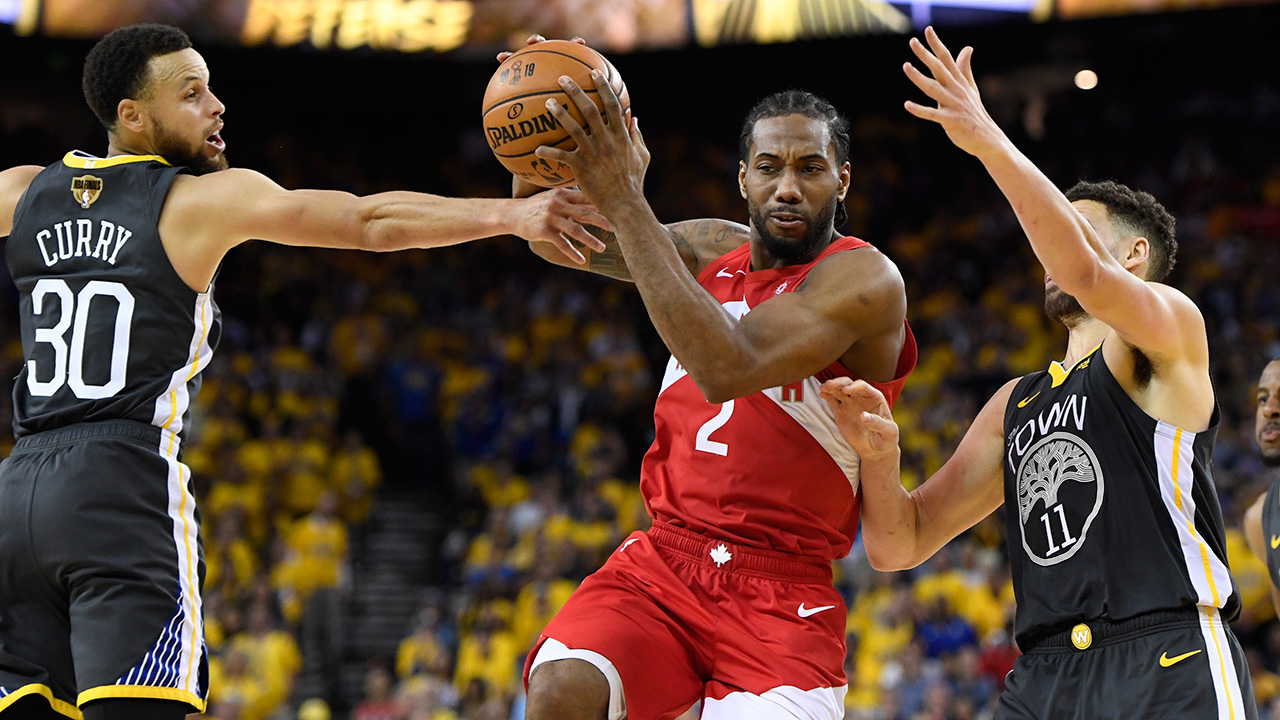
The Toronto Raptors' trade for Kawhi Leonard became official Monday night, capping 2.5 months of suspension that began when the NBA opened an investigation into the Los Angeles Clippers' salary-cap circumvention scheme in early July. The deal—sending Brandon Ingram, Gradey Dick, two future first-rounders (2031, 2033), two second-rounders, and a 2027 first-round pick swap to Los Angeles—had been agreed to on June 30 but froze on July 9 pending the league's findings. Commissioner Adam Silver's public endorsement of owner Steve Ballmer's acceptance of a $30 million fine, staff suspensions, and the loss of five future first-round picks on Tuesday cleared the final regulatory hurdle, allowing the Clippers to finalize the transaction.
The structural delay created genuine organizational uncertainty in Toronto, but it never threatened the deal's fundamental logic. The Raptors understood early that Leonard's salary-cap status would remain unaffected regardless of the investigation's outcome—the circumvention scheme predated his involvement and carried no eligibility strings attached to his availability this season. What extended the timeline was Ballmer's initial posture: weeks of silence and veiled threats of legal action suggested the Clippers ownership might contest the penalties rather than absorb them. When Ballmer signaled acceptance Sunday night, the path cleared almost immediately. A single call Monday from Clippers GM Trent Redden to Raptors GM Bobby Webster reactivated a deal that had been architecturally sound but administratively frozen.
Toronto's cost—three future assets with legitimate rotation/borderline-star potential (Ingram and Dick, most notably) plus multiple draft capital—reflects how severely the organization values a healthy, prime-window Kawhi. The Raptors are betting that a 34-year-old wing who averages 22.4 PPG on 51% two-point, 40% three-point, and 89% free-throw shooting over his career can compensate for the depth surrendered. That calculation hinges entirely on durability and availability: Leonard has played 58, 52, and 68 games in his last three seasons. Training camp opens in fewer than six days. His conditioning and integration timeline remain uncharted.
For prop players, the Leonard signing creates a framework shift that won't stabilize until October 22, opening night. His usage rate, pick-and-roll frequency, late-game touch allocation, and spacing impact on Scottie Barnes (and vice versa) all hinge on offensive system design and health. Early-season props on Leonard's scoring (his most reliable volume edge across roles) carry elevated variance because Toronto's actual perimeter distribution won't crystallize until game-flow data emerges. Similarly, Barnes's assist floor may contract if Leonard commandeers isolation usage, or it may expand if Leonard's gravity creates secondary opportunities. Any pre-season line on Raptors wing/perimeter scoring should be treated as exploratory, not structural: the market will have better information by Week 2. The safer angle is to fade early overreactions to Leonard's performance in the first 1-2 games (blowouts or stellar debuts frequently get hammered by sharp money afterward) and wait for stabilized volume data before committing capital to his season-long props.