NBA · transaction
Rajakovic's Extension Seals Raptors' Bet on Kawhi Era
Toronto locks in its coach days after acquiring Leonard, signaling organizational confidence in a contender built around star wing talent and defensive intensity.
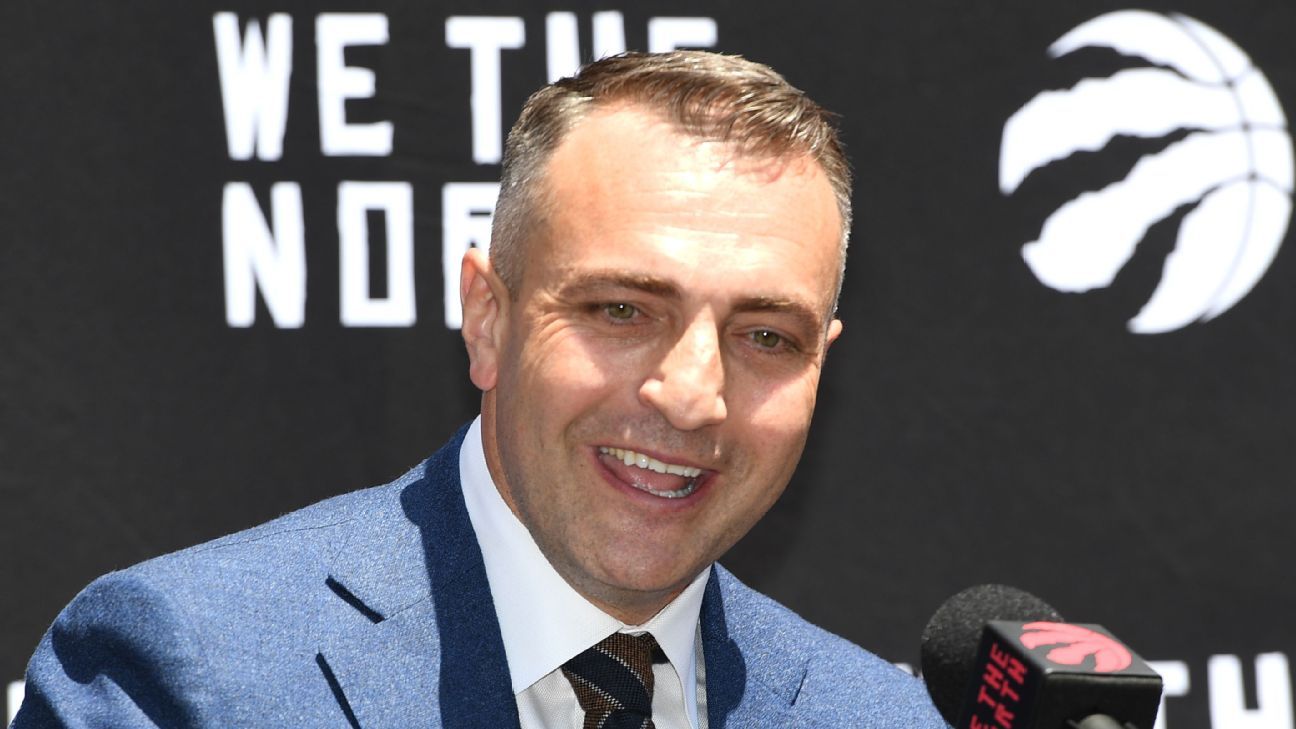
The Toronto Raptors signed coach Darko Rajakovic to a multiyear extension Thursday, less than 72 hours after trading for Kawhi Leonard. The move amounts to a dual commitment: the franchise is doubling down on Rajakovic's system while simultaneously banking on Leonard's presence to elevate a team that won 46 games last season and lost Game 7 to the Cavaliers in the first round.
Rajakovic inherited a decimated roster two seasons ago—Toronto had won 30 or fewer games in each of his first two years—and engineered a 16-win swing to 46 wins in year three. That trajectory, combined with an immediate playoff return, convinced the organization he was the architect worth building around. His 101-105 record masks a franchise reset; he proved he could develop young talent and impose a defensive identity on a team that had drifted. The Raptors dealt Brandon Ingram, Gradey Dick, two firsts, two seconds, and a pick swap to land Leonard, a trade that reorients the entire offense around a 35-year-old perimeter star who averaged 27.9 points in 65 games last season and carries two championship rings plus seven All-NBA selections.
Leonard's arrival creates an immediate offensive framework: isolation-heavy sets leveraging his mid-range lethality and playoff pedigree, pick-and-roll flexibility if Toronto adds more offensive creation, and the gravity of a two-way superstar who forces defenses to commit resources his direction. Rajakovic's defensive principles—switching, scramble recovery, length-based perimeter coverage—mesh cleanly with Leonard's on-ball prowess. The coach enters 2026–27 with cover-your-tracks security and a clear mandate: justify the Leonard price by delivering a second-round exit minimum, ideally a Finals run.
For prop bettors, Leonard's scoring and usage patterns anchor the offense in ways that matter for season-long and game-to-game modeling. Leonard's 27.9 PPG baseline carries variance—he played 65 of 82 games last season—but as the Raptors' primary scorer in isolation sets, expect him to sustain 26–29 PPG in regular-season play. The real angle sits with complementary scorers: Toronto must distribute 45–50 points nightly among its second and third options (likely a mix of existing depth and deadline acquisitions). Rajakovic's system historically demands ball movement and positional flexibility; high-volume scoring nights for role players become predictable when Leonard absorbs 35–40% of offensive possessions. That scarcity creates an asymmetric edge on unders for Toronto's bench contributors in games where Leonard plays 30+ minutes—the team can't turn over the ball to three different scorers simultaneously when one consumes that much volume.
The contract extension also signals stability in playmaking allocation. Rajakovic's guard-centric offenses have historically produced 20–22 team assists per game. With Leonard anchoring wing isolation and fewer three-ball reps flowing to non-shooters, assist totals for depth guards should compress relative to their individual PPG projections. Watch for assist undervaluation on mid-tier Raptors ball-handlers once the market prices in Leonard's arrival; Rajakovic's extension suggests the coach remains empowered to shape that distribution, not a scapegoat forced into line-up adjustments.