NBA · transaction
Robinson's Free Agency Leverage: Why the Knicks' Backup Center Has Leverage This Summer
Mitchell Robinson enters the market with genuine bidding interest, reshaping how New York values its rim protection depth.
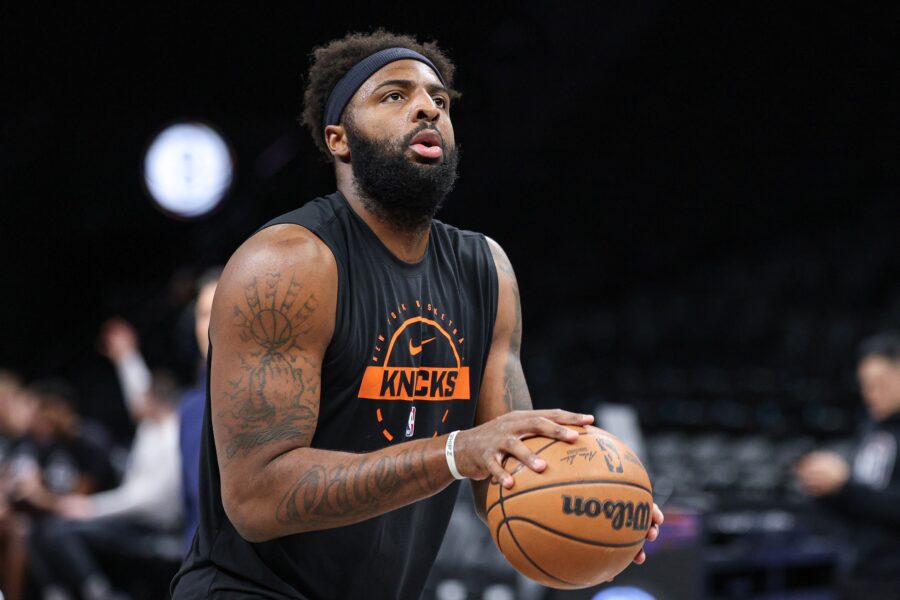
Mitchell Robinson is positioned to command significant external interest as an unrestricted free agent this summer, according to Jake Fischer's reporting. The Knicks' backup center, who has operated in the shadow of Julius Randle's starting role, now faces a market that values his defense and finishing ability more than the New York spotlight typically has. This mirrors the 2024 path of former Knicks center Isaiah Hartenstein, who tested free agency and secured a multi-year commitment elsewhere after proving his worth away from star shadows.
The mechanism driving Robinson's leverage is straightforward: rim protection and pick-and-roll defense remain scarce on the open market, and Robinson has delivered both without requiring offensive creation. His per-36 defensive metrics—block rate, paint defense efficiency, switching capability on smaller guards—track favorably against centers making $8–12 million annually. The Knicks' willingness to keep him on the bench while maintaining playoff spacing around Randle actually advertises Robinson's fit on teams seeking a true defensive anchor who doesn't demand offensive touches. Charlotte, Houston, and other depth-desperate contenders can justify a multi-year offer.
For the Knicks, Robinson's free agency creates a roster flexibility problem. If New York matches a sheet to keep him, it ties $10–12 million to a bench role. If it lets him walk, it loses low-cost rim protection and betting-reliability in rotations where Randle sits. The team's front office will calculate whether its championship window requires that insurance or whether pivoting to a young, cheaper center preserves flexibility for perimeter upgrades. That calculus directly affects Knicks rotations, pace-and-space availability, and the stability of Julius Randle's on-court partners down the stretch—all of which move prop totals and individual projections.
Bettors tracking Knicks playoff performance and rotation stability should monitor Robinson's agreement timeline. If New York re-signs him early, expect continuity in paint defense and lower variance in team totals when Randle leads fourth-quarter scoring charges. If Robinson signs elsewhere, the Knicks will lean heavier on spacing and perimeter firepower, raising both team pace and reliance on Randle's scoring volume—shifts that ripple through player props for Jalen Brunson (assist volatility increases without paint relief) and Randle himself (higher scoring pressure, slightly elevated turnover risk). The backup center market often gets overlooked in prop construction, but rotation certainty is a reliable edge ingredient.