Robinson's Finals Return Reshuffles Knicks Frontcourt Depth—But His Minutes Ceiling Stays Tight
By Justin Erickson ·
Mitchell Robinson is available for Game 1 after hand surgery, but his role remains a reserve pivot in a Finals matchup where depth matters more than roster size.
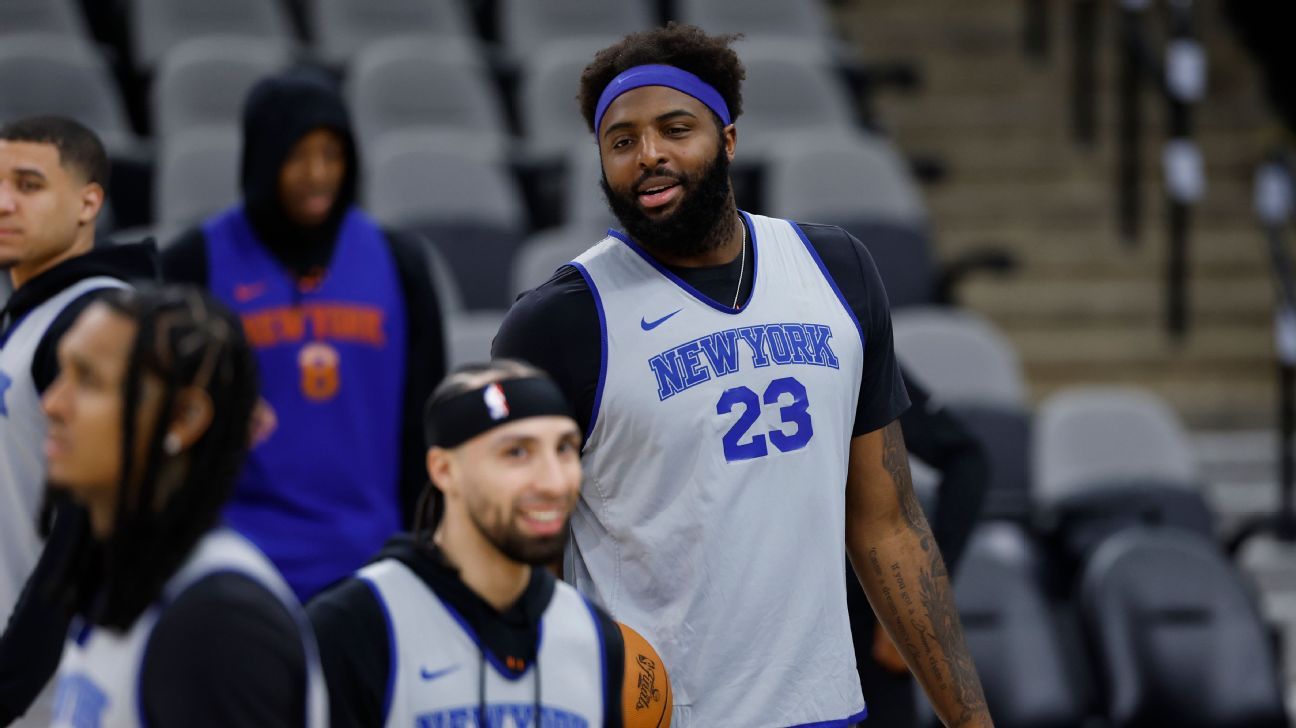
Mitchell Robinson will suit up for Game 1 of the NBA Finals against San Antonio on Wednesday, clearing a medical hurdle that threatened to sideline the Knicks center for the franchise's first championship run since 1973. Robinson practiced Tuesday following surgery on a fractured fifth metacarpal in his right hand, participating in light shooting and dribbling drills while wearing protective wrapping. ESPN reported he is listed as questionable, a formality; his availability was never in serious doubt once he took the court.
But availability and impact are different currencies in Finals basketball. Robinson has been a reserve presence all season, appearing in 13 of the Knicks' 14 playoff games while averaging 5.3 points and 5.5 rebounds in 14.2 minutes off the bench. He missed one game due to illness and his reduced offensive role reflects a Knicks depth chart where frontcourt touches flow primarily through higher-leverage players. Even returning from hand surgery, Robinson's offensive ceiling is constrained—his hand injury will likely limit his willingness to absorb contact on the glass or attack the rim early in his recovery, meaning the Knicks' frontcourt scoring burden remains concentrated elsewhere.
The real impact surfaces in matchup strategy. San Antonio's frontcourt presents a size puzzle that depth can actually solve; Robinson's ability to provide 12-16 minutes of rim protection and effort rebounding without needing offensive touches becomes more valuable in a seven-game series where fatigue compounds. The Spurs will likely lean on physical post offense, and a healthy Robinson—even operating at 70-80% of his standard elasticity—offers the Knicks another body to rotate through those possessions without forcing a star into foul trouble.
For prop purposes, Robinson's return eliminates a potential absence that would have compressed New York's bench minutes and forced heavier reliance on its core scorers. That compression would have naturally inflated usage rates for Jalen Brunson and Julius Randle, creating a false offensive efficiency floor. With Robinson available, the Knicks can distribute fatigue across the series. Brunson's assist total should remain anchored around his seasonal baseline rather than spike due to limited offensive options; similarly, Randle's scoring opportunities stabilize because the frontcourt doesn't collapse onto him to compensate. The available prop impact is modest but directional: Robinson's return removes upside pressure from Knicks star totals, making overs on Brunson points/assists less appealing at Game 1 numbers, and making Knicks team total overs slightly less vulnerable to forced offensive load-balancing.