NBA
Spurs' Game 3 Win Resets Finals Math: Why the Under at 216.5 Carries Real Leverage in Game 4
San Antonio's upset victory halted New York's 13-game postseason run and flipped the Finals narrative—but the scoring mechanics that built the Under case haven't shifted.
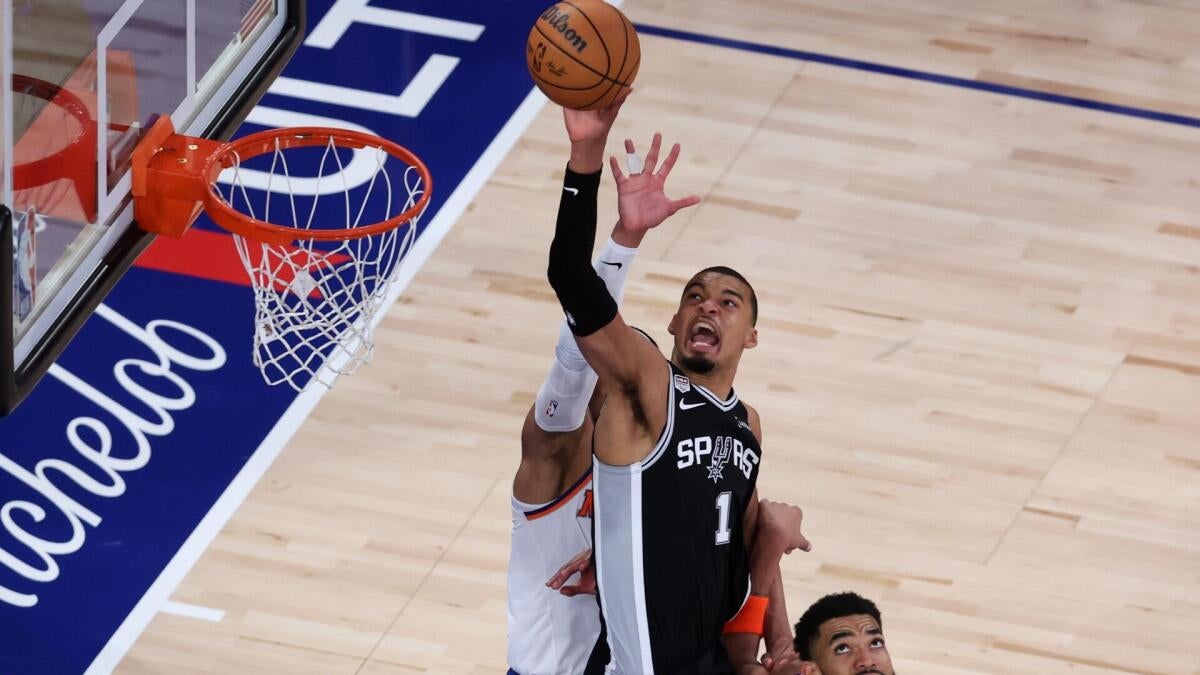
The Spurs walked out of Madison Square Garden with Game 3, snapping the Knicks' 13-game postseason winning streak and pushing the series to 2-1 New York. San Antonio's ability to steal a road game in the Finals—something the model's 10,000 simulations factored heavily—changes the psychological texture of the series, but it does not erase the underlying scoring trends that have defined this matchup.
The series opened with two consecutive Unders, Games 1 and 2 both falling short of their totals despite the Knicks' offensive arsenal. Game 3 cleared the Over (a rarity for both teams), but the arc matters: New York has gone Under in 53% of its regular-season games, San Antonio in 54%. Over a 10,000-game simulation set, the model projects 215 combined points for Game 4, with the Under hitting 54% of the time. That's not a marginal edge—that's a structural mismatch between market pricing (216.5) and the actual probability set. The model names only two players clearing 20 points: Victor Wembanyama for the Spurs and Jalen Brunson for the Knicks. That constraint matters because it means role players and mid-tier scorers are expected to underdeliver relative to their regular-season usage.
Wembanyama's presence as a defensive anchor compounds the Under case. His length forces New York's perimeter operation into tighter windows, and the Knicks have not solved the problem of creating clean looks against his frame. Brunson's scoring load will intensify—he's averaging north of 24 points per game in these Finals—but the model's simulation assumes he'll finish closer to 20 than 25, suggesting some fatigue bleed-through or improved Spurs perimeter coverage. Meanwhile, the Spurs' offensive efficiency without tip-ins and transition buckets (the byproducts of home-court urgency in Game 3) should normalize downward. Home courts generate pace and carelessness; neutral emotional territory breeds slower, more deliberate possessions.
The market has overweighted the psychological momentum of San Antonio's Game 3 victory and underweighted the compositional scoring truth: both teams play slow-tempo, half-court basketball by design. The 216.5 total assumes a return to Game 3's pace or higher, but the Knicks' defensive ranking and the Spurs' established slow-roll system suggest a reversion to the 212–214 range. For bettors tracking this series, the Under becomes a durability play rather than a one-off outlier, because the mechanism—two defenses that compress scoring lanes and two offenses that lack surplus creation—persists regardless of who wins the previous game.