Knicks One Win From Crown; Spurs' Home Desperation Meets Brunson's Clutch Reality
By Erik Schwartz ·
New York stands at the championship threshold after Brunson's 36-point Game 4, but San Antonio's elite home record and desperation pricing offer a structural underlay worth examining before Saturday's clincher.
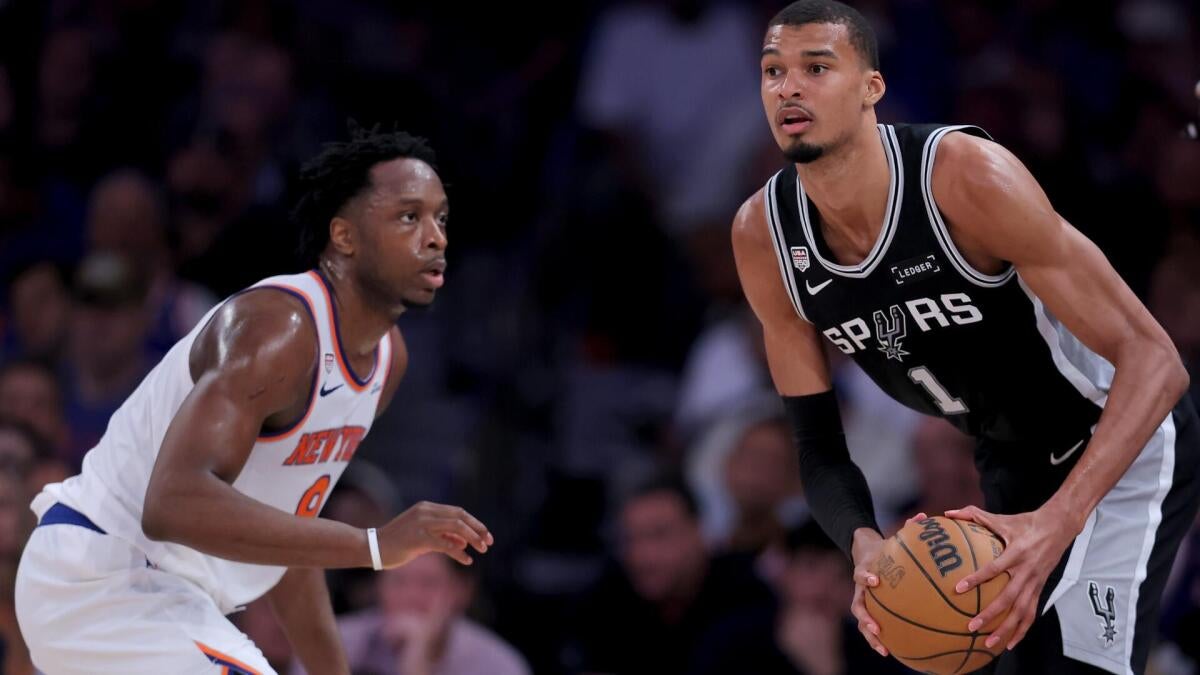
The Knicks are 240 minutes of basketball away from their first NBA championship in 53 years. Jalen Brunson authored Game 4's one-point thriller at the Garden—36 points, seven assists, and the kind of shot-making clutch moment that Finals myths are built on—leaving New York ahead 3-1 with a chance to close out in San Antonio on Saturday. The Spurs remain the highest-seeded home team in the Finals matchup, moving to -5.5 at FanDuel after dropping the first two games at Frost Bank Center, a 32-8 fortress during the regular season. The total opened at 218.5 and has contracted to 216.5, a two-point regression that hints at how the market is reading the setup: tighter, lower-scoring affair.
Context matters here. San Antonio has not lost three consecutive home games all season—a fact the Spurs will emphasize in their locker room, and one the market has already digested into that -5.5 spread. The Knicks, meanwhile, have covered eight straight on the road, a run that stacks cleanly with their overall Finals execution and the confidence of a team playing without desperation. The spread is inviting because it should be; the Spurs have to win at home or go extinct. Victor Wembanyama, the Finals' most disruptive defender and a 29-point nightly threat, will be at full throttle. Brunson, now seasoned by 53 minutes of Finals intensity, carries the Knicks' playmaking load into the toughest venue remaining.
The under deserves structural attention. Three of the four Finals games have closed below the total; both San Antonio home contests landed under. That 216.5 threshold implies a 108.25-point average per team, a ceiling that assumes either squad maintains Finals efficiency in a pressure-cooker environment where shot-making often tightens. SportsLine's model projects 213 combined points—a 3.5-point margin below market—and flags the under as 57% simulation-hit rate. The mechanism is straightforward: Wembanyama's rim protection collapses driving lanes; Brunson's half-court pullups carry higher variance in road Finals games; Spurs role players (typically 40%+ three-point shooters) regress toward their Finals mean of 35% in desperation scenarios. Lower-possession games, tighter defenses, and the Spurs playing at home with their season on the line all push toward grind basketball, not track meet.
Brunson's 24-point projection from SportsLine carries weight given his 36-point Game 4, but Finals scoring shows decay in the road third game of a series. He averaged 28.3 points through the first three games; Game 4's 36 sits as an outlier fueled by the Garden's energy and his own hot hand. Return to a road Finals game—even one the Knicks are favored to win—and his shot volume contracts, his assist role widens (as San Antonio will defend the perimeter tighter), and a 22–26-point range becomes more predictable. That doesn't disqualify a Brunson points play, but it suggests the market is fairly priced on his individual total after Game 4's career Finals game.
The Spurs spread is a classic desperation-dog angle: home team facing elimination, elite season-long home record, a two-star nucleus (Wembanyama and Chris Paul's steady hand), and public money likely split between the Knicks' clinch opportunity and media narratives of San Antonio's grit. The market correctly prices this as close to a coin flip on elimination day. Where the actual leverage lives is in the under—the structural collapse of pace and the Spurs' defensive tightening under duress. A 216.5 total in a Finals Game 5 where the home team is facing extinction should carry higher volatility risk than the simulation suggests; the market has priced for a baseline Finals game, not a survival-mode playoff intensity. That gap is where the edge resides.