NBA
Cleveland's Shooting Variance Defense Masks a Brunson Problem the Cavaliers Haven't Solved
Down 0-2, the Cavaliers are correct that their shot selection has been sound—but the real issue is Jalen Brunson's continued dominance in pick-and-roll, a dynamic that won't regress regardless of how many threes start falling.
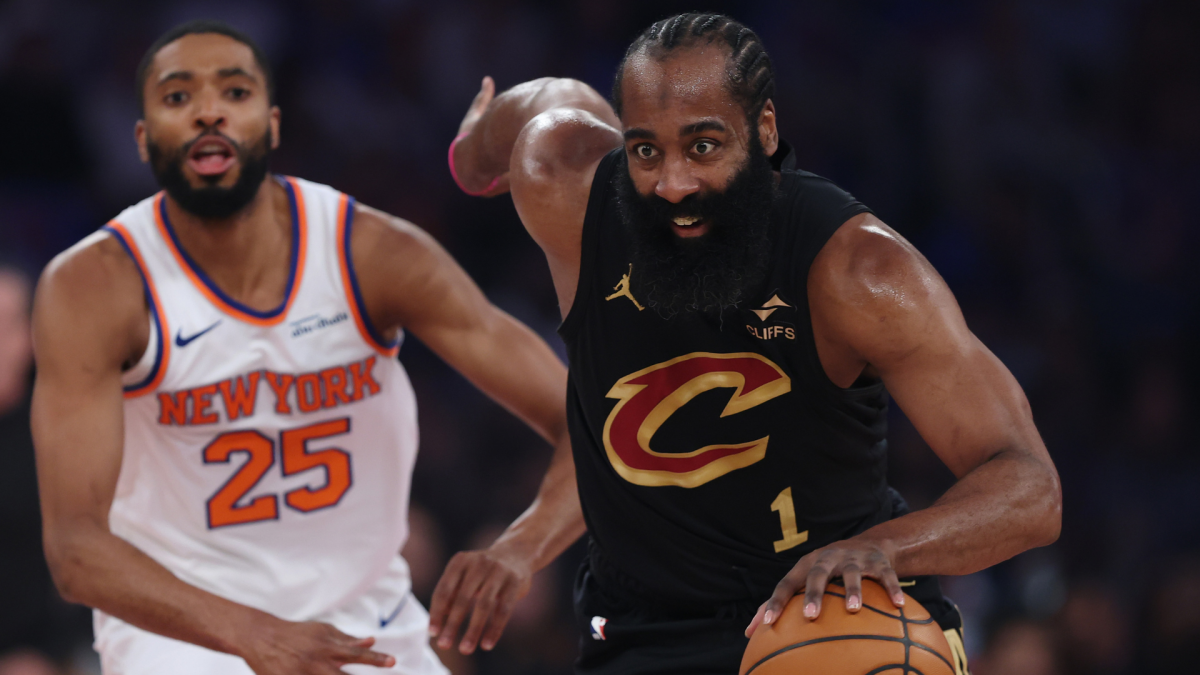
The Cavaliers' locker room has locked into a unified message: their process is sound, their execution has simply failed. After shooting 9-for-35 from three in Game 2's 109-93 loss, coach Kenny Atkinson, James Harden, Evan Mobley, Donovan Mitchell, and Jarrett Allen all echoed the same refrain—they generated good looks, the variance just didn't break their way. It's a technically defensible position. Over 50 playoff games, Cleveland has shot 37.6% from three at home. Shooters like Sam Merrill and Max Strus have elite credentials. The law of large numbers suggests a regression toward the mean. But behind that process-first framing lies a more troubling reality: the Cavaliers have no structural answer to the Knicks' most consequential offensive engine, and no amount of three-point shooting recovery will solve it.
The real damage isn't coming from the perimeter. It's coming from Jalen Brunson operating in pick-and-roll against Cleveland's defense. When the Cavaliers stay attached to Brunson on switches—which they must do to avoid giving him space—he either finds a mismatch rolling man or kicks out to an open shooter. When they go under screens to protect the three-point line, Brunson attacks downhill and creates more chaos. Atkinson acknowledged the trap before Game 2: "This is a real dilemma in coaching, but I do think there's a point where you've kind of got to say, 'The numbers don't mean as much right now, we gotta do something different.'" That intellectual honesty contradicts the all-process narrative. The Knicks didn't beat Cleveland through variance—they beat them through a systematic mismatch in ball-handling and floor design. Brunson's assist rate in this series sits at 8.1 per game; his season average is 6.8. That's not noise. That's architecture.
Cleveland's path back hinges on two separate bets. The first—that three-point shooting normalizes—is real but secondary. The second—that Brunson's pick-and-roll dominance is somehow containable without further defensive rotation—is fiction. If the Cavaliers don't adjust their switching thresholds or bring bigger, more mobile bodies into pick-and-roll coverage, Brunson's assist and scoring outputs will remain elevated, whether Cleveland is hitting threes or bricking them. The Knicks' ball movement improves when their guard play is unimpeded. Brunson's touches increase. Bench units like Isaiah Hartenstein get easier rim opportunities. The cumulative effect is that New York's efficiency doesn't depend on the variance of spot-up shooters—it flows from structural advantages that Atkinson hasn't yet negated.
For prop purposes, this distinction matters immensely. Market consensus has likely tightened on Brunson's assist line inward after two games of heavy playmaking. Books understand that assist volume has climbed. But they may not fully appreciate that the climb is structural, not circumstantial. If Cleveland generates the same defensive looks in Game 3—a not-unlikely outcome given their personnel constraints—Brunson's 8+ assist line carries durable value. The Knicks' offensive rating, meanwhile, should remain sticky above 110 even if Cleveland's three-point shooting tightens. New York's edge isn't thin variance; it's execution against a defense that doesn't have the personnel or tactical flexibility to impose simultaneous pressure on both Brunson's downhill creation and the perimeter shot. Atkinson's process was right in isolation. His rotation choice wasn't.
The Cavaliers will almost certainly shoot better from three in the coming games. Sam Merrill going 0-for-5 from deep won't persist. But shooting recovery doesn't equal series recovery if the underlying offensive leverage—Brunson in space—remains unaddressed. That's the gamble Cleveland is implicitly taking. They're betting on variance while ignoring mechanism. Markets, on the other hand, should bet on the mechanism.