MLB · transaction
Guerrero Jr.'s Power Collapse Signals Deeper Toronto Decay
The Blue Jays' 2026 implosion flows through their franchise cornerstone, whose $500M deal is already looking like a monument to past performance rather than future value.
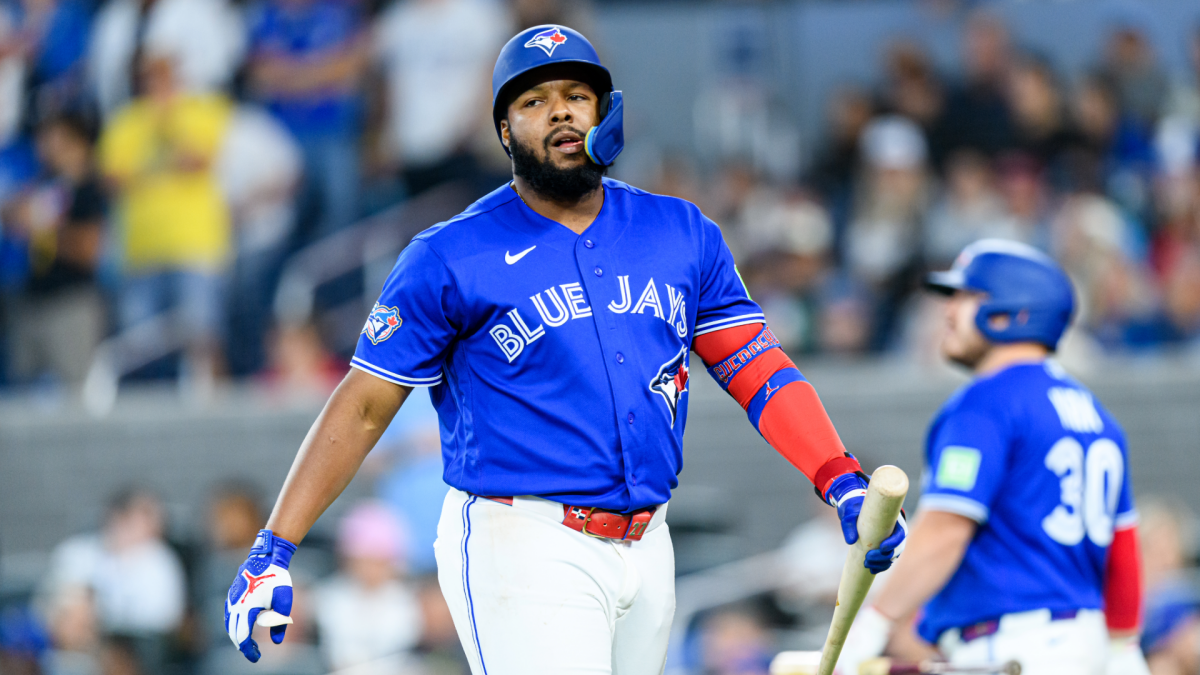
Vladimir Guerrero Jr. has hit nine home runs through 2026. For context: he's a $500 million player signed to run through 2039, and he's managed one of those nine at home plate. His slugging percentage sits at .359—well below what you'd expect from a first baseman carrying that financial weight—and his OPS+ of 92 means he's performing 8% worse than league average when park factors are stripped out. A year ago, his career mark sat at 136. The swing isn't minor variance. It's structural failure.
Toronto's organizational trajectory makes this worse. The Jays rode Guerrero Jr.'s productivity into a 2025 World Series run—the franchise's third pennant ever—before pushing the Dodgers to the brink. Twelve months later, they're hemorrhaging toward sub-.500 finishes and likely playoff elimination. Guerrero Jr. was the face of that ascent. He's now the face of the collapse. When a homegrown star signed to a half-billion dollars underperforms as his team implodes, the narrative doesn't sort itself into neat cause-and-effect. Both things are true: his individual decline matters, and the team's supporting infrastructure has fractured around him.
What's instructive for bettors is Guerrero Jr.'s own framing of the contract. He defended himself to Telemicro News by arguing the deal was payment for what he'd already accomplished, not a projection of future output. That's a philosophical defense that works great in a union meeting; it's a disaster in real baseball economics. Modern contracts don't reward; they wager. A $500 million deal is a bet the team is making on what the player will produce for the next 13 seasons. When that bet enters year two underwater—with power metrics collapsed and contact quality degraded—it tells you the organization either miscalculated the player's durability or missed a mechanical deterioration that's now visible on tape.
For the betting side, the implications ripple outward. Guerrero Jr. props—home run lines, RBI totals, slugging percentages—have been re-marked lower across the market as the .359 slugging and 1.3 WAR became the new baseline instead of the outlier. The sharper angle sits in the Toronto team total space. A team that was contention-caliber 12 months ago is now running a roster held together by one underperforming albatross contract and organizational dysfunction. Their team totals for the balance of 2026 and into 2027 are getting priced as though a mid-season reset will fix the chemistry. It won't. Organizational fractures don't heal mid-season, and they rarely heal in a single offseason. Toronto's win total for next year should price in sustained mediocrity, not a bounceback. The market will want to assume Guerrero Jr. snaps back to 136 OPS+; that's the cognitive trap. One catastrophic season doesn't erase a career, but it does erase the assumption that the next one will heal itself automatically. Fade team overs on Toronto until the front office makes concrete moves to dismantle what's broken.