Guerrero Jr.'s Back Injury Clouds Blue Jays' September Push
By Ty Whitney ·
Vladimir Guerrero Jr. left Sunday's finale at Texas early with lower back tightness, raising durability questions heading into a compressed playoff window.
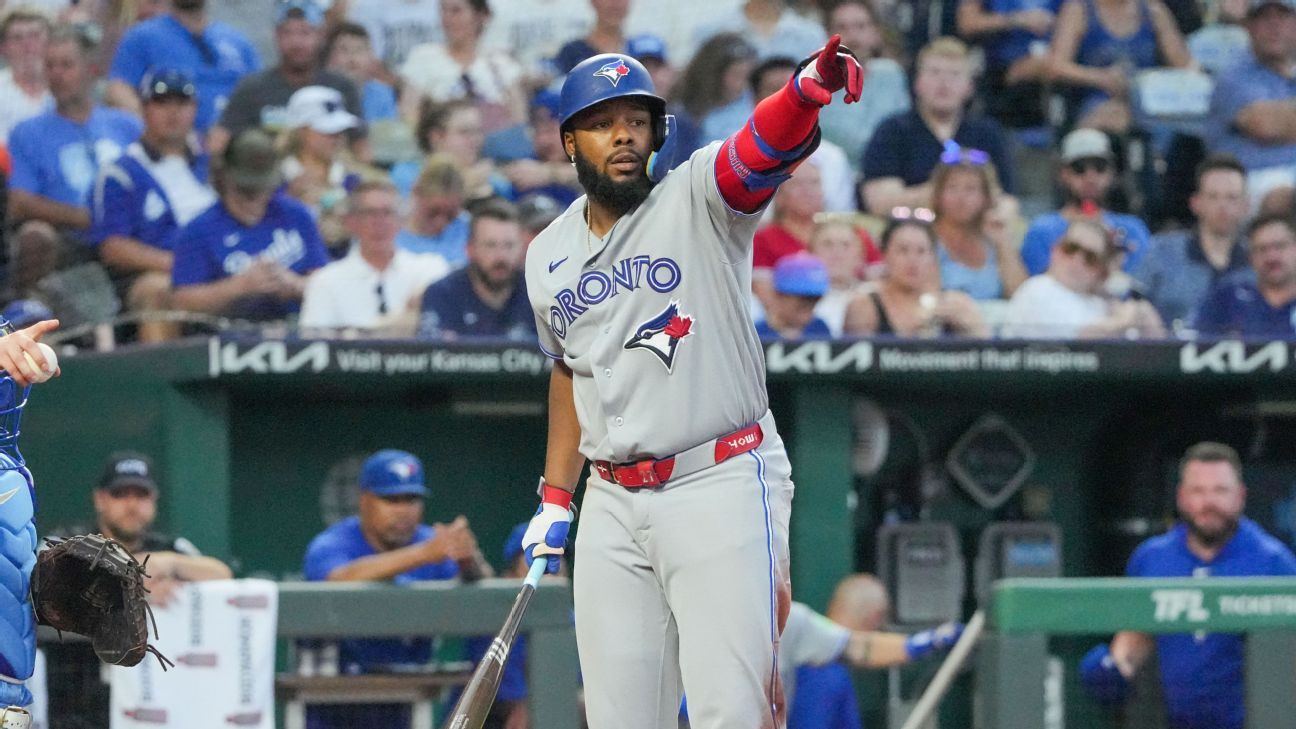
Vladimir Guerrero Jr. exited Toronto's series finale against the Rangers in the fourth inning Sunday with left lower back tightness, ending a day that had started normally—a first-inning single, a comebacker to the pitcher in the third. The Blue Jays' offensive engine and defensive linchpin departed the field with no clear timeline for return, forcing a mid-game shuffle that saw Myles Straw move to left field and Kazuma Okamoto slide to first base.
Back injuries in baseball are a category unto themselves. Unlike a hamstring or ankle tweak that might sideline a player for a week before a manager tests him out in low-leverage spots, lower back tightness in September signals structural fatigue—the cumulative toll of 141 games (Guerrero's current count) of swinging, tracking baserunners, and absorbing ground-ball impacts at first base. At 26 years old, Guerrero has the physical recovery profile to manage acute inflammation, but the timing of a mid-game exit this late in the season, when every swing carries postseason weight, suggests something worth monitoring beyond a single-game precaution.
Guerrero's season line—.263 average, 9 home runs, 56 RBIs across 141 games—paints a picture of uneven offensive production masked by his defensive value. A .263 average in late September, especially for a player drafted to anchor a lineup, reflects a season that never quite clicked at the plate. His nine home runs in 141 games projects to roughly 10-11 for a full season, a floor number for a first baseman with his pedigree. The injury compounds an already-underwhelming offensive contribution at a moment when the Blue Jays need maximum firepower to hold pace in what remains a volatile playoff race.
For prop bettors, Guerrero's absence from Sunday's finale and the subsequent back concern introduces immediate friction. If he returns to the lineup in the next 48 hours without imaging that reveals structural damage, his individual props (hits, RBIs, home runs) likely reset near season averages—depressed numbers that already reflect a down year. A player hitting .263 doesn't command the faith that justifies overs on hit or RBI totals; the market will price him near his true line, and there's no hidden edge in backing a below-average hitter because he had one tight lower back. The real angle isn't Guerrero himself—it's the Toronto team total. Losing your cleanup hitter, even for one game, costs 0.3-0.4 runs per contest in expected team production. If the Blue Jays remain without him for multiple contests down the stretch, their team-total overs become vulnerable, particularly against rotation opponents with strong strikeout profiles who can suppress the offense's secondary contributors.