MLB
Blue Jays' Wild Card Death Spiral Accelerates as Rogers Surrenders Rare Homer
Toronto's playoff window has effectively closed, but the return of Trey Yesavage from knee surgery offers a fleeting prop angle in a blowout scenario.
The Blue Jays are mathematically done. That's not hyperbole—after dropping Monday's opener to Baltimore 4-3, Toronto sits 3½ games behind the White Sox for the final AL Wild Card slot with only five games remaining (the White Sox have six). Without the tiebreaker, the Blue Jays need to make up 4½ games in that window. They could be eliminated as early as Tuesday. Add losses of Brett Bateman to injury and the continued absence of Vladimir Guerrero Jr., and what looked like a competitive October push in spring has evaporated into a September funeral march.
The timing of Trey Yesavage's return underscores the cruelty of this collapse. The lefty made his first start since August 4 after undergoing meniscus surgery on his left knee, striking out three batters over two innings on 40 pitches. His stuff looked sharp—that submarine splitter still induced whiffs from Dylan Beavers on the opening pitch. Manager John Schneider acknowledged the entire roster's injury toll: Cody Ponce flamed out early in the season, other starters aged or broke down, and the rotation Schneider had envisioned in spring training never materialized. Yesavage himself called the rehab "hard," watching every game from Dunedin while waiting for clearance. The peculiarity of a knee injury for a pitcher—an uncommon source of damage for a throwing athlete—meant the medical team couldn't easily explain the mechanism, only that "stuff pops up over the course of the year."
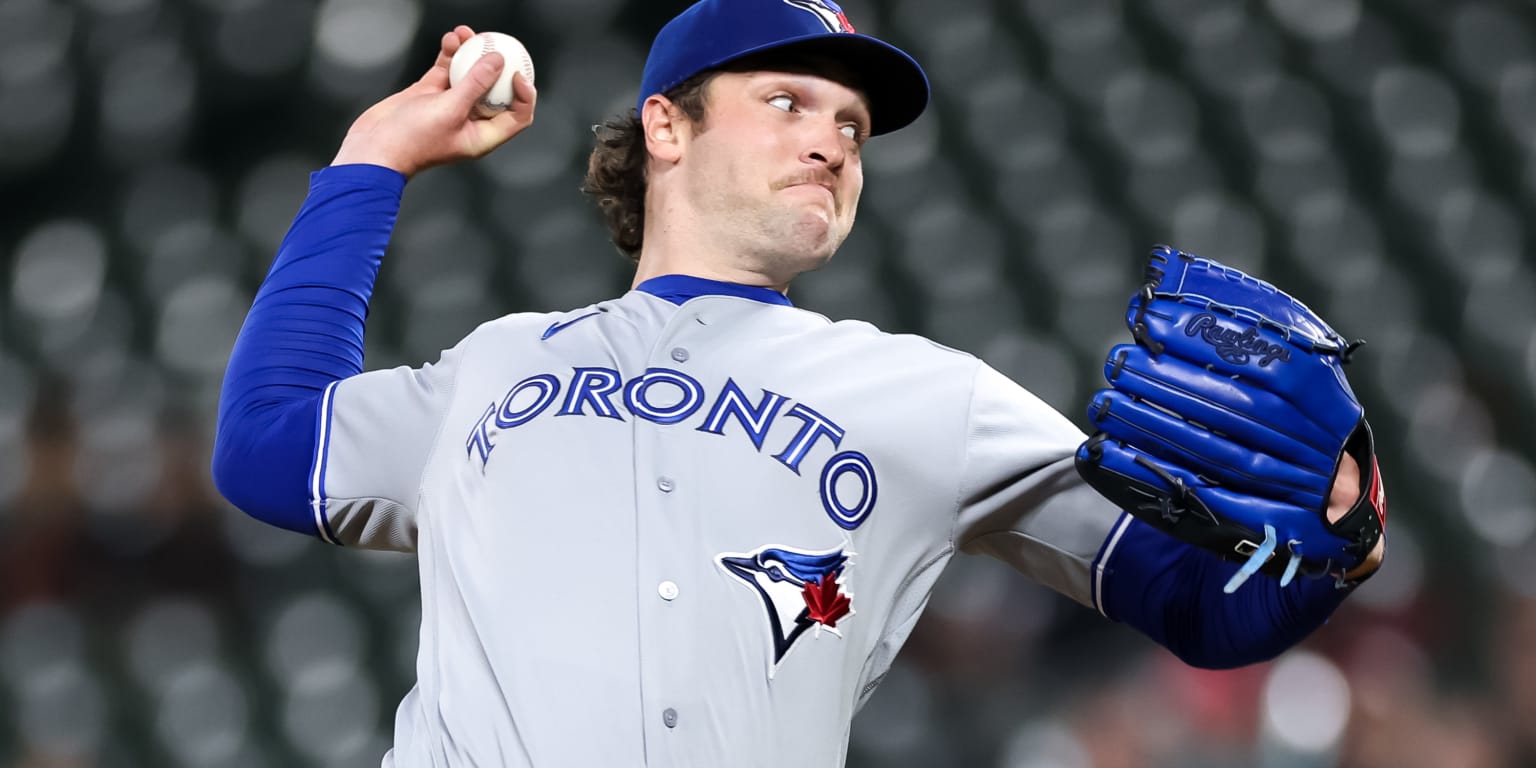
But the sequence that ended Monday's game tells the real story. With the score tied and a runner on in the eighth, Schneider went to Tyler Rogers, his most reliable reliever. Pete Alonso's two-run shot made it 4-2 Orioles—only the second home run Rogers has allowed all season, a remarkable figure for any pitcher, let alone one who surrendered just one long ball in 2025. Rogers is a submarine specialist whose lateral angle and arm slot make elevated fastballs difficult targets; homers off him are statistical anomalies. That Alonso reached him on this night, in this spot, feels almost cosmically timed. "You trust him to make pitches like he has all year," Schneider said, and he was right to. The problem wasn't Rogers' execution. It was the mathematics of a season that stopped working sometime in August.
From a prop perspective, the only remaining angle centers on Toronto's terminal status and the leverage it creates for relief usage. With postseason odds now "microscopic" per the source, the Blue Jays will almost certainly begin holding out veterans with minor complaints. That means shorter leashes on aging arms and more aggressive rest management—which paradoxically should lift Rogers' per-appearance strikeout floor if Toronto faces a mathematical elimination scenario where the team plays only meaningless games before shutdown. Yesavage, too, becomes a short-burst play: if Toronto somehow extends this series into late September (a near-impossible ask), his appearances will be capped at 3-4 innings per appearance, creating artificially suppressed innings totals and K props. The edge here is not in the direction of a bet—the Blue Jays are finished—but in recognizing that when a team's season is dead, prop lines often fail to account for usage patterns that diverge from regular season norms. Look for suppressed pitcher innings and strikeout totals on Toronto relievers once elimination is official.
What began as an injury-plagued yet competitive roster in spring has devolved into a fire-sale waiting room. Yesavage's return is a footnote in a larger narrative of attrition. Rogers' rare homer is a symptom, not a cause.