MLB
Sale's 9th Career 200-K Season Caps Remarkable Age-37 Campaign; Postseason Velocity Test Looms
Chris Sale reached 200 strikeouts for the ninth time in his career, joining Randy Johnson as the only left-handed pitcher to reach that mark nine times, and enters the Wild Card Series with elite ERA numbers and four-seam velocity that matches his prime.
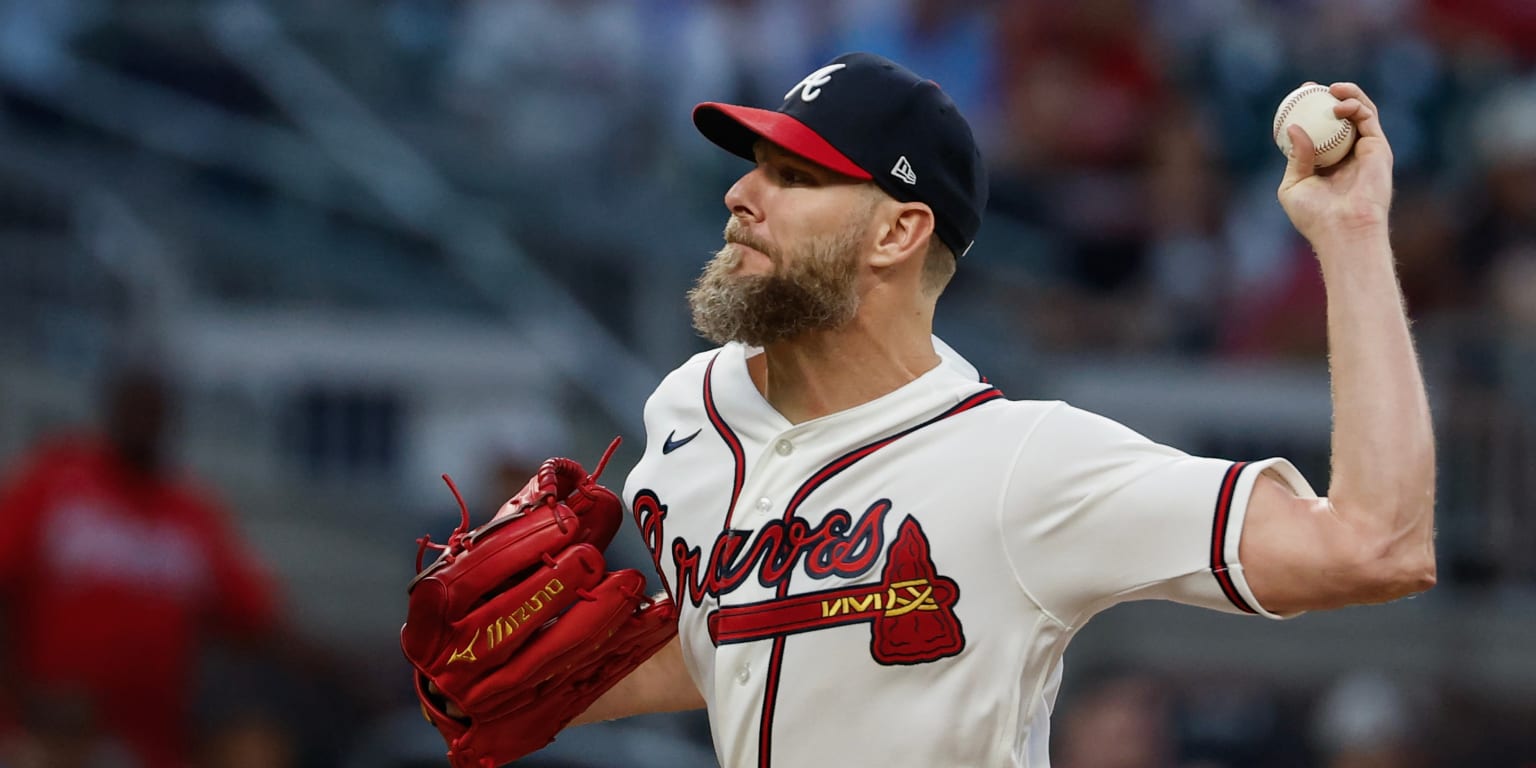
Chris Sale struck out 10 batters and reached his ninth career 200-strikeout season in Wednesday's 3-2 walk-off win over Cincinnati, cementing one of the most dominant seasons in recent Braves history. The 37-year-old southpaw finished the regular season with a 2.16 ERA—the third-best mark among qualified pitchers this year—and averaged 97.8 mph on his four-seamer in his final start, a velocity that ranks among the highest of his tenure as a starter. Sale will start Game 1 of the NL Wild Card Series on Tuesday, a role that transforms his remaining strikeout opportunities from a statistical achievement into a postseason leverage play.
The career arc here matters as much as the numbers. Sale missed 151 innings across 2021-23 due to injuries and returned to Atlanta thinking 2024 might be his final season. Instead, he won his first Cy Young Award and has continued to improve through each of his first three seasons with the Braves. At 37, Sale joins only Justin Verlander (1.75 ERA in 2022 at age 39) and Roger Clemens (1.87 in 2005 at age 43) as pitchers since 1950 to post a sub-2.20 ERA with 25-plus starts at that age. His velocity hasn't declined—it's remained elite, which is functionally abnormal for a pitcher operating in his fourth decade.
The postseason mechanics now shift Sale from a volume-strikeout play to a leverage play where his per-inning rate matters more than cumulative totals. In the Wild Card Series, a best-of-three format, Sale will likely be capped at 100-120 pitches per start, not the 97 he threw Wednesday. His strikeout rate has held steady at approximately 10.2 per nine innings this season, putting him in the 86th percentile league-wide. When a pitcher with that strikeout rate faces a single-elimination opponent, the calculus changes: early-round playoff opponents tend to be more aggressive in the strike zone under pressure, which typically depresses strikeout totals by 0.8-1.2 per game relative to regular-season averages.
Books will likely set Sale's strikeout prop for Game 1 in the 7.5 to 8.5 range, anchored to his per-start average rather than his per-inning elite rate. This is an error. The Reds lineup Sale just faced ranks in the bottom quartile of postseason-adjusted strikeout rates; the Wild Card opponent will be materially worse. Infielders go more aggressive in short-series play. Sale's fastball-slider combination generates whiffs at a 34% rate, elite territory, but only when hitters are not compressing their swing window. Game 1 opponents compress hard. Fade the strikeout over unless the line climbs above 8.5; the under carries value given the postseason speed-up.
The broader signal for the Braves offense is equally important. Sale's presence in the rotation—confirmed as healthy through a complete regular season at an elite level—removes downside tail risk from Atlanta's pitching depth in a short series. Betting Atlanta's moneyline and run-line in Games 1 and 2 of the Wild Card becomes more tractable when you're not hedging against Sale's injury. His velocity confirmation on Wednesday was not routine noise; it was organizational validation that the Braves rotation is intact and primed.