MLB
Pérez Halts Skid With Dominant Outing; Control Breakthrough Points to Sustainable Shift
After five games drowning in walks and earned runs, Marlins right-hander Eury Pérez delivered a masterclass in command—zero free passes in 6 1/3 innings—signaling a potential inflection point in his season arc.
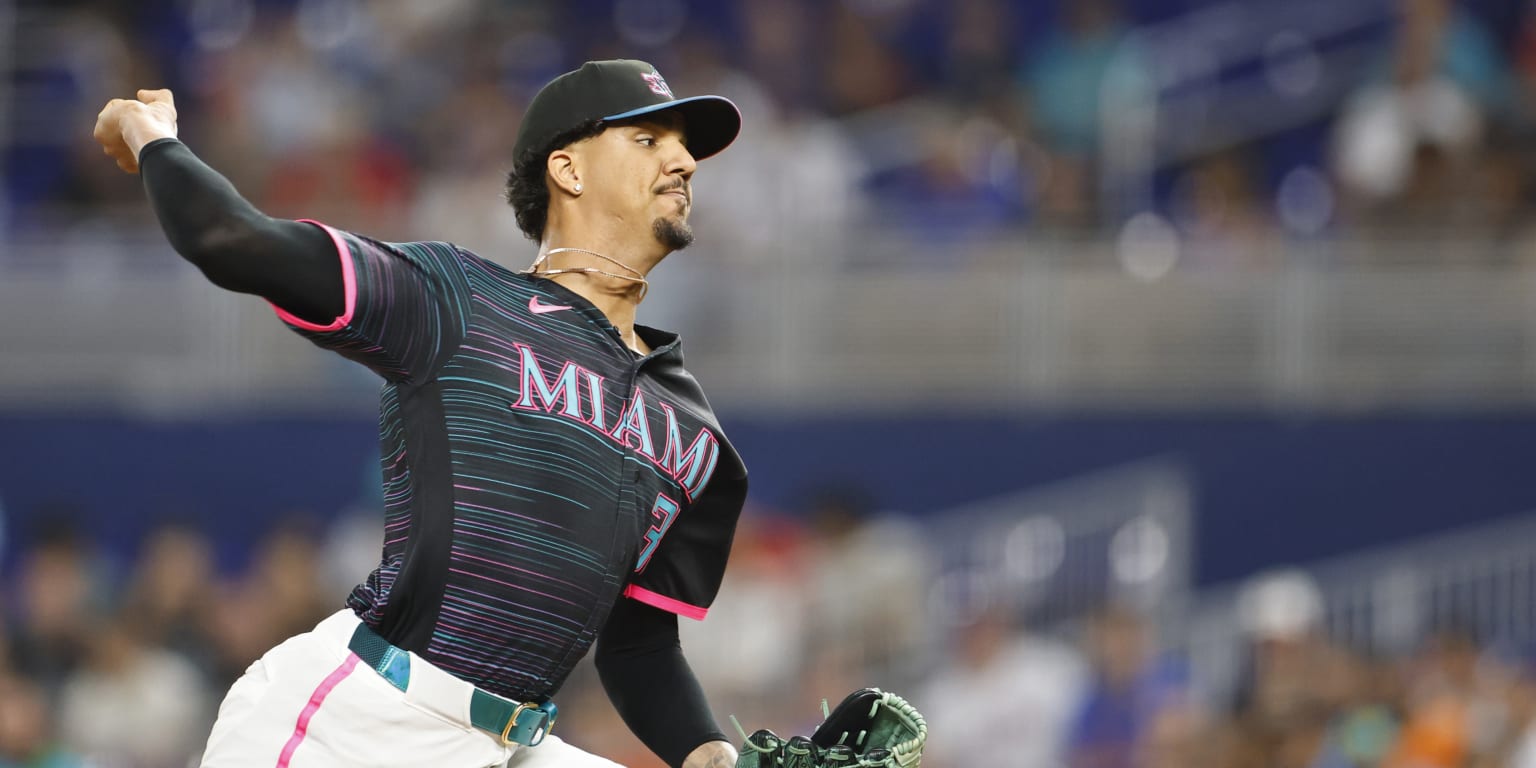
Eury Pérez needed a reset, and Friday night against the Mets provided exactly that. The Marlins right-hander escaped a five-game tailspin by tossing 6 1/3 innings of one-run ball on just two hits, with five strikeouts and—critically—zero walks. That last number matters more than the win itself: Pérez had surrendered 41 baserunners over 26 1/3 innings during his skid, a chaos metric that often predicts further unraveling. One clean outing doesn't erase a 6.49 ERA over that span, but the walk rate bottoming out suggests the mechanical issue, whatever it was, may have corrected.
The one blemish was Juan Soto's two-out homer on a 99.8 mph four-seamer in the first—the hardest pitch allowed for a home run in the majors in 2026, per MLB's data. That's a hard-contact marker, not a command failure. Pérez's fastball didn't lose velocity; Soto's bat caught it flush. Defense and run manufacturing did the rest: Jakob Marsee's two defensive plays in center field kept the bleeding contained, while the Marlins' sixth and seventh hitters—Esteury Ruiz and Owen Caissie—manufactured both runs on small-ball sequence and timely contact. Ruiz's theft of third (his fifth of the season) and Caissie's ability to put the ball in play when it mattered turned a 1-1 tie into a 2-1 lead by the fourth inning.
From a pitch-design and command perspective, this performance opens a real avenue for Pérez's strikeout props in his next two starts. A pitcher who eliminates walks while maintaining fastball velocity typically generates swings-and-misses at a higher rate; hitters expand the zone when they're not waiting for the walk. Pérez's five strikeouts on just 76 pitches (62% strikes) is an efficiency marker that will compound if the walk rate stays grounded. The Mets offense, which is currently bottom-tier in strikeout avoidance, made eight quick outs and rarely worked deep counts. Pérez's upcoming matchups will likely be against inferior offensive profiles if the Marlins remain in the NL East race—a structural advantage for a pitcher rediscovering command.
The betting angle is two-fold. First, expect Pérez's strikeout line to climb from 4.5-5.5 range (where he's been priced during the skid) back to 6.5-7.5 in his next start, as market makers recalibrate for command improvement. Second, lean overs on Marlins team totals in his next two starts against weaker offenses—the offensive environment will likely remain tighter (less run-scoring for both sides), but Pérez's reduction in baserunners should tighten the margin of error and lower the variance on the team's win probability. The Marlins' 2-1 victory wasn't a barnburner, but it was a controlled, economical win that suggested Pérez is back in a zone where he limits the damage and lets small offensive advantages hold up.