Pérez's Eight-Week Absence Reshapes Marlins Rotation Math
By Ty Whitney ·
Miami loses a 23-year-old strikeout arm mid-season, forcing a cascading change to workload distribution and bullpen usage that extends well beyond his replacement.
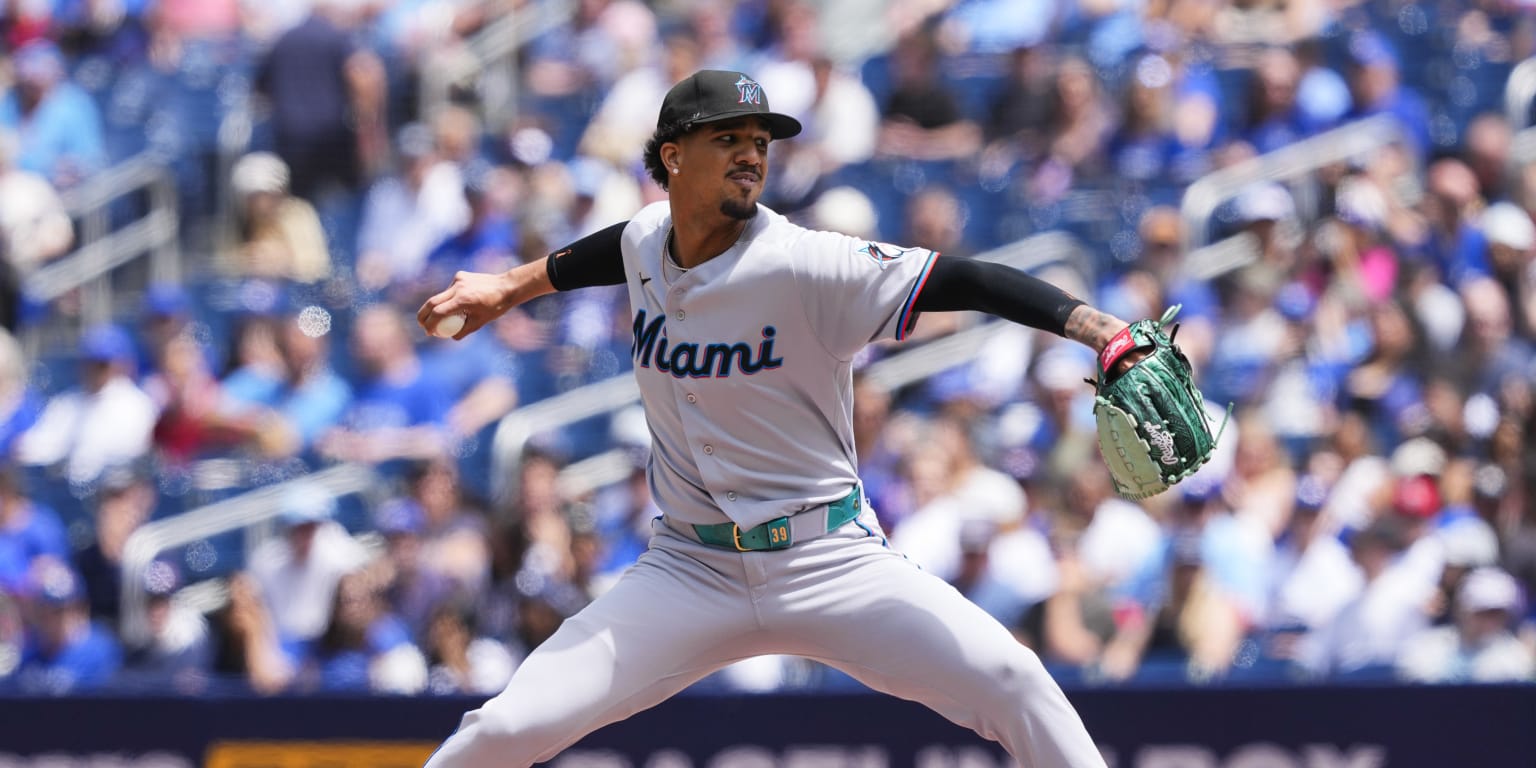
Eury Pérez will miss roughly two months after a right gracilis strain sent him to the injured list with an eight-week recovery timeline. The 23-year-old right-hander left Wednesday's game against the Mets in visible distress during a stretch routine between innings—a freak accident that robbed Miami of one of its few sources of consistent high-leverage strikeout stuff at a critical juncture in the season.
Pérez had built real value in a lean Marlins rotation. Over 62 2/3 innings this season, he'd struck out 72 batters while maintaining a 4.60 ERA in a thin run-prevention environment. His stuff was sharp; in the four scoreless innings he threw before the injury, he'd recorded a 101 mph four-seamer and posted a season-high nine strikeouts. For a rebuilding club, Pérez was becoming a reliable third or fourth starter—the kind of cost-controlled young arm that typically gets protected. Instead, Miami now faces eight weeks without him and zero margin for error in workload management across the rest of the rotation.
The operational ripple runs deeper than a single roster spot. Miami will either lean harder on less-proven depth starters or accelerate external acquisition, both moves that carry roster constraints and tax the bullpen with earlier exits. Over the next 8-10 weeks, expect elevated innings from relief arms—particularly in close games. That means fewer specialized matchups, higher fatigue rates on leverage relievers, and measurable degradation in late-inning dominance. Teams with thinner pitching depth historically see bullpen K-rate compression and higher leveraged-situation walk rates as workload concentrates on fewer arms.
For bettors, the Marlins' strikeout props become unreliable through mid-August. Pérez's innings vacate roughly 50-60 strikeouts from Miami's projected total over that window. Replacement-level starters typically operate at 8.5-9.2 K/9, while Pérez was sitting around 10.3 K/9. That's not marginal slippage—it's a measurable drop in offensive pressure across a month-plus of games. Additionally, bullpen usage spikes carry inverse risk: relievers throwing more innings and in tighter spots tend to elevate walk rates even as strikeout rates hold. The net effect is lower-quality at-bats and extended at-bats against Marlins pitching for opposing hitters.