MLB
García Jr.'s Plate Discipline Unlocks June Dominance—and a Persistent Prop Edge
Luis García Jr. has hit 11 home runs in June by doing something simple: waiting for pitches he can damage, and a friendly walks competition is keeping him honest.
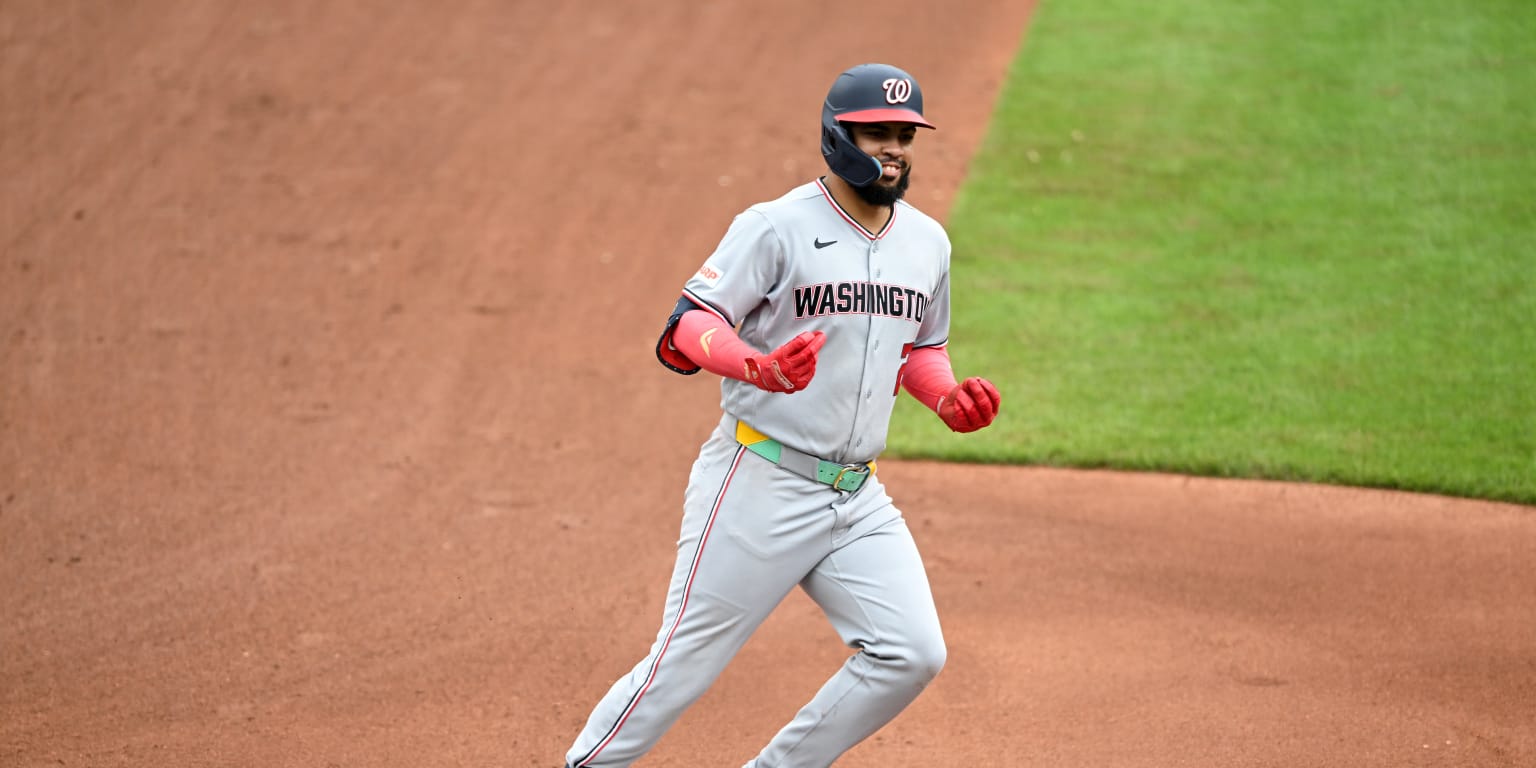
Luis García Jr. went 3-for-5 with two home runs and five RBIs on Sunday against Baltimore, his third multi-homer game of 2026 and his 11th home run of June. The Nationals' 26-year-old has become the first Washington player to post double-digit homers in a calendar month since Kyle Schwarber's 16 in June 2012, and the numbers behind that output are more revealing than the headline: he's done it by fundamentally changing how he approaches at-bats.
García's transformation began around June 5, when he launched a two-run homer and grand slam against Arizona—a moment manager Blake Butera identified as a shift in mentality. "A little switch went off," Butera said postgame, "where it's like, 'All right, this is what happens when I get a good pitch to hit, and when I trust it.'" Since that date, García has recorded 18 RBIs and 9 home runs in roughly three weeks. The coaching staff pushed García toward selectivity—work on counts, don't chase—and the player leaned into an unexpected accountability mechanism: a walks competition with catcher Keibert Ruiz that began roughly three weeks ago during a hitters meeting. García is winning that race 11 walks to Ruiz's 6, and the dual benefit is measurable. On Saturday, García hit a 114-mph home run on a 3-0 count. Sunday's pair came on 0-1 and 2-2 counts. He's no longer hunting; he's hunting when the pitcher is in a bind.
The sustainability question matters here. García finished 2025 with a .701 OPS and 16 homers across 139 games—meaning he's already matched last year's home run total in 61 fewer games. That's not a reversion play. The plate discipline shift is real, embedded in coaching, and reinforced by peer competition. Butera noted García's approach as one that always had raw hitting ability ("he kind of can hit everything"), but the timing of when he swings has fundamentally altered his value. His walk rate is up, his chase rate is demonstrably lower, and his damage on counts where he has leverage is exceptional. The June 5 multi-homer game wasn't an outlier; it was a trigger point for a methodical approach change that's now three weeks deep.
For betting purposes, García's home run props have likely already adjusted upward after this June surge, but the market may be pricing Sunday's performance as a continuation of variance rather than evidence of a structural improvement in his discipline. The walks competition—a specific, measurable accountability mechanism that ties his hitting coach's stated philosophy directly to peer incentive—is the kind of signal that books often miss because it lives in the clubhouse, not the box score. García's 11 walks in roughly three weeks suggests a disciplined hitter who's being selective in count situations, which translates to higher home run quality and fewer weak-contact strikeouts. His past-six-games home run rate (five homers in six games) is elevated, but it's tethered to a specific change in approach, not randomness. This is a multi-week edge, not a two-game hot streak.
The Nationals head to Boston next, where García will face a different pitching environment but carry the same discipline mindset. His RBI total sits at 55 for the season—on pace for 145+ in a full 162-game campaign—and that efficiency gains credibility when it's driven by count awareness and peer-enforced plate control. Buyback to García's home run prop over the next two weeks (through mid-July) should reflect his new baseline, not the discount pricing that applied when he was chasing everything in 2025.
MLB Intelligence — Baseball intelligence beyond the box score. Open MLB Intelligence →