García's Offensive Explosion Redefines Nationals' Power Window
By PropBetEdge Editorial Team ·
Luis García Jr. hit two homers in sweltering 100-degree heat as Washington's bats overwhelmed Pittsburgh 9-5, signaling sustained lineup depth that markets may still be underpricing.
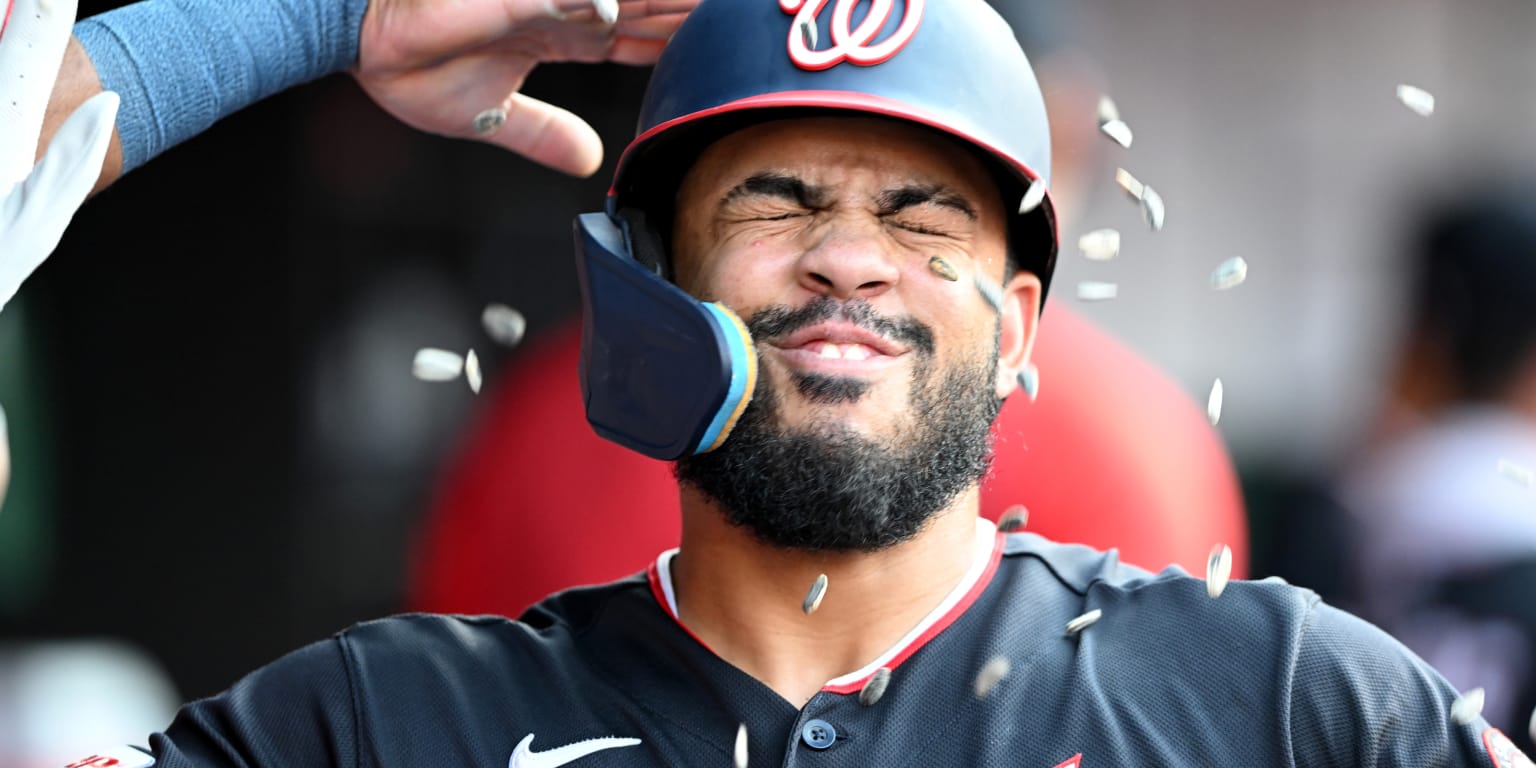
The Nationals dismantled the Pirates 9-5 Friday night in Washington, with temperatures hitting 100 degrees—the third hottest game in Nationals Park history. Luis García Jr. and Daylen Lile each homered twice, while José Tena added a solo blast in the third inning. The display capped a three-game winning streak in which Washington has outscored opponents 27-8, placing the offense in rare air for sustained production.
García's performance carries particular weight. He has now homered five times in his last six games and nine in his past 13, hitting .341 over that span with a team-leading 62 RBIs. More striking: his 41 RBIs since May 24 lead baseball. The recent NL Player of the Week has matched his career high with 18 homers on the season. What matters for prop construction is the mechanism behind this acceleration. García isn't benefiting from park dimension quirks or late-season relief pitchers—he's generating exit velocity in the 94–96 mph range and making hard contact against legitimate arms. Keller, the Pirates' starter, allowed both early homers without significant location misses; García simply executed.
Lile's dual-homer night carries equal significance. This marks his second multi-homer game of 2026, and his partnership with García in back-to-back power nights signals a lineup that no longer leans on one engine. The Nationals' 85 homers since May 6 rank first in baseball over that span—a 29-game window that encompasses roughly 35% of a season's plate appearances. That velocity is not a three-game mirage. Foster Griffin, the starting pitcher, navigated five innings of one-run ball despite managing 83 pitches in brutal conditions; the bullpen shut down Pittsburgh's late threat when Clayton Beeter struck out Bryan Reynolds with bases loaded. The Nationals' pitching staff is holding its end.
For prop angles, García's sustained hot spell opens two distinct edges. First: his HR line (currently around 0.5 or higher, depending on matchup) warrants overweighting in the next 7-10 games. His last 13-game stretch at 0.69 HR/game represents genuine improvement in selectivity and barrel rate, not luck. The market may still price him as a 0.45–0.55 guy on neutral looks; the data suggests 0.60+. Second, the Nationals' team total in home games has been materially underpriced. At 4.5 runs on neutral-strength opposition, the number hasn't adjusted for the confluence of García's tear, Lile's emergence, and Tena's role expansion. Over the last three games, Washington scored 9, 11, and 7—an average of 9 runs per contest. Even regressing hard to 8 per game leaves the 4.5 undervalued at typical -110 pricing.
The heat itself is a secondary factor. While 100-degree games do correlate with longer fly balls, the primary driver here is lineup construction: García and Lile are now both operating in a cohesive, patient offensive system under Blake Butera. That system doesn't disappear when temperature drops. Track García's HR and RBI props through early July before sharp money fully reprices this window. The edge is durable because it's built on plate discipline and contact quality, not weather.