Washington's Early-Inning Edge Is Real—and Exploitable
By Erik Schwartz ·
The Nationals are crushing opposing pitchers in the first frame like no other team in baseball, and that pattern extends to the road stage where they're operating at a historic pace.
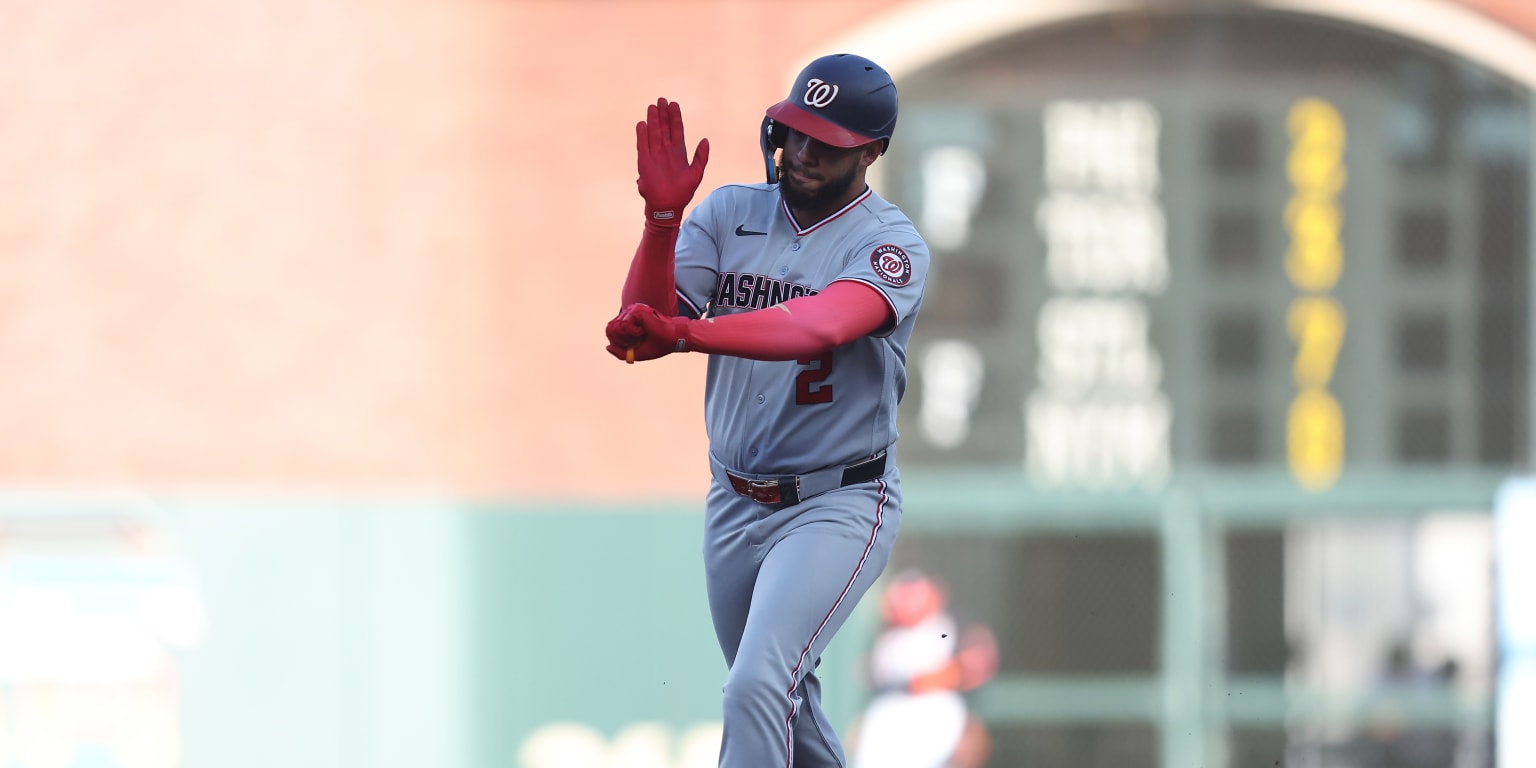
The Nationals dismantled the Giants 6-3 on Tuesday with a blueprint that has become their calling card: early damage, efficient relief, and relentless road execution. James Wood's single and Luis García Jr.'s two-run homer needed just 11 pitches to put Washington up 2-0, marking the 52nd and 53rd first-inning runs the Nats have scored this season—tops in the majors by a comfortable margin. That opening salvo set the tone for a scrappy, well-managed win that extended their road record to 23-13, tied with Atlanta for the best mark in baseball.
What separates Washington's early-inning dominance from random variance is its systemic nature. The Nats aren't just getting timely hits; they're facing opposing starting pitchers who haven't settled into their rhythm, often catching them before they've found their command. Tuesday's sequence against Houser exemplifies this—two extra-base hits before the pitcher reached his 12th offering. Blake Butera's first-year offense is built to punish that window. The lineup constructs quality at-bats with runners already on base, forcing early decisions that less experienced or unprepared pitchers tend to botch.
Lefty Andrew Alvarez typified the inverse scenario: shaky execution (five walks, three extra-base hits across four innings) salvaged only by San Francisco's inability to convert runners into runs. The Giants managed just 3-for-12 with runners in scoring position and left 13 stranded for the night. Alvarez escaped because the Nationals' bullpen—Lord, Lovelady, Beeter, Ribalta combining for five innings of one-run relief—never ceded momentum once the early lead was banked. That's not luck; that's depth executing under pressure.
For bettors, the market has begun to acknowledge the Nationals' road strength (they're above .500 ATS away from home), but it has not fully priced the first-inning aggression. Opposing sportsbooks set first-five-innings totals and team-total lines assuming a normalized run-scoring distribution across all nine frames. Washington's concentration of early offense—52 runs in one inning out of a full season—creates an asymmetry. Teams facing the Nats should expect elevated first-inning run probabilities, which depresses later-inning output as the Nationals work with a cushion and a worn-down opposing staff. When you see a matchup featuring Washington, watch opening-inning spreads; the Nats' ability to strike fast has outpaced the market's adjustment.
The durability of this edge matters. This is not a hot streak built on one or two hitters catching fire for a week. Garcia, Wood, and supporting hitters have been scripted into an early-season system that prioritizes aggressive at-bats when opposing starters are least prepared. That pattern compounds across a 162-game schedule. Road performance (23 wins already) and first-inning production (52 runs, outpacing the second-place team by double digits) are both multi-month samples, not single-game outliers. The Nats' construction and Butera's tactical approach have created a durable edge that persists across opponent types.