MLB · injury
Severino's Season Ends Early; Athletics Rotation Void Opens Volatility on Starter Props
Luis Severino won't pitch again in 2026, forcing Oakland to navigate September with an unproven rotation and reshaping the betting calculus for the franchise's remaining contests.
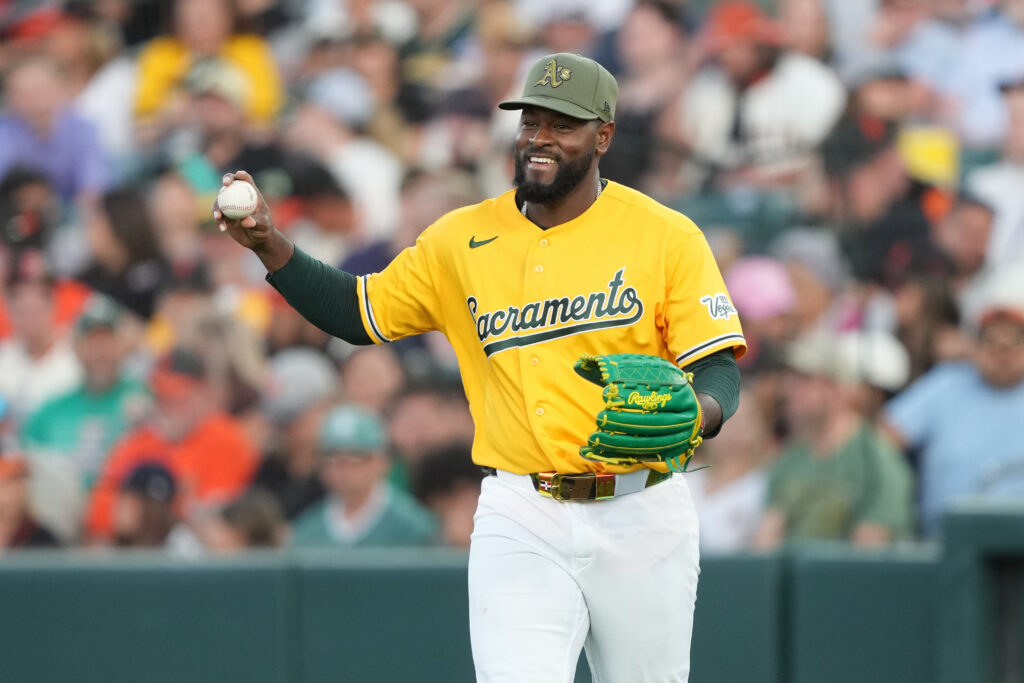
Luis Severino is done for the season. Oakland Athletics manager Mark Kotsay confirmed yesterday that the right-hander, who landed on the 15-day injured list at the end of May with a shoulder capsule and subscapularis strain, has insufficient time remaining in his throwing progression to return before the calendar flips to October. The timeline is unforgiving: Severino was moved to the 60-day IL in June, hasn't thrown a minor-league rehab appearance, and the Athletics are mathematically out of playoff contention. There's no incentive to rush a veteran arm back for September baseball that matters to no one.
This is the hardening of what looked inevitable weeks ago. Severino signed a three-year, $67 million deal entering 2025 to be Oakland's rotation anchor during their threadbare transition to Las Vegas. Before the injury, he'd produced 12 starts with a 4.16 ERA, a 24.0% strikeout rate, and an 11.4% walk rate—respectable if unremarkable. The real concern was the location split: at Sutter Health Park (now the Athletics' decrepit home), he posted a 5.33 ERA over 25⅓ innings with seven home runs allowed. On the road, 3.38 ERA across 37⅓ innings with two dingers. That pattern held last season too—5.85 ERA at home, 3.14 on the road since he arrived in Oakland. The stadium is eating him alive, and now the shoulder injury has erased any remaining value from his 2026 contribution.
For bettings purposes, this matters most to Athletics starter proposition volume. Oakland's rotation depth chart just took a hit. Gage Jump and J.T. Ginn have shown promise and are controllable, but neither has deep major-league track records. The A's will likely decline Jeffrey Springs' $15 million club option, leaving them light on veteran innings depth for September. When a contender loses a starter mid-season, the impact is diffuse—they can chase a trade or promote prospect. When a non-contender loses one, the surviving starters absorb usage risk and workload volatility. Jump and Ginn strikeout lines may widen as the team manages innings conservation; ERA props could spike on variance; and team total unders become more attractive simply because the uncertainty in starting-pitcher quality compresses offensive offensive efficiency in ways that don't always show up in preseason projections.
Severino's $22 million player option for 2027 now carries extra leverage. He'd previously signaled dissatisfaction with pitching in Oakland's minor-league stadium environment and was presumed to decline and test free agency. A year lost to injury, however, might push him toward accepting the option and using 2027 as a platform season to reset his value before hitting the open market after that. If he opts in, Oakland's rotation continuity improves for next year's projections—though a 36-year-old coming off a lost season rarely delivers the same velocity profile. The bookkeeping is secondary, though; the immediate story is Oakland's September margin for error just narrowed significantly, and bettors holding Athletics team total overs in close games should view this as a downside risk factor that oddsmakers may not have fully repriced yet.
MLB Intelligence — Baseball intelligence beyond the box score. Open MLB Intelligence →