MLB
Judge's Wild Card Return Hinges on Soleus Healing; Yankees Already Planning Without Him
The Yankees' MVP candidate said Wednesday he intends to play Game 1 of the AL Wild Card Series next Tuesday, but his manager has already prepared the roster assuming he won't.
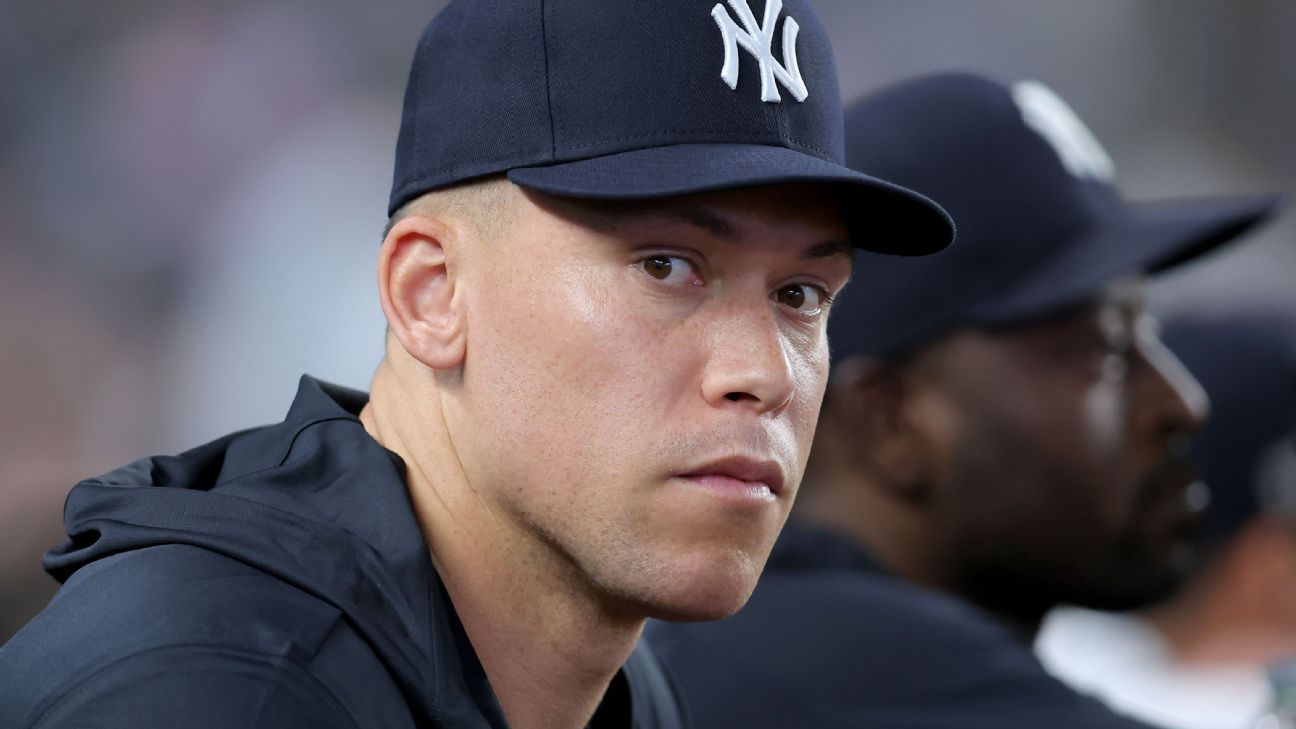
Aaron Judge told ESPN on Wednesday that he intends to be ready for Game 1 of the AL Wild Card Series at Yankee Stadium next Tuesday, but the organizational messaging tells a different story. Judge was placed on the injured list Saturday with a right calf strain in the soleus muscle—a structure critical for running and hitting—and received a platelet-rich plasma injection Monday. Manager Aaron Boone said Tuesday he does not expect to have Judge available for the wild-card series, though he stopped short of ruling it out entirely. The disconnect between Judge's stated intent and the team's operational planning creates a genuine ambiguity about his availability, one that will reshape Yankees postseason leverage and lineup construction depending on how the next seven days unfold.
The injury timeline is compressed. Judge suffered the strain during a September 16 loss to Minnesota in his seventh game back from a fractured rib that sidelined him for more than three months. He returned without a rehab assignment and went 4-for-23 with 13 strikeouts in his first 24 plate appearances—a brutally brief runway that preceded the calf strain. MRI imaging on Thursday revealed the soleus damage. Judge has not provided a public return timeline, and his comments to ESPN suggest he has ongoing discussions with the organization about his prognosis but limited agency in roster decisions. The math is stark: seven days to restore function to a muscle essential for acceleration, deceleration, and explosive lower-body engagement in a sport that demands all three.
The Yankees' offensive profile without Judge is measurably worse. With Judge in the lineup this season, the team went 41-25 and averaged 5.12 runs per game. Without him, they're 49-42 and averaging 4.15 runs—a 0.97 run deficit per contest. That's not statistical noise; it's the difference between playoff momentum and flatness. Judge himself finished at .241 with 18 home runs and an .871 OPS across 66 games, a production curve that reflects his own physical constraints (the fractured rib cost him a full month of development time). The organization is unlikely to game-plan around his return if Boone's public expectation holds: the wild-card roster will be constructed as if Judge is unavailable, and any late inclusion becomes a roster-construction scramble.
For bettors, Judge's injury status carries two distinct edges depending on timing and information flow. In the immediate window—before Friday—the Yankees' moneyline and run-total props will reflect lingering hope about Judge's availability. If the team issues a statement confirming his exclusion from the roster on Friday or Saturday, moneyline odds will shift toward opponents as the market reprices a Yankees offense capped at 4.15 runs per game. That's a structural fade opportunity: any books still pricing Judge's availability into their models after official confirmation are leaving value on the unders. The moneyline itself becomes more vulnerable as depth decreases and opposing pitchers face fewer threats in the middle of the order. Second, if Judge somehow does clear medically and appears in the wild-card series, his plate appearances against relief pitching in high-leverage moments become a leverage bet—he won't have live at-bats to shake off rust, and the soleus will be barely integrated into his swing mechanics. Fade high-leverage plate appearances for Judge in games 1 and 2 of any series where he returns; the tissue won't be ready, and his strikeout rate will be elevated.