Judge's Soleus Strain Leaves Yankees Lineup in Limbo for October Push
By Ty Whitney ·
Aaron Judge's calf injury puts his postseason availability in genuine doubt with eight days until the regular season ends, reshaping how to model Yankees run production in October.
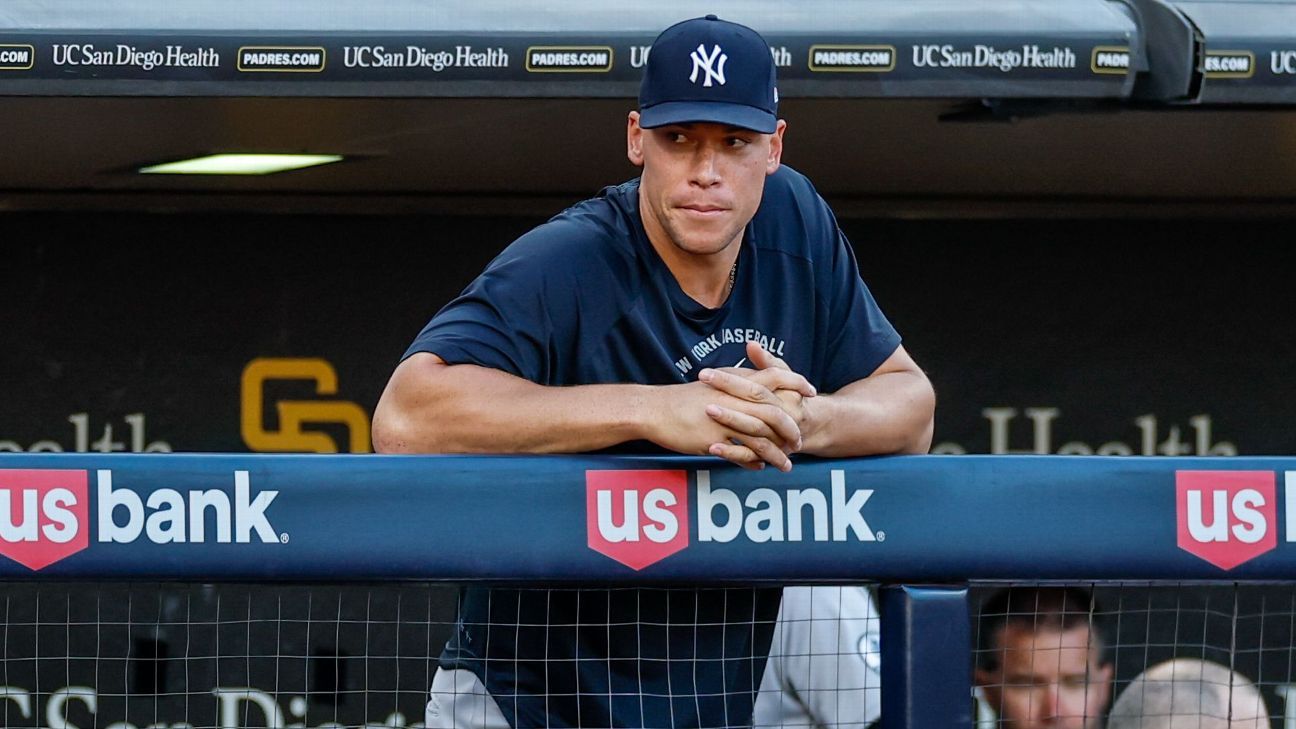
Aaron Judge is back on the injured list with a strained soleus muscle, the lower-calf injury that ended his brief return to action after a three-month absence from a broken rib. As ESPN reported, Judge was removed mid-game Wednesday against Minnesota and placed retroactively on the 10-day IL on Thursday; he remains eligible for activation as soon as September 27, the regular season's final day. The eight-time All-Star offered no firm timeline for his return, saying only "I'd like to be back by the postseason" while acknowledging his body's recovery remains uncertain.
What makes this injury more precarious than the rib fracture is the mechanism: a soleus strain directly undermines a hitter's ability to accelerate through the baseball and generate lower-body torque in the box. Unlike a rib injury—which can be pain-managed in short bursts—calf strains worsen when explosive plantarflexion is required, exactly what happens when a batter strides into a fastball. Judge's seven-game audition since his rib return was bleak: 4-for-23 with 13 strikeouts and a single extra-base hit. That wasn't rust. That was a body signaling it wasn't ready. Now he's lost eight more days—nearly a full week—of conditioning before any attempt to ramp for October baseball.
The Yankees' offensive ceiling without Judge is measurably lower. New York is 48-39 in games he has missed this season versus 41-25 when he plays, a significant gap in a team fighting for playoff position. Judge accounts for roughly 8-10% of the team's power output in a healthy season; his absence compresses expected run production and raises the volatility of nightly team-total forecasts. When a franchise's best run-producer is unavailable, variance spikes: the lineup can still explode against weak bullpens, but baseline production sags against reliable arms.
For prop bettors, Judge's IL stint creates two distinct betting windows. Through September 27, assume Judge is unavailable: Yankees team totals should trade at a discount relative to their season baseline. Any line that doesn't account for Judge's absence as a likely reality is mispriced on the high side. Second, if Judge does activate for the final regular-season game or carries over to the wild-card round, expect a sharp line correction the moment it's announced. The market will aggressively reprice his impact—likely moving team totals up by 0.3–0.5 runs within minutes. Early signals that he's been cleared to play will be worth fading until the books catch up, which happens fast in a playoff environment. The honest mechanic: a healthy Judge adds 0.4 runs per game to Yankees team totals; his absence removes it. Track his IL status closely. The edge exists in the lag between his return and the market's repricing.