MLB · injury
Judge's Calf Strain Ends Comeback Window; Yankees Face Extended Lineup Flux
Seven games after returning from a broken rib, Aaron Judge lands back on the injured list with a right calf strain, forcing New York to reset its offensive timeline during the final stretch.
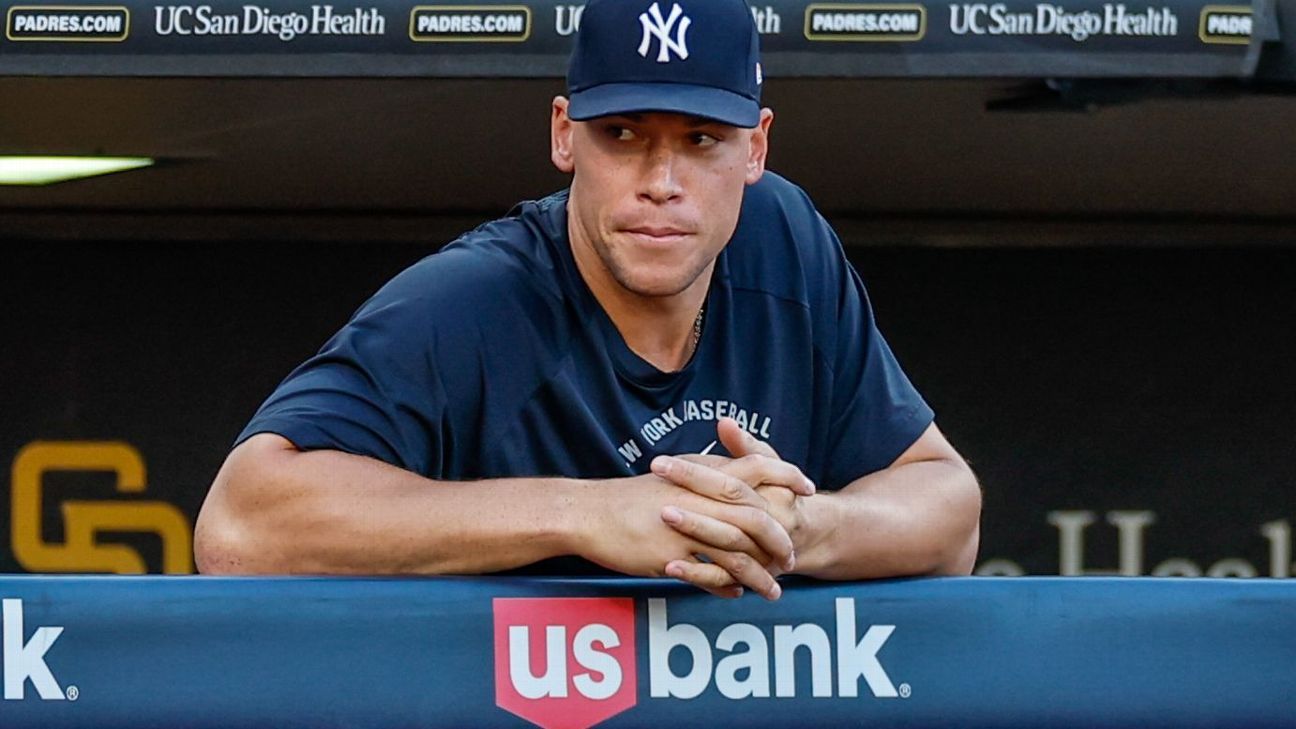
Aaron Judge is back on the injured list. The New York Yankees placed their three-time MVP on the 10-day IL Friday with a right calf strain sustained Wednesday against Minnesota, cutting short what was already an underwhelming comeback arc. Judge had played just seven games since returning from a broken rib injury, posting a .174/.217/.217 slash with 13 strikeouts and one extra-base hit. He was pulled midway through the Twins loss after reporting tightness in his lower right leg during the first inning; the injury compounded after he tracked down a fly ball in the gap but showed no immediate distress at the time.
The timing of this setback is cruel. The Yankees still control a wild-card berth and trail Tampa Bay by five games in the AL East with less than three weeks of regular season remaining. Judge carries a .241 average with 18 home runs and 41 RBIs across 66 games this season—numbers that reflect both the missed time and his struggle to find timing on the comeback. The calf strain, unlike the rib fracture, is not a structural injury that requires a prolonged healing period, but it represents the kind of lower-body aggravation that tends to linger. Soft-tissue injuries in the leg create a cascading risk profile: initial inflammation, compromised push-off mechanics, compensation injuries elsewhere. Judge may be cleared in ten days, but returning to full impact usually requires another two to three weeks of at-bats.
For the Yankees' offense, this is a material loss. Judge still draws premium pitching attention despite his slump, and his absence forces the team to lean harder on their secondary options—Giancarlo Stanton, Juan Soto, and Aaron Hicks—in increasingly high-leverage spots. Stanton himself carries injury risk. The Yankees' expected run-creation dips measurably without Judge's plate appearances, even if his recent performance has been suppressed. Over a full season at his career rates, Judge produces roughly 0.15 additional runs per game beyond replacement; losing him for even ten days plus a ramped-return window costs the team roughly 2-3 runs of offense over that span.
From a prop perspective, Yankees team totals shift materially downward for the next 7-10 days. Books will likely adjust totals down by 0.3-0.5 runs once the IL placement clears, reflecting the gap in offensive production. The edge here is not a recency spike but a baseline-removal mechanism: Judge's departure removes a known, consistent source of offensive value. The mechanism persists because Judge's injury is confirmed and the timeline is defined (minimum ten days); this is not a variance play but a structural one. Soto is the beneficiary in terms of lineup construction—expect his plate appearances and leverage spots to increase, which could push his RBI or runs totals up slightly, but the net effect for the Yankees' run output is negative. Fade Yankees team totals at anything above 4.0 for the next two weeks; look for overs to crater as bettors price in the absence.
The larger question is whether Judge can ramp cleanly once cleared. A calf strain requires his push-off mechanics to be pain-free and explosive to restore his swing timing. If he re-enters too early or with incomplete recovery, the team risks another setback heading into October. For now, assume Judge is unavailable for meaningful contributions until early October, if at all. The Yankees' postseason odds may have already shifted, but their daily prop landscape is about to become far less stable without their best hitter in the lineup.