MLB · transaction
Harper's Outfield Return Reshapes Phillies Lineup — and Their Offensive Math
The Luis Arraez trade forces Bryce Harper back to right field for the first time in over four years, creating both mechanical risk and lineup optimization that bettors haven't fully priced.
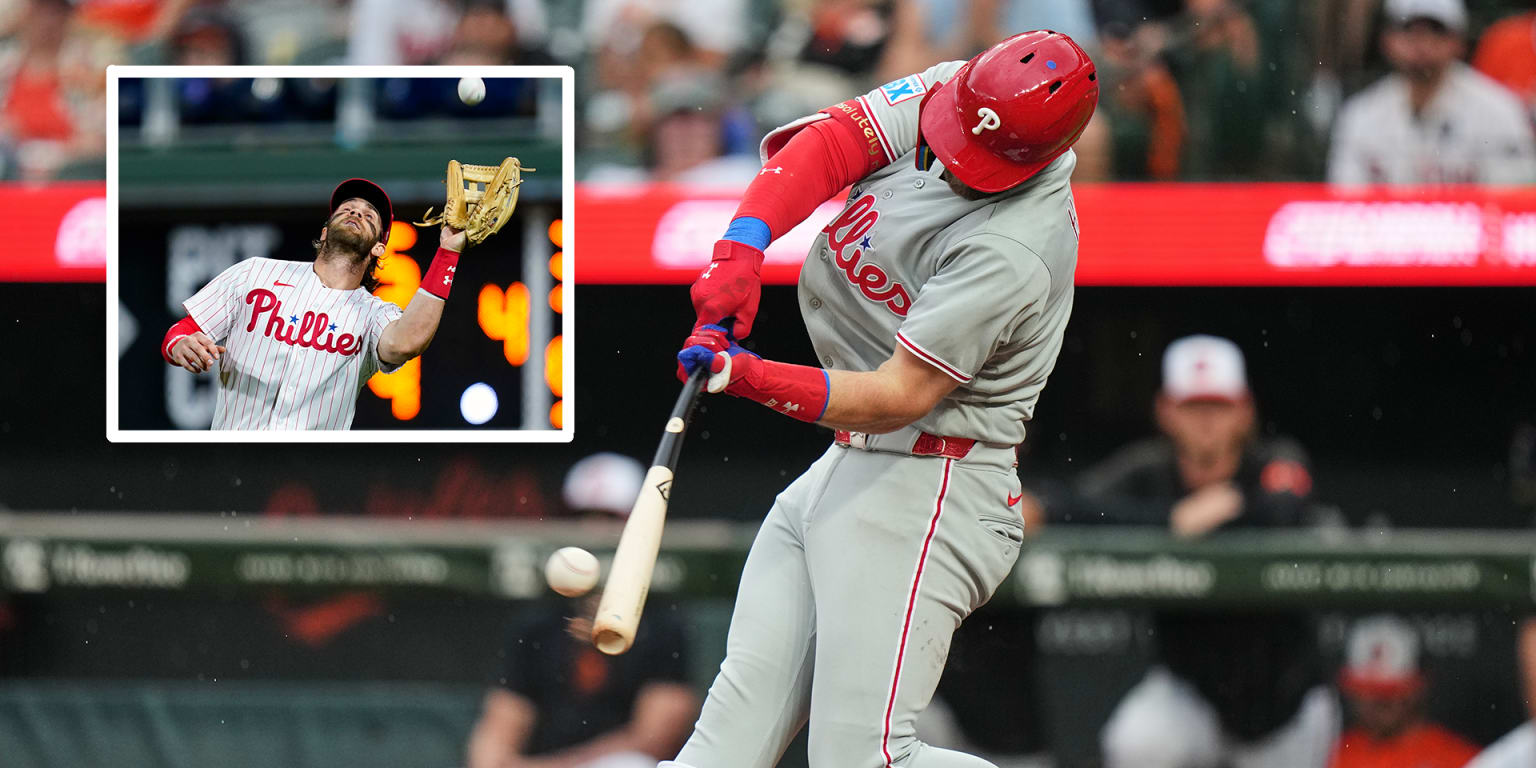
The Phillies acquired Luis Arraez and Caleb Kilian from the Giants on Monday in exchange for prospects, and the move immediately triggered a defensive cascade: Arraez takes second base, Bryson Stott slides to third, Alec Bohm shifts to first, and Bryce Harper returns to right field. Harper's last regular appearance there was April 16, 2022 — before he tore his ulnar collateral ligament and underwent Tommy John surgery that fall. He hasn't played outfield regularly in nearly five years.
Harper's willingness to move is genuine. He texted Dave Dombrowski less than 24 hours before the Trade Deadline explicitly offering to shift positions if the front office found the right fit. Dombrowski found it in Arraez, a three-time batting champion whose elite contact rate (.357 career batting average, 5.2% strikeout rate) will stabilize a Phillies offense that has been streaky down the stretch. But Harper's return to the outfield introduces mechanical uncertainty that interim manager Don Mattingly is taking seriously. The throwing demands in right field — particularly longer distances — require a ramp-up period that doesn't happen overnight after four years in the infield. Harper's arm strength has to rebuild in game conditions, and early throws will likely be cautious. This isn't a cosmetic adjustment; it's a structural change with execution risk baked in.
The lineup gains undeniable offensive juice: Arraez's hit tool and on-base skills will lengthen at-bats and reduce strikeout exposure across the order. But the Phillies' short-term volatility increases. Harper's defensive comfort in right field will develop gradually, not immediately. Over the next two to three weeks, expect his fielding positioning and throw accuracy to improve measurably — but also expect occasional hesitation or misplays as his shoulder and lower body mechanics readjust to outfield geometry. For prop bettors, this creates a duality: Arraez's arrival should elevate the Phillies' team batting average and OBP props over the medium term, but Harper's individual hitting props are now contaminated by the cognitive load of positional adjustment. He won't be thinking purely about pitch location when part of his mind is recalibrating outfield spacing and throwing angles. Conversely, Arraez's plate discipline and ball-in-play consistency should show up immediately in his own contact-rate and BA props — he doesn't need a ramp-up period to see pitches and spray hits.
The edge exists in timing: Arraez's offensive props are likely underpriced in his first week as a Phillie because the market is still pricing a transition discount that doesn't apply to a pure hitter. His three-time batting-title pedigree suggests his .357 career average floor is more reliable than depth-chart position changes. Meanwhile, Harper's props should be faded for the next 10-14 days while his outfield legs settle. Once you see two or three clean games with confident footwork and full-extension throws, the mechanical risk subsides and his baseline value returns. This is a single-event angle — the initial lineup shake-up carries elevated short-term noise — but the mechanism is durable: elite contact players don't lose their eye when positions change, and veterans with elbow histories predictably regain confidence in throwing over multi-week windows, not overnight.