September Reality Check: Raleigh's Late Surge, Phillies' Strikeout Fix, and What Actually Matters
By Erik Schwartz ·
Three weeks left in the regular season and the market's still pricing seasonal trends as if they're predictive—they're not all weighted equally.
We're 27 days from the end of the MLB regular season, and the contention picture has crystallized: teams fighting for spots are mining every available edge, and the data they're chasing is often noise dressed as narrative.
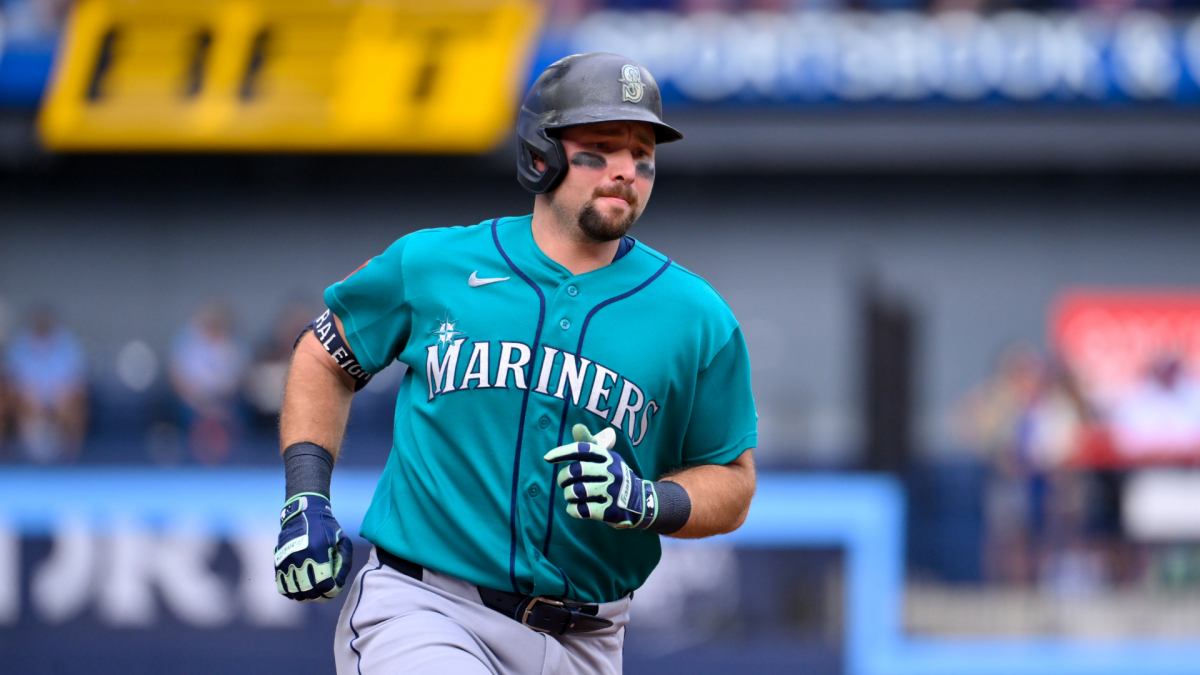
Cal Raleigh's power resurrection is the clearest example of both signal and its limits. The Mariners catcher entered September hitting just .171 after nearly five months of struggle, but he's launched six home runs in his last seven games and eight in his last 14—a pace that earned him AL Player of the Week. The mechanical adjustment is real: raising his hands in his stance earlier than the typical sequence creates a narrower swing path and compresses his decision window. His in-zone miss rate has fallen from 21.4% over his prior 13 games to 16.0% in his last 13—now matching league average. But Seattle has lost 24 of its last 37 games heading into Tuesday. Raleigh's individual correction arrives too late to rescue the team's playoff odds; the Mariners were already mathematically eliminated or close to it by the time his hands found their new home. What matters here for bettors is recognizing the difference between a sustainable technical fix and a variance blip in September. Raleigh's adjustment appears structural—it addresses a timing problem that plagued him all season—but a two-week hot streak on a last-place team doesn't validate it against October scrutiny. The edge, if one exists, belongs to early-season 2027 bets when Raleigh's hand position can be tested against a full season's worth of pitching adjustments.
The Phillies' offensive pivot carries more immediate weight. Philadelphia went 21-7 in August after hitting .236/.303/.398 with 4.37 runs per game in the first half. Since the All-Star break, that's become .258/.336/.409 with 4.88 runs per game—a measurable upgrade driven largely by strikeout reduction. Luis Arraez's arrival lowered the team's whiff rate, but the improvement is team-wide; Alec Bohm, Bryce Harper, and Bryson Stott have all tightened their approach. Philadelphia sits four games behind Atlanta in the loss column with seven head-to-head matchups remaining against the Braves, and the NL East winner gets a Wild Card Series bye. The offensive data here is actionable: if the Phillies face a starting pitcher who relies on strikeout velocity (high fastball rate, limited movement variance), their refined pitch recognition should suppress K totals relative to the pitcher's season average. Against a sinker-slider guy in a contact-heavy scheme, that edge compresses.
For prop bettors, the Phillies' strikeout reduction is durable because it stems from a lineup-level adjustment, not a single player's correction or a September variance spike. Test their team strikeout rate in the next week against opponents' K/9 rates; if the Phillies consistently underperform the pitcher's seasonal whiff rate by 1-2 strikeouts per game, the market has likely overweighted recent history. Conversely, don't chase Raleigh's power line at inflated juice just because he hit six dingers in seven games; that's recency pricing itself into a two-week sample.
The Angels' organizational struggles—buried in the second wild-card position and falling out of contention despite mid-season trades—represent a third category: sunk cost. Los Angeles made moves believing they had a window, and they didn't execute. That narrative doesn't move betting lines; execution does. By late September, teams are auditioned for next year, and individual performance becomes the only variable that matters. Raleigh's mechanical fix might save his 2027 value. The Phillies' strikeout discipline could carry them to a division title. The Angels' season-long dysfunction is already baked into their October probability. Bettors should distinguish between which trend is structural, which is timing-dependent, and which is already dead.