MLB · transaction
Burns Extends First-Half Dominance Into Second Half, Contract Security Intact
Five scoreless innings against Seattle, a 2.42 ERA, and a $105 million extension locked in—Burns is operating at elite efficiency with no reason to expect regression.
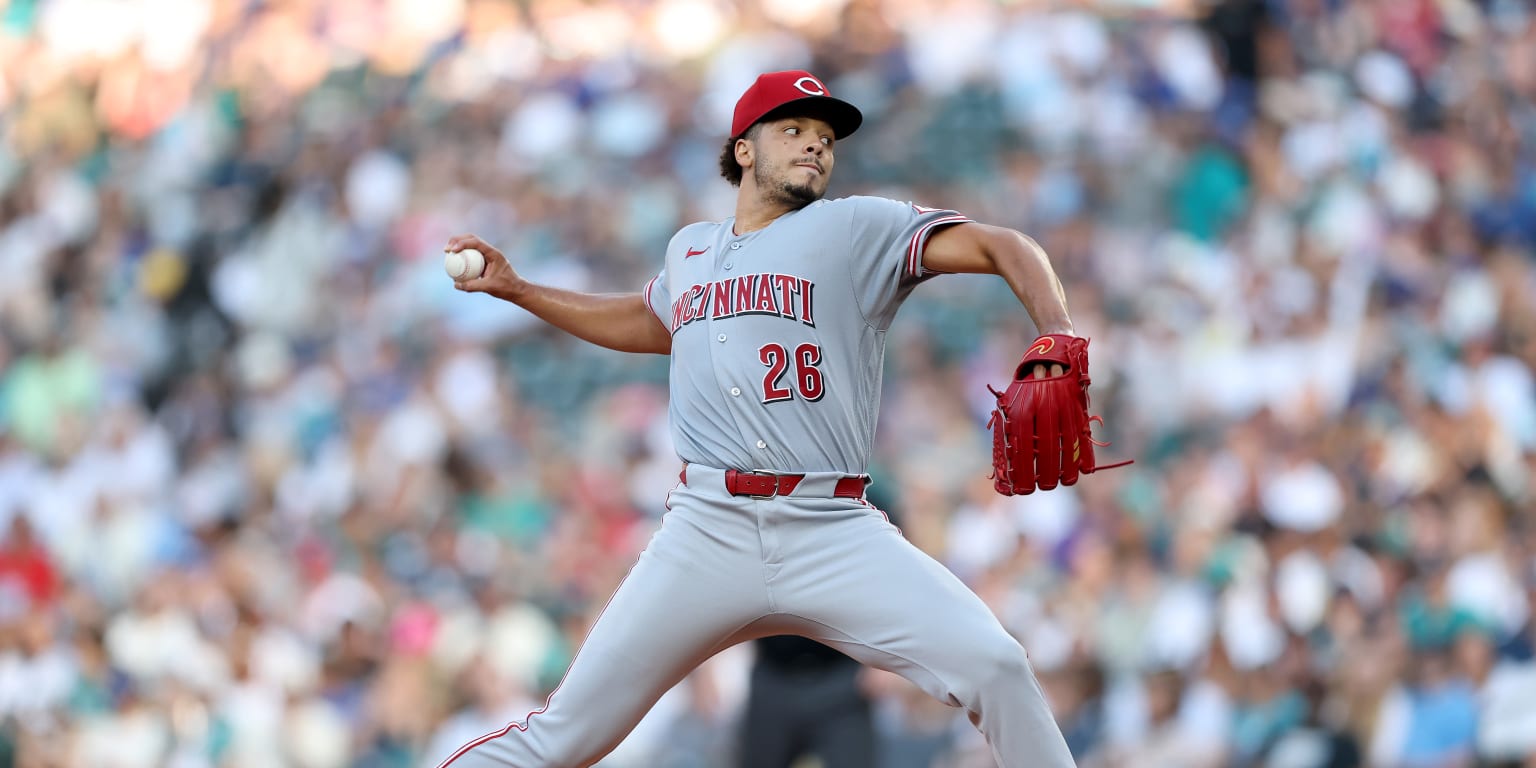
Chase Burns picked up exactly where he left off Tuesday night in Seattle. The 23-year-old right-hander worked five scoreless innings against the Mariners, surrendering three hits and two walks while striking out six. He exited with a 3-0 lead in hand and his ERA now down to 2.42 across 107⅔ innings pitched this season. More telling: Burns entered the night with an 11-1 record and has allowed two or fewer runs in 16 of his 19 starts—a consistency rate that goes beyond variance and into evidence of genuine command.
The mechanics of Burns' dominance were visible in his Seattle outing. He navigated early traffic—walks in the first and fourth, singles scattered through the first two innings—by pitching to weak contact and generating strikeouts when it mattered. In the second inning, with baserunners on, he struck out the side. In the fourth, with runners at the corners after a leadoff walk and a blooped single, he punched out Luke Raley and induced outs from the next two hitters. That's not luck. That's a pitcher executing his best stuff in high-leverage moments. The Reds' offense did its part early—Elly De La Cruz hit a solo homer in the first and Eugenio Suárez added another in the fourth—which meant Burns could pitch with a cushion, but he didn't need it to dominate.
The contract extension Burns signed on Saturday—seven years, $105 million, running through the 2033 season—is organizational validation of what his performance has already proven. Cincinnati paid for a pitcher already operating at Cy Young-caliber metrics, not speculation on future potential. That's the inverse of prospect pricing; the Reds are using money to lock in present-day excellence. A 23-year-old on a long-term deal with a sub-2.50 ERA through mid-July, pitching to weak contact and limiting walks, is the definition of structural advantage.
For prop bettors, Burns presents a contrarian opportunity because the market will likely overcorrect on the near-term. After a five-scoreless-inning performance, books will shade his strikeout lines and team total unders higher than the underlying mechanics warrant. But Burns' 124 strikeouts in 107⅔ innings (10.38 K/9) represents elite strike-zone command against major-league hitters, not a hot streak. His 2.42 ERA and 16-of-19 starts allowing two or fewer runs isn't variance—it's a repeatable pattern of generating weak contact and avoiding free passes when it matters. The market's immediate reaction to Tuesday will be to tighten his lines, but Burns' actual skill set hasn't changed. The edge exists in backing his strikeout volume against softer opponents over the next two weeks before sharper books reset those lines downward in line with his true talent.
The Reds' confidence in Burns extends beyond money. He's operating within a sustainable framework: low walk rate, elite strikeout rate, weak-contact generation, and team support that allows him to pitch efficiently. None of those inputs look likely to reverse in the short term. Tuesday's start against Seattle wasn't a breakout—it was continuity.
MLB Intelligence — Baseball intelligence beyond the box score. Open MLB Intelligence →