Chase Burns Locks In Long Money: What Cincinnati's $105M Bet Means for Reds Betting Strategy
By PropBetEdge Editorial Team ·
Cincinnati bet $105 million that Chase Burns will anchor its rotation through 2033, and the market hasn't fully priced what that commitment costs the rest of the lineup.
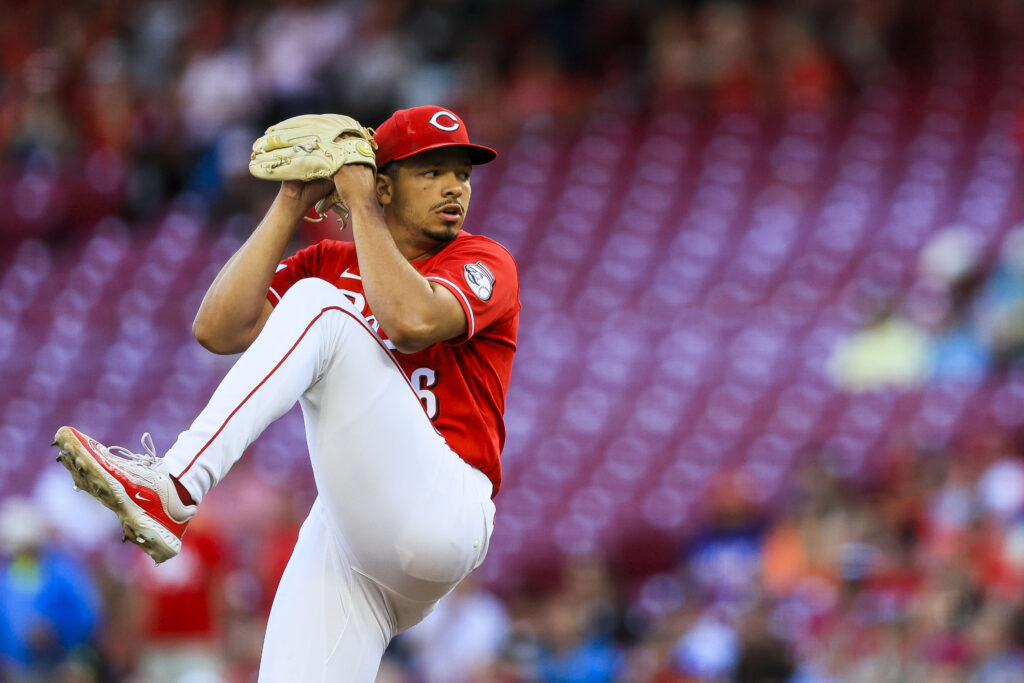
The Reds and Chase Burns agreed Thursday to a seven-year, $105 million extension that begins in 2027 and runs through 2033, per Jon Morosi of MLB Network. Burns was already under team control through arbitration until 2031; the deal simply front-loads his years of control and converts uncertainty into a franchise cornerstone. At roughly $15 million annually, the pact ranks Burns among the mid-tier ace salaries in baseball—reasonable for a pitcher in his prime, but only if he maintains the form that earned the extension in the first place.
Burns has emerged as the Reds' most reliable starter, and Cincinnati's front office is banking on sustained excellence. The extension also signals internal valuation: the Reds committed seven years of payroll to one pitcher, which necessarily constrains flexibility elsewhere on the roster. Payroll is finite. When Cincinnati allocates $15 million per year to Burns, that capital isn't available for position players, relief depth, or mid-season upgrades. That trade-off matters for bettors pricing Cincinnati's win total and team-total runs.
The immediate betting implication is strikethrough. Burns' individual strikeout props and innings-per-start lines won't shift materially from this contract news alone—his performance profile doesn't change on the day the ink dries. What does change is Cincinnati's financial posture heading into 2027. If the Reds committed $105 million to one pitcher, they're signaling they believe the rest of the roster can compete around him. That's either optimism or constraint depending on how you read it. If it's constraint—if Cincinnati is banking on internal development and veteran depth rather than external spending—then Reds team totals should compress slightly as investors price in a roster that's not adding premium position talent.
For the 2027 season and beyond, Burns' strikeout volume and quality starts become more durable betting anchors. A pitcher locked into a long-term deal with a team typically receives consistent run support and usage patterns; there's no front-office incentive to suppress his workload. Burns can be modeled as a 200-inning, 8+ K/9 starter for the next seven years with high confidence. That durability reduces single-season variance and makes his over-strikeout props into tighter edges against public perception. If the market prices Burns as a volatile arm based on recent volatility, but Cincinnati's organizational commitment signals they expect sustained health and output, the edge flips in favor of the pitcher's over prop at conventional -110 or better.
The real betting action, however, is on the Reds as a team. Seven years of $105 million locked into one arm is a leverage play on Cincinnati believing its hitting and depth pitching can carry the rest. If those bets pan out, Reds team totals run over. If they don't, Cincinnati becomes a seller-in-waiting with an anchor contract. For now, price Cincinnati's 2027 and 2028 team totals with caution—the organization is betting its payroll efficiency on development and homegrown talent, not free-agent reinforcement.