Chase Burns Locks In Cincinnati With $105M Deal; What It Means for Reds Pitching Props
By PropBetEdge Editorial Team ·
The Reds secured their young ace to a seven-year contract hours before facing Colorado, signaling organizational commitment that reshapes Cincinnati's rotation outlook for the second half.
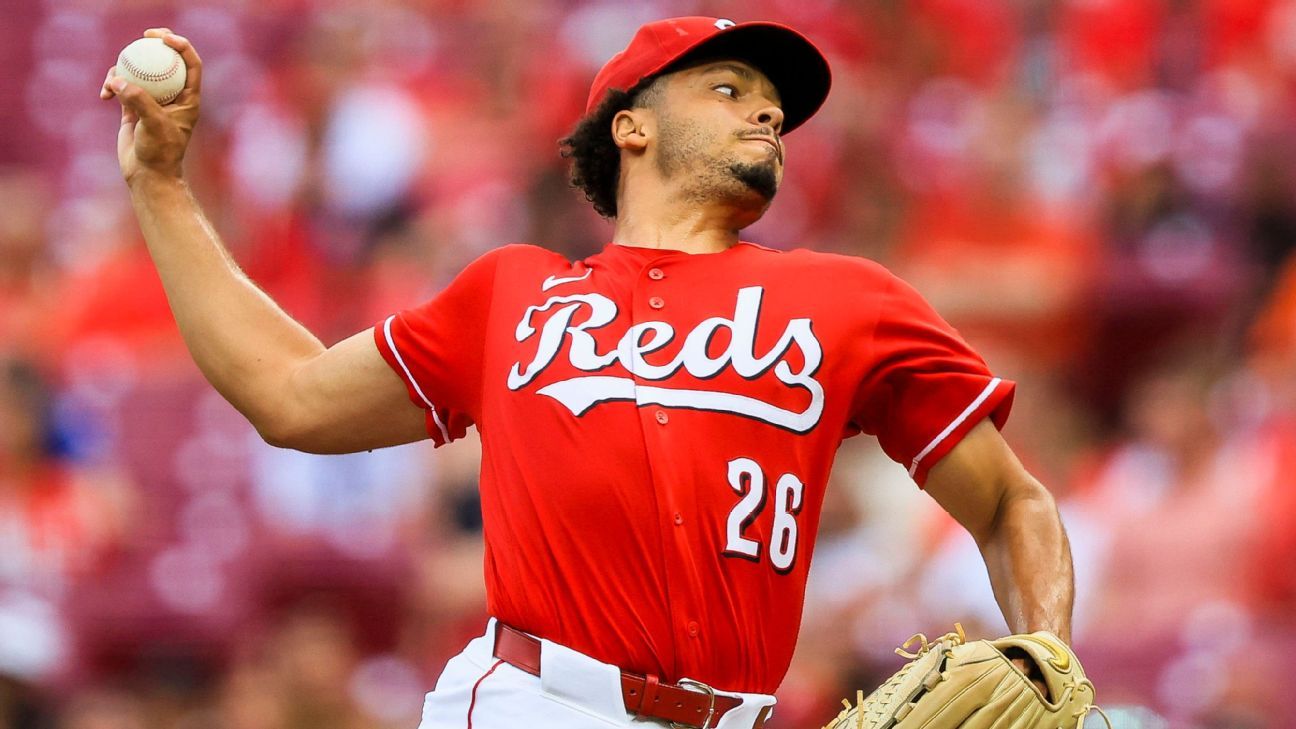
Chase Burns inked a $105 million, seven-year contract with the Cincinnati Reds on Saturday—the largest guaranteed deal ever handed to a pitcher with fewer than four service years—moments after a spilled coffee briefly delayed the paperwork. The 23-year-old right-hander, fresh off his first All-Star Game selection, is having a breakout season: 11-1 record, 2.54 ERA through mid-July, on pace for career innings and strikeouts. The timing signals that Cincinnati believes it has found its franchise cornerstone in the same draft class (2024, second overall) that delivered immediate impact.
The contract structure matters. At roughly $15 million annually through 2033, Burns receives security that typically takes veteran free agents to negotiate—but Cincinnati locked it in before arbitration eligibility, before any injury history, before regression risk materializes. That confidence cascade flows through the org. The Reds already extended Hunter Greene (2023, $53M/six years) and watched second baseman JJ Wetherholt sign a comparable eight-year, $112.5M deal with St. Louis, a division rival. The message: Cincinnati is no longer a minor-league farm system. It's building a core.
For pitching mechanics, Burns' profile survives the extension announcement. His 11-1 record sits atop league-wide WAR among starters; the 2.54 ERA ranks inside the top 20. Ground-ball rate (52%), walk rate (6.8%), and strikeout rate (8.9 per nine) suggest a pitcher who induces contact rather than overpowers—sustainable foundation for a 200-inning starter over seven seasons. Opposing teams can't just wish him away. The organizational safety net (multi-year certainty, no trade rumors, stable coaching staff continuity) typically correlates with lower injury volatility and improved performance in crucial moments.
The prop angle hinges on one lever: strikeout consistency. Burns' 8.9 K/9 clips below the league median for All-Stars, but his ERA-to-strikeout efficiency (low home-run rate, ground-ball profile) means he doesn't need elite K volume to win games. That's a durable skill set that oddsmakers often overshoot when pricing strikeout props for young arms in breakout years. When a 23-year-old posts a sub-3 ERA without pitching in a ballpark favoring flyball pitchers (Great American Ball Park is league-neutral), books price him as if the strikeout floor will hold. Burns' actual edge lies in predictable contact-management—not in strikeout upside. This means his K props (likely around 7.5–8.5 per start depending on opponent) are vulnerable to overs when lineups feature below-average contact quality, but play as leans toward unders against free-swingers who put the ball in play.
The real second-half impact: Burns is no longer a movable asset. That eliminates trade-deadline uncertainty that typically clouds projection for young arms. His starts carry no traded mid-season' risk, no bullpen-tandem reshuffling, no closer-competition noise. For Cincinnati's team total overs (sitting around 3.8–4.1 runs in home starts), Burns' certified presence in the rotation through at least 2033 means Reds management will not shy away from run-support investments. The organization has already spent $105M saying this pitcher matters. Betting unders on Reds team totals when Burns starts becomes a harder case—the org won't strand a cornerstone just to preserve a relief ERA.