MLB · milestone
Home Run Props on a 15-Game Slate: Why Platoon Advantage + Pitcher Weakness = Edge on Friday
A full Friday card with Yankees-Red Sox and Dodgers-Padres matchups sets the stage for exploitable home run props where hitter-pitcher splits and recent pitching degradation align.
Friday's 15-game slate opens with three marquee series: Yankees visiting Boston, Dodgers heading to San Diego, and Braves traveling to San Francisco. Within that volume sits a familiar betting pattern—home run props tied to platoon matchups where one side has documented splits and the opposing pitcher has recently coughed up long balls at an elevated rate.
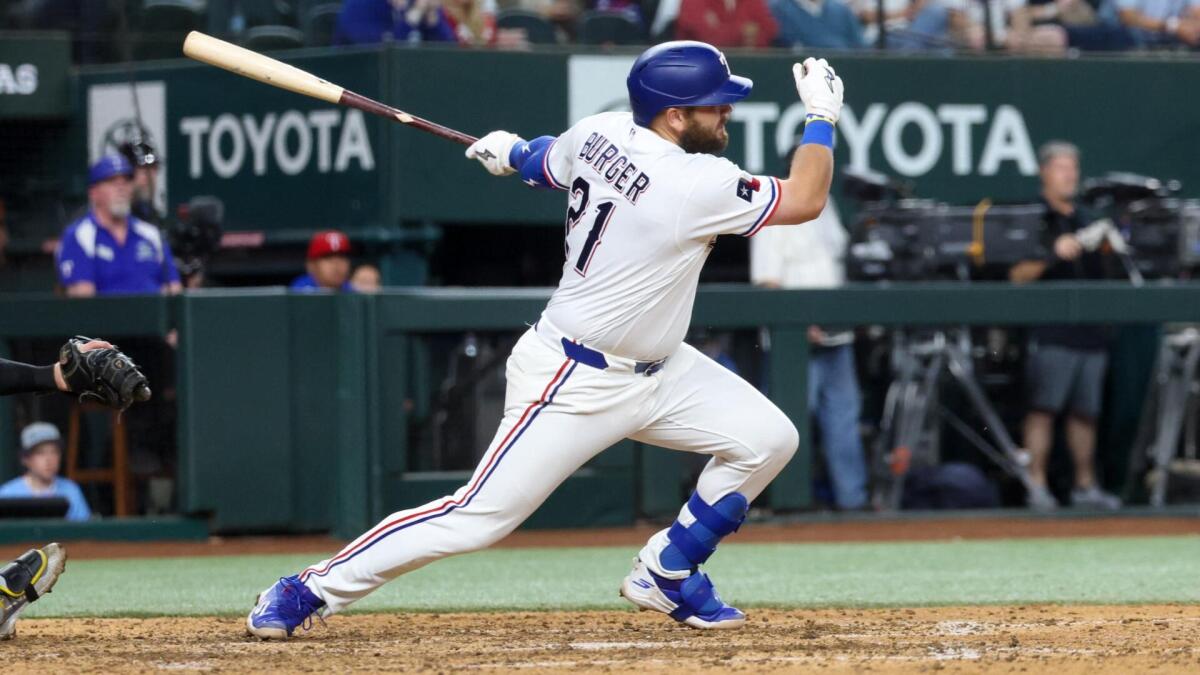
The mechanical edge appears sharpest in three spots. Jake Burger, Rangers first baseman with 14 homers on the season, faces Blue Jays starter Patrick Corbin. Burger's split data is clean: he's hitting .273 with a .879 OPS against left-handed pitchers (Corbin throws left) and has deposited 12 of his 14 season homers in road games—he's currently traveling. Corbin's profile deteriorates further: right-handed batters are crushing him at .303 with a .869 OPS, and over his last three starts he's allowed 11 earned runs in 11⅔ innings with two home runs surrendered. That's not one outlier start; it's a three-game trend suggesting command or stuff degradation. Similarly, Jake Bauers of the Brewers carries a .928 OPS against right-handed pitchers (Cubs starter Colin Rea throws right) with 12 of his 14 homers coming off righties. Bauers also owns a .892 OPS in home games at Milwaukee. Rea has surrendered 11 earned runs in 15⅓ innings over his last three starts with three home runs given up—again, a rolling decline, not noise.
The third name, TJ Rumfield of the Rockies, faces perhaps the most asymmetric split. Against right-handed pitchers (Twins starter Taj Bradley), Rumfield is posting a .916 OPS with 11 of his 12 season homers. His reverse split against lefties sits at .647 OPS, which underscores how heavily his power skews toward this specific arm side. Bradley has yielded five home runs over his last three starts, including two multi-homer outings in 15⅔ innings. The platoon advantage compounds an already vulnerable pitcher.
What separates these from opportunistic same-day picks is durability. Each hitter carries a multi-week record of elevated OPS against the pitcher arm they're facing today—not a single hot streak. Burger's 43 road games and Bauers' Milwaukee splits represent sample sizes large enough to resist single-game variance. The pitchers, conversely, are in active decline across three-start windows, which is more predictive than a one-start outlier. The market is pricing these props with standard baseline home run rates; it hasn't yet indexed the specificity of platoon matchups paired with pitcher degradation in motion. Once books adjust—usually within 24-48 hours after sharp action moves early lines—these odds will compress. The edge window is shortest on Friday morning before the slate locks.
Bettors should also recognize that home run props on a 15-game slate carry natural variance. Any single at-bat remains low-probability relative to longer seasonal trends. However, the confluence of favorable splits, pitcher recent form, and game volume creates a favorable expected-value environment for targeted positions. Parlaying these three names amplifies the risk-return profile; the payoff cited near 200-1 reflects the compounding improbability of three home runs landing in a single slate, but the individual odds reflect pitcher vulnerability that the market has not yet fully priced.
MLB Intelligence — Baseball intelligence beyond the box score. Open MLB Intelligence →