Rocker's Fielding Drills Pay Off as Rangers Claw Back into AL West Tie
By Ty Whitney ·
Kumar Rocker's mechanics refinement—visible in pre-game work—translates to competitive starts; Texas ties Houston at 77-77 with bullpen depth emerging as a secondary edge.
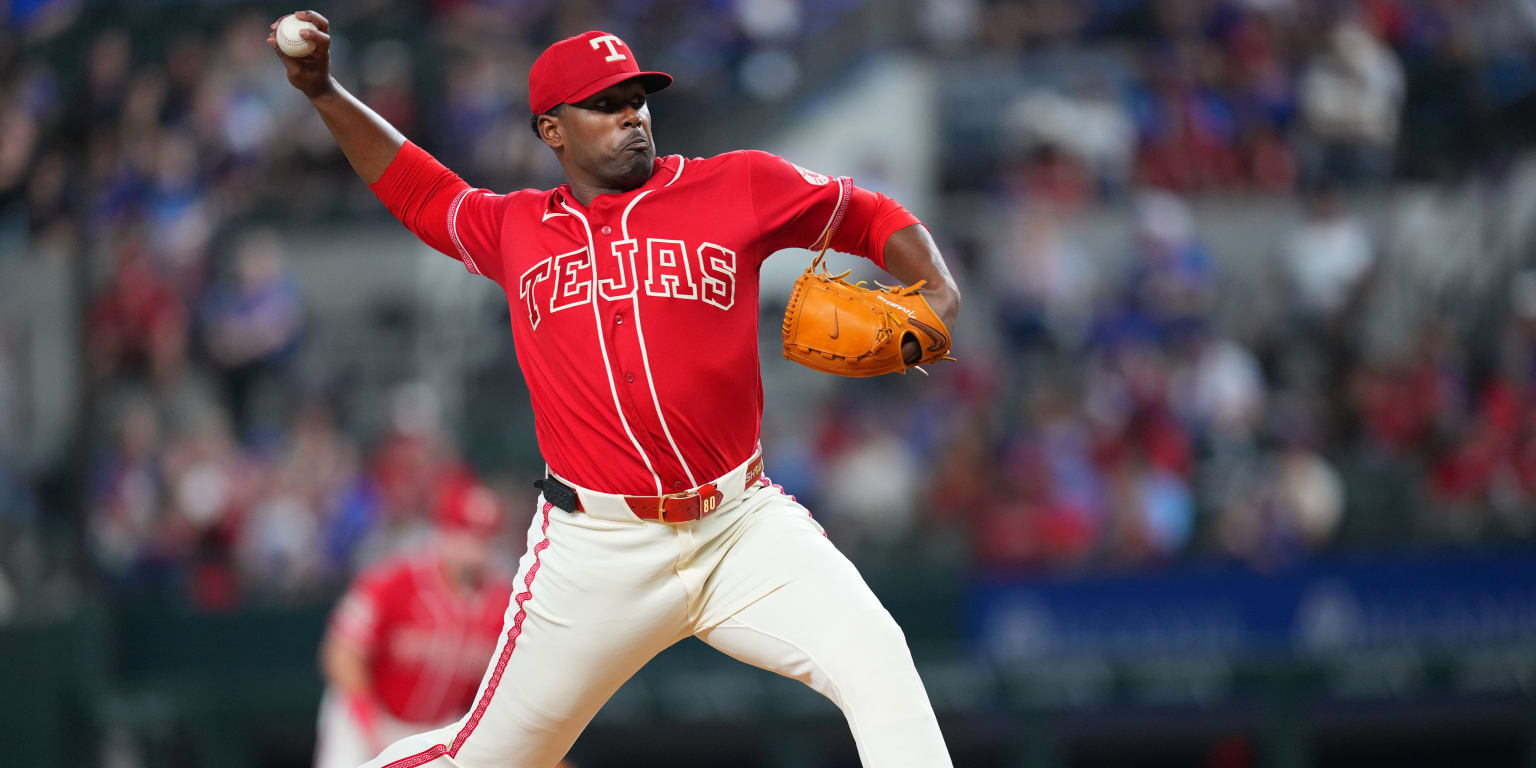
The Rangers scraped back into a deadlock with Houston in the AL West on Friday night, 77-77 apiece, after dismantling the Blue Jays 7-1 at Globe Life Field. Kumar Rocker, in his 29th start of the season, delivered the kind of stabilizing outing that doesn't require perfection—just sufficient innings and clean execution. He surrendered one run across 4⅓ innings against Dylan Cease, a legitimate AL Cy Young candidate, then handed off to a bullpen that covered the remaining 4⅔ frames without breaking. The structural story here matters more than the final line.
Rocker's second full season has been marked by one persistent liability: his footwork and timing on balls in play, particularly when forced to cover first base on right-side grounders. The Rangers' coaching staff recognized the problem acutely enough to schedule deliberate fielding practice hours before first pitch. That investment paid immediate dividends. On the very first play of the game, Rocker read Brett Bateman's slow roller correctly, sprinted to the bag, and converted the feed from Jake Burger without drama. It was a tell: the mechanical work was sticking. Across the outing, Rocker allowed only two baserunners through four innings, both singles to left field—low-leverage contact that advanced runners minimally. He then walked the first two batters in the fifth, saw a double to Myles Straw end his day, and exited having delivered the frame he needed to deliver.
The sequence repeated a pattern from his previous start in Arizona. Rocker runs hot through the first four frames, then loses command in the fifth—a sign of either fatigue or pitch sequencing imbalance, not a new development. What's material is that Texas has isolated the problem and is managing it within his workload. Tyler Alexander inherited the mess and stranded both runners. Trevor Williams, acquired on September 1st, followed with four scoreless innings, keeping the bullpen reservoir intact heading into the series finale and beyond. This is organizational competence under pressure: recognizing a weakness, drilling it, and structuring game deployment to exploit the fixed window.
For betting purposes, the Rangers' next three games carry elevated volatility because this bullpen depth—now visible and proven—compresses around a narrow roster window. Williams and Alexander are complementary arms on borrowed time. If either absorbs meaningful wear over the next 48 hours, their availability for the final stretch tightens immediately. Rocker's starts become more predictable now that the fielding issue is addressed: expect him to eat 4.5 to 5 innings consistently, vacate on the fifth-inning walk, and hand off fresh arms. The Rangers' team totals will track more reliably to their hitting strength (they scored seven runs against a Cy Young contender) than to bullpen heroics. For the Blue Jays series finale and beyond, Rocker's strikeout props should stabilize; his K/9 likely improves now that he's not managing mechanical anxiety on the mound.
Houston's loss to Atlanta means the Rangers are not yet buried—they're level with the Astros and one game shy of the final wild card. That's not a play-in positioning; it's a runway. Every start from Rocker, every Williams appearance, and every ground ball he fields cleanly between now and October 1st inches them closer to October. The market hasn't fully digested that the coaching staff identified and began fixing a repeatable flaw mid-season. That's a durability edge that compounds.