Rangers Explode for 8 First-Inning Runs After Getting No-Hit; What the Swing Tells Us About Momentum and Pitching Fatigue
By Erik Schwartz ·
Texas erupted for its largest first inning of the season immediately after suffering a combined no-hitter, a sequence that exposes a real vulnerability in how Houston's bullpen arms function in back-to-back games.
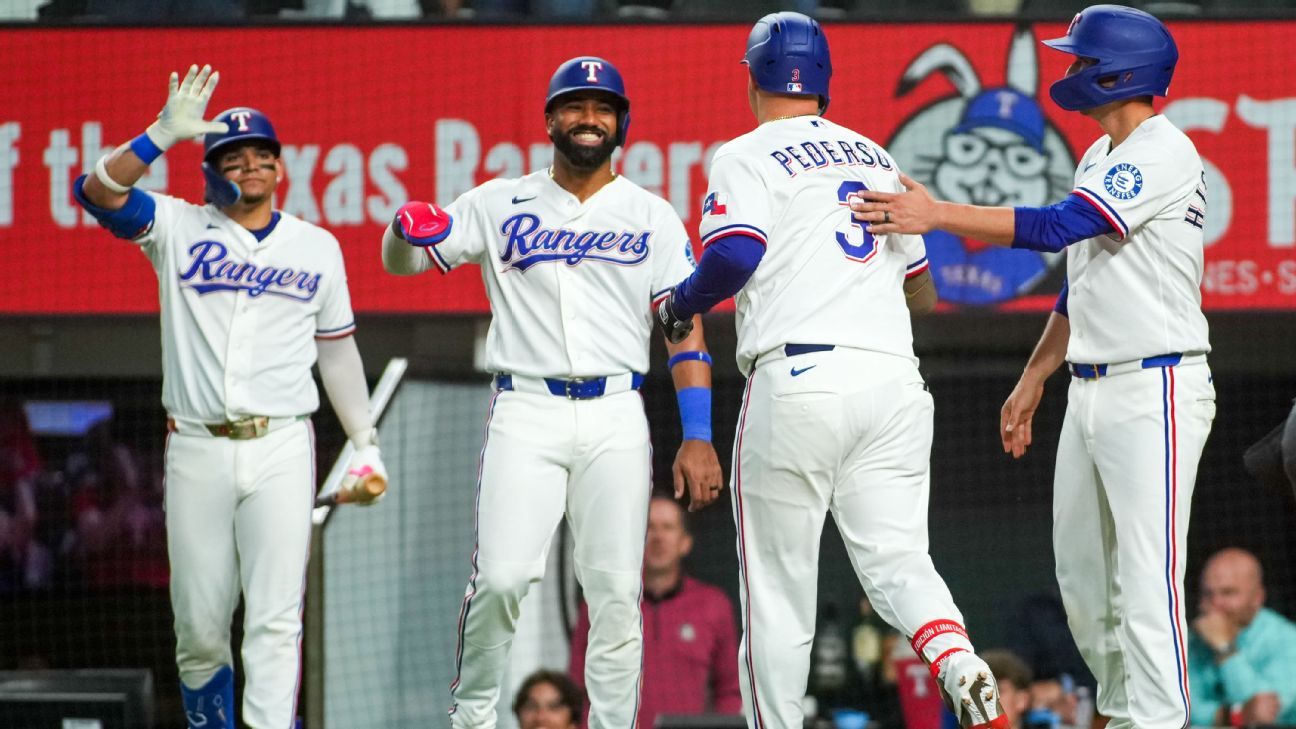
The Rangers scored eight runs in the first inning Tuesday night against Houston, capped by a Joc Pederson three-run homer, just 24 hours after three Astros pitchers combined to no-hit them 9-0. The timing—and the mechanics of how Texas attacked—matters more than the surface narrative of emotional rebound.
Houston's no-hitter came courtesy of starter Tatsuya Imai, relievers Steven Okert, and debut-maker Alimber Santa, who threw 97 pitches combined across nine innings in a complete shutdown. For a bullpen already tasked with coverage the night before, that workload creates a cascading effect: the arms available Tuesday are either fatigued, unavailable, or forced into early-inning duty before they're fully warm. Jason Alexander took the mound for the Astros opener Tuesday and allowed six baserunners before recording a third out. Brandon Nimmo's single started the sequence; Jake Burger followed with a two-run single; Evan Carter's bouncing triple into right scored two more; Ezequiel Duran doubled off the wall to bring in another run. By the time Pederson launched his 399-foot fastball for the final three runs, Alexander had nothing left in the chamber.
This wasn't Texas swinging with a chip on its shoulder. It was Houston's rotation stepping into a game where the bullpen had already fired its ammunition. The no-hitter—impressive as it was—inflated the leverage on starters in the follow-up contest and created immediate vulnerability to a lineup that was primed to capitalize on early sloppiness. The Rangers' eight-run first tied the Toronto Blue Jays for the most any team has scored in a first inning this season, a distinction that carries weight for future matchup analysis.
For prop bettors tracking team totals and first-five-inning lines, the sequence reveals a structural edge: when a bullpen-heavy performance in Game 1 (99+ pitches across relief arms) precedes a Game 2 matchup with the same team, the starter in Game 2 carries elevated volatility in their opening inning. Alexander's inability to escape the first—and his fastball flattening by pitch 47—isn't random variance; it's a function of bullpen depletion forcing earlier or less-recovered starters into the lineup. Houston's bullpen was stretched thin entering Tuesday. The Rangers exploited that window within 18 pitches.
Looking ahead at Rangers-Astros rematches or similar back-to-back scenarios where one team's relief corps has absorbed heavy volume, first-five-inning overs on the team facing the fatigued staff carry genuine edge. The market will price in the emotional narrative (Rangers rebound, let's fade them) rather than the mechanical one (relievers were exhausted, starter got exposed). That asymmetry is where the angle lives—and it lasts only as long as the bullpen hasn't recovered its depth chart.