MLB
Dodgers' Skubal Trade Reshapes NLDS; Hernández and Hot Offenses Set Tone in Game 1 Sweep
Los Angeles and Chicago won decisively in Saturday's Division Series openers, but the Dodgers' deadline acquisition of Tarik Skubal is the move that will define how the rest of October unfolds.
The 2026 postseason officially opened Saturday with four Division Series Game 1s. The White Sox blanked the Guardians 3-0, and the Dodgers topped the Braves 5-3, each team claiming early control of their respective series. Historically, Game 1 winners advance in 73% of cases—a durable edge that carries weight through the best-of-five format. But the real story wasn't volume; it was execution and roster construction.
Tarik Skubal, the two-time defending Cy Young winner, made his Dodgers debut on Saturday and was nearly untouchable. He worked six innings, allowed one hit, struck out seven, and gave up only a solo homer—all while inducing eight whiffs on his changeup alone out of 15 swings drawn by the pitch. The Tigers traded him in July when they waved the white flag; the Dodgers paid the price and immediately reaped the dividend. What matters for prop evaluation is not just that Los Angeles landed the best pitcher available, but that every other contender did not. Had Atlanta or any other contender acquired Skubal, the postseason composition—and every team total, strikeout line, and first-five-innings prop flowing from it—would read entirely different. The market repriced Dodgers rotation strength at the deadline; those prices held through Game 1.
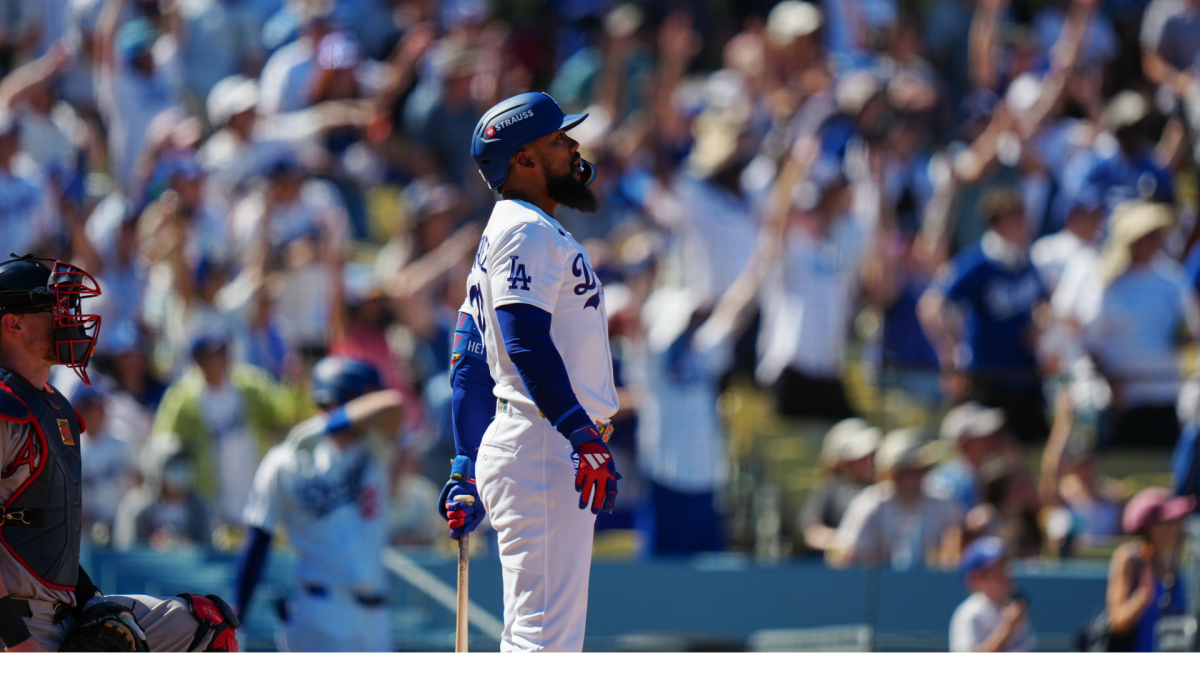
On the offensive side, Teoscar Hernández has become a postseason weapon in ways that transcend a single game. His 11 career playoff homers across 38 games, with at least one in each of his last six postseason series, isn't noise—it's a structural advantage the Dodgers carry into every October. More relevant to live betting: Hernández posted a .352/.433/.582 line over his final 25 regular-season games, a stretch that began when Dave Roberts contemplated benching him in late August. He broke out with five homers, 20 RBIs, and 15 runs in that span. On Saturday, he capitalized on a Freeman walk with a two-run blast in the fourth inning that ultimately held as the margin of victory. Kyle Tucker added a two-run insurance shot in the sixth, but Hernández's at-bat was the kill shot—the moment when the Braves' pitching staff conceded the series.
For props moving forward, Game 1 outcomes compress uncertainty but don't eliminate it. The Dodgers' strikeout total for their rotation has legitimate air under it now that Skubal's performance is documented; books will shade overs on Dodgers pitchers' K props slightly higher, but the edge is already baked in for Game 1 fill. The actionable angle sits in Games 2 and 3, where the Braves will face Clayton Kershaw or another Dodgers starter without Skubal's peak stuff. Conversely, Hernández's hot-bat momentum is persistent, not ephemeral—he's shown it over a 25-game sample and carries the same swing mechanics into Game 2. Team totals for Los Angeles should remain sticky near 4.5 runs per game for the remainder of the series, with moderate upside if matchups favor the Dodgers' lineup again. The White Sox shutout of Cleveland suggests defensive execution and bullpen depth won the day; those single-game variance plays fade quickly, making White Sox pitching props unreliable for Games 2-5.
The 73% Game 1 win-series win correlation is real, but it's also already priced. What lingers is the Dodgers' structural advantage at the top of their rotation—a gap that widens if the series extends past Game 3. Any prop bet riding on Braves pitcher strikeouts or team totals in Games 2-4 should factor in that Skubal's presence reshapes relief usage and offensive aggressiveness. The Dodgers aren't just up 1-0; they're up with the best pitcher in baseball available for every remaining game.
MLB Intelligence — Baseball intelligence beyond the box score. Open MLB Intelligence →