MLB · lineup
Arizona's Littell Gamble: Discount Innings for a Rotation in Crisis Mode
The Diamondbacks claim a struggling starter days after the Trade Deadline, banking on context shift and elite defense to salvage a volatile pitcher.
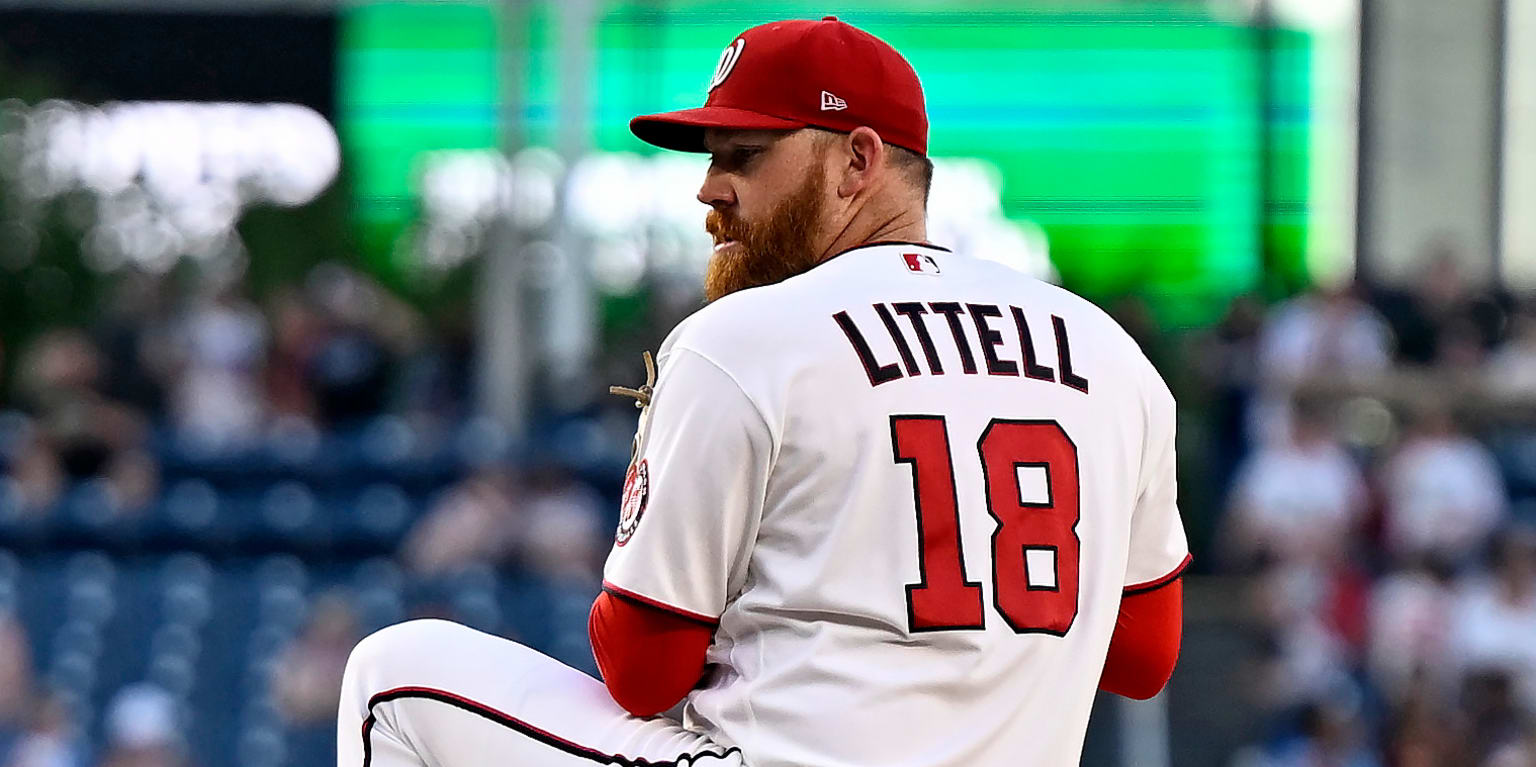
The Diamondbacks have acquired right-hander Zack Littell from Washington, claiming him off waivers less than a week after the Trade Deadline. Arizona absorbs only a prorated portion of his $7 million salary—a low-cost hedge for a rotation that has taken collateral damage from injuries to Zac Gallen (right elbow inflammation), Corbin Burnes (Tommy John surgery and teres major strain), and the recent exit of Merrill Kelly from a start due to a right leg cramp. Littell arrives with middling credentials: a 4.04 ERA across 89 starts since the Rays converted him to the rotation in mid-2023, paired with a concerning trend in 2026 where his four-seam fastball has been crushed to a .306 average and .639 slugging percentage, generating 25 home runs in 112.1 innings.
The arithmetic of this deal hinges on Arizona's defensive prowess and the pitcher's pitch mix. Littell is not a velocity play—his four-seam averages 91.7 mph—but a contact manager who leans on a slider (.227 average allowed in 2026) and a five-pitch arsenal deployed to both sides of the plate. His walk rate has been better than league average in each of the past three seasons, and his strikeout rate of 7.3 percent (67th percentile) remains solid, if not dominant. The Nationals' Blake Butera praised Littell's clubhouse presence and flexibility, which speaks to durability and institutional value, but the May-to-June collapse (2.35 ERA in May; 5.25 ERA in 10 outings since June 12) exposes the volatility baked into his profile.
Arizona's second-ranked defense by framing metrics provides a concrete tailwind. Contact pitchers benefit disproportionately from elite glove work behind them—the difference between a 4.20 ERA and a 3.70 ERA can be 50-80 points of defense-independent pitching (DIPS) advantage. Littell's weak fastball becomes less dangerous when ground balls are converted and fly balls are tracked down. He worked at least five innings in 15 of 23 Nationals appearances, signaling endurance and a willingness to eat innings in a swingman role. That workload utility is precisely what Arizona needs with Gallen and Burnes in uncertain recovery windows and Drake optioned to Triple-A.
For bettors, the Littell addition creates two distinct angles. First, Arizona's team pitching totals over the next 10-14 days—before the claimed pitcher fully integrates—should be treated with caution if they've moved sharply lower on the news. The market often misprice deadline pickups as immediate quality upgrades; Littell's actual impact depends on sequencing luck and how the Diamondbacks' defense executes in the field, not on his name value. Second, under bettors should monitor Littell's first two or three starts closely. His fastball vulnerability and strikeout suppression (7.3 percent K-rate) favor elevated contact rates; if Arizona's defense doesn't materialize as expected, or if opposing teams get early looks at his fastball sequencing, the over on his innings pitched or ERA props becomes compelling. The volatility in his 2026 performance—May dominance to June collapse—suggests high variance in single-start outcomes. Treat early Littell starts as information-gathering windows rather than reliable long-term bets.
MLB Intelligence — Baseball intelligence beyond the box score. Open MLB Intelligence →