MLB · injury
Suarez Returns to Braves Bullpen After 12-Week Elbow Recovery
Atlanta's right-hander rejoins the rotation just as the pennant race tightens, but his fastball velocity and command will determine whether he's a late-season asset or a liability.
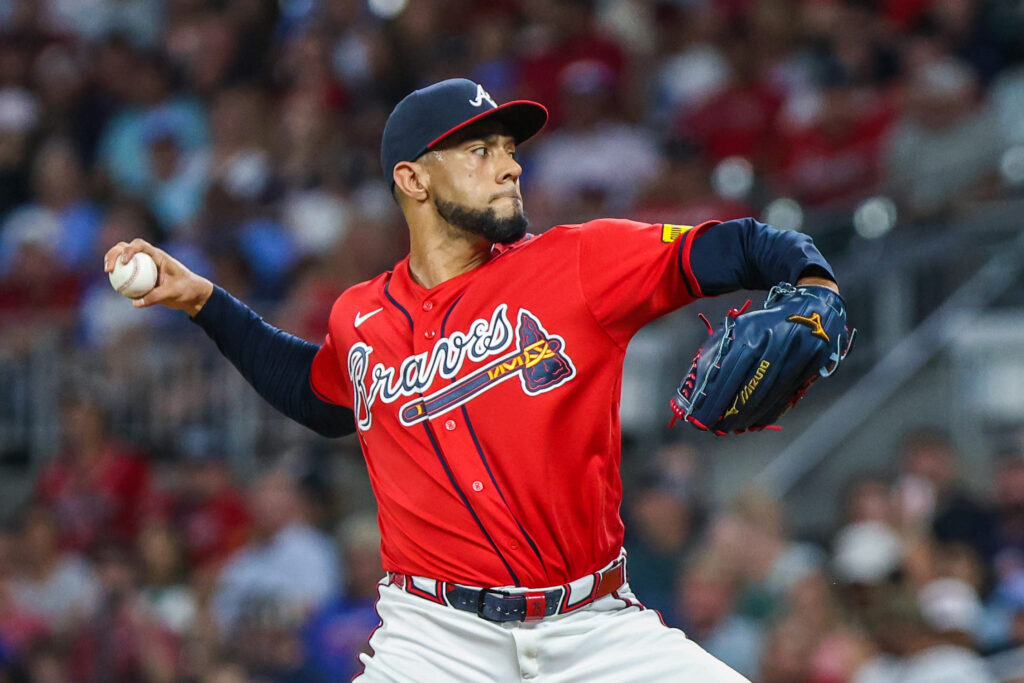
Robert Suarez is back. The Braves activated the right-handed reliever from the 60-day injured list ahead of Wednesday's game against Cincinnati, ending a 12-week absence that began in late June when right elbow inflammation forced him to the sideline. Owen Murphy, recalled earlier in the season, was optioned to clear roster space. Atlanta had an existing 40-man opening, so the transaction required no corresponding move up the chain.
Suarez's timing is neither accidental nor irrelevant. With roughly 10 days left in the regular season and the Braves fighting for postseason positioning in a tightening NL East race, the club is banking on a healthy mid-rotation arm. Before the injury, Suarez had appeared in 41 games, averaging 1.1 innings per outing with a 3.64 ERA and 9.2 K/9. His fastball sat in the 93-95 mph band; command wavered but was workable in short stints.
The real question isn't whether Suarez will pitch—it's at what velocity and control. A 12-week recovery from elbow inflammation leaves no margin for ramping error. Most relievers need 4–6 appearances to rediscover feel, command, and timing in game conditions. If Suarez throws fastballs at 91–92 mph with elevated walk rates in his first outings, Atlanta faces a problem: a bullpen addition who actually increases leverage-situation risk. If he returns to 94+ mph with sub-3.5 BB/9 command, he's a genuine late-playoff upgrade.
For bettors, this creates a narrow window of edge. Suarez's strikeout prop—likely to land in the 0.5–1.5 range depending on usage—will open sharp, priced on his pre-injury K/9 baseline and recent league average reliever velocity trends. But his first three appearances carry execution risk; the market won't immediately punish a 90 mph fastball or a 2 BB outing because the sample is microscopic. Bets placed on Suarez props in games 1–3 after activation rely on assumptions about immediate command recovery that historically don't hold. Wait until appearance 4 or 5, when actual velocity and walk data accumulate.
The Braves' roster-construction choice—spending a 40-man slot and demoting a younger arm—signals confidence in Suarez's medical clearance, not certainty of performance. In playoff baseball, that distinction matters. A healthy Suarez is a resource; a deconditioned one is a sunk cost with a bullpen tag attached.