Lopez's Shoulder Blow Deepens Atlanta's Pitching Crisis at the Worst Possible Time
By Justin Erickson ·
The Braves lose their veteran right-hander to inflammation just weeks before the playoffs, pushing a decimated rotation to its limit.
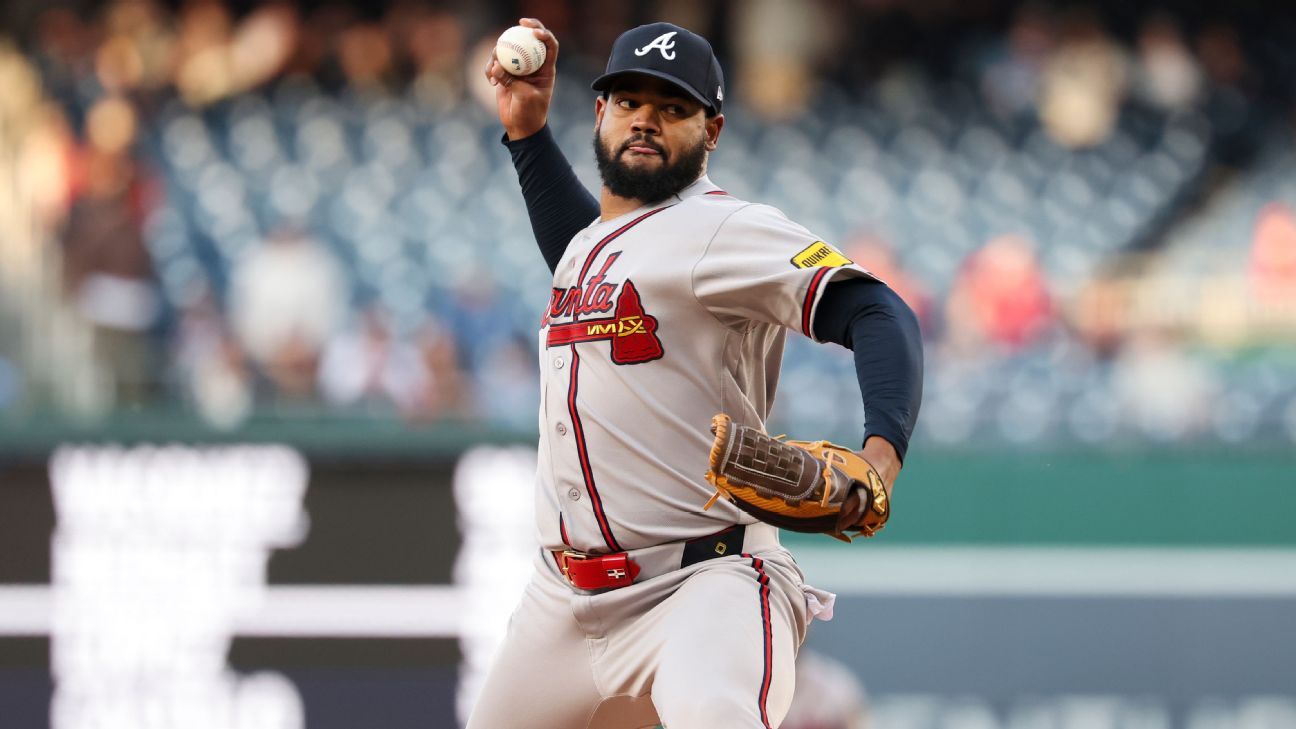
Reynaldo Lopez is headed to the injured list with right shoulder inflammation, the Braves announced Tuesday. The 35-year-old righty, already compromised after a left knee injury sidelined him from late July through early September, has become the seventh Atlanta pitcher to land on IL this season—a roster management catastrophe with playoffs looming.
Lopez's timing could not be worse. He returned to action on September 9 after missing 45 days, but those 7⅔ innings since his comeback have been brutal: a 12.91 ERA, 11 runs allowed, 13 hits, five walks. A pitcher who posted a 4.54 ERA in 79⅓ innings across 13 starts and 13 relief appearances this season was already losing velo and command. Monday night's three-inning outing against Chicago—five runs, six hits—exposed that decline before the shoulder flared. Now rest becomes mandatory.
The deeper problem isn't Lopez as an individual. It's the cumulative damage to Atlanta's depth. Bryce Elder (right shoulder), Joe Jiménez (post-op from left knee surgery in 2024, only now ramping in the minors), Spencer Schwellenbach (right elbow surgery), Spencer Strider (right elbow inflammation), Robert Suarez (right elbow inflammation), and Joey Wentz (torn right ACL) form a casualty list that suggests either catastrophic luck or systematic conditioning failure. Seven pitchers down in September, when every arm matters, transforms the rotation from a competitive asset into an emergency operation.
From a betting lens, this hemorrhage reshapes Atlanta's postseason viability and tilts the team-total calculus sharply downward. The Braves' ability to score runs remains intact—that's a playoff-roster constant—but their capacity to suppress opponent runs just collapsed. An already overextended bullpen now inherits more innings. Lopez's absence isn't a marginal 5% swing; it's an organizational credibility test on durability that the market is only beginning to reprice. Back-of-the-envelope math: seven IL arms means the rotation depth chart has shifted from "competitive" to "patch-work survival mode," which materially raises opponent scoring projections and lowers Atlanta's implied win probability in tight playoff series where pitching depth wins games.
The Braves will lean harder on younger arms—22-year-old JR Ritchie was recalled from Gwinnett—and on late-innings leverage with a thinned bullpen. Neither option carries the reliability of a veteran right-hander at full health. If the team reaches October, expect unders on Atlanta's team totals (both runs and wins per game) to hold outsized value relative to the preseason market. The pitch-execution issues Weiss noted with Ritchie and the months-long rehab arc for Jiménez suggest this isn't a quick fix.