Suarez's Forearm Injury Opens Bullpen Volatility Window for Braves Through All-Star Break
By Justin Erickson ·
Atlanta loses its most reliable reliever for at least three weeks, forcing an untested call-up into high-leverage innings and reshaping late-game pitching leverage for the stretch run.
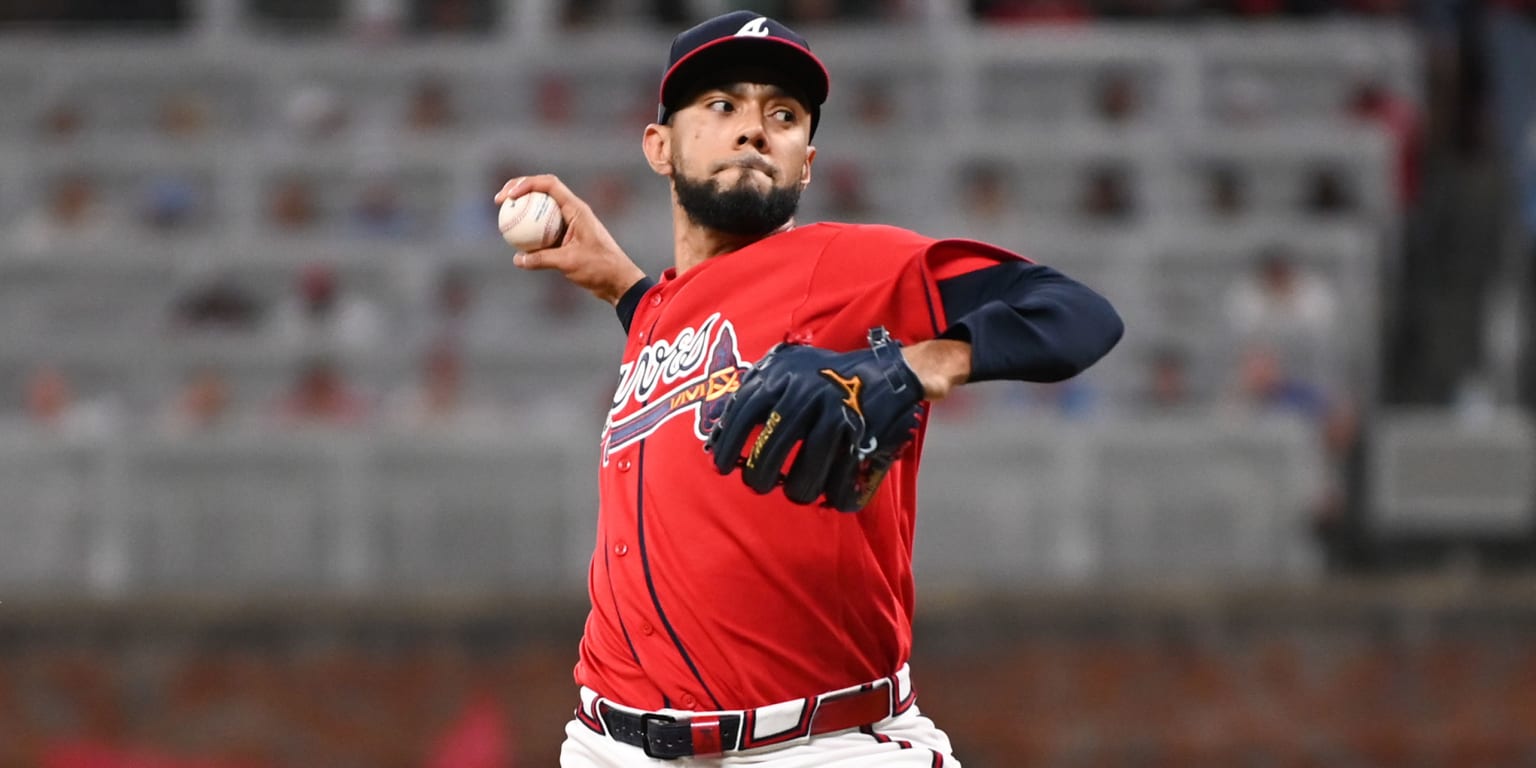
Robert Suarez, the Braves' most dominant relief arm, landed on the 15-day injured list Friday with right forearm tightness, effective immediately. The 0.56 ERA over 31 appearances vanishes from Atlanta's bullpen equation through at least mid-July—a window that covers roughly 20 games and includes the All-Star break. Suarez hasn't pitched since June 19 (seven days ago), when he threw 28 pitches across 1⅓ scoreless innings against Milwaukee. The Braves now slot Hurston Waldrep, a 26-year-old Triple-A depth piece, into the rotation vacancy left by the move, pending Friday's performance against San Francisco.
Forearm tightness in relief pitchers is rarely a quick repair. The diagnosis itself signals incomplete inflammation rather than structural damage—no tear, no surgery—but the rehab timeline for any pitcher touching 95+ mph repeatedly is measured in weeks, not days. A 15-day IL placement with "likely not rejoin[ing] until after the All-Star break" is organizational speak for "probably 4-5 weeks." That's June 26 through late July: a span that covers the final month of the first half and the opening week of the second half. For a team navigating a tight division race, losing a 0.56 ERA arm creates both immediate and persistent roster stress. The Braves cannot simply replace that strikeout density and command profile with a September call-up; they have to manufacture shutdown innings with bodies already in the system or make a trade-deadline move.
Waldrep's insertion matters less for his individual profile than for what it signals about Atlanta's bullpen depth chart. López, the scheduled Friday starter, is being capped at 30 pitches—a clear indication he's being used as a short burst rather than a traditional starter. That short outing forces the Braves to ask Waldrep or another depth arm to handle multiple innings in a high-leverage Friday night game. If Waldrep performs well, Atlanta keeps him up and continues building reps. If he struggles, the team burns another arm and accelerates the timeline for seeking external bullpen help. Either outcome reshapes how the Braves deploy their remaining depth over the next 20 games.
For proposition bettors, this injury introduces two distinct pricing angles: first, Atlanta's bullpen strikeout rate and ERA will compress upward over the next 3-4 weeks as Suarez's absence forces more innings from secondary arms with lower strikeout rates. The Braves' bullpen K/9 drops measurably when Suarez is off the mound; tracking their reliever strikeout props on road games (where they face stronger offenses) through mid-July becomes a fade opportunity, as outs will come harder without his velocity. Second, Waldrep and López as fill-in rotation options carry elevated variability in their first-inning or first-five-innings strikeout totals because neither has established consistent workload patterns at the MLB level. Betting against their strikeout totals in their first few appearances—until one of them settles into a defined role—capitalizes on the market's tendency to overshoot young arms' strikeout expectations when they get sudden exposure.
The broader shelf life of this angle is short. Suarez's return in mid-to-late July will restore the bullpen's baseline, erasing the compression effect. Waldrep may carve out a permanent role or may fade back to Triple-A once the rotation stabilizes. But for the next 15-20 games, Atlanta's bullpen is operating at reduced efficiency, and late-game leverage situations will fall to less reliable arms—a structural edge that punishes bullpen-dependent props.